Synthetic drug 'kush' ravages Sierra Leone's young / Photo: JOHN WESSELS - AFP

 UEFA's legal move 'massive escalation' in bitter Infantino feud

 MEXC Launches Earn Plus With Limited-Time Event Offering Up to 800% APR Booster
 Norway's new King Haakon VIII, popular face of shaken monarchy
 Stocks rise ahead of Fed chair's policy speech

 Norway's new King Haakon VII, popular face of shaken monarchy

 Last-wicket duo take England to 290 all out in 2nd Test against Pakistan
 MPSC Drug Inspector Exam Leak: Rutuja Patil Allegedly Paid Rs 50 Lakh for Leaked Paper
 Japan spent record $96 bn in yen interventions: ministry
 Nepal-China floods disaster: Latest developments

 Duplantis needs A-game to fend off Karalis pressure
 Architect Minenhle Makhanya Ordered to Repay R147 Million for Nkandla Upgrades

 Iran says still open to diplomacy as war with US hits six months

 20,000 Salmon Return to Klamath River Following Dam Removal, Yet Recovery Faces Ongoing Challenges

 King Harald, 'symbol' of Norway, dead at 89

 Norway's new King Haakon, popular face of shaken monarchy
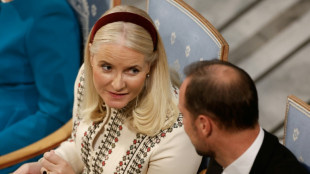
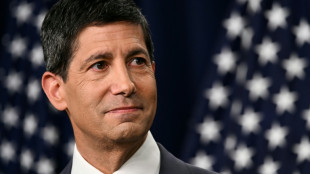 Most stocks rise as attention turns to Warsh speech
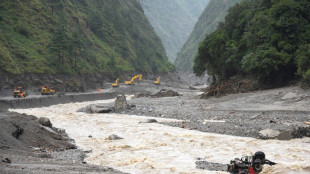
 Japanese rugby U-turns on limits on naturalised players

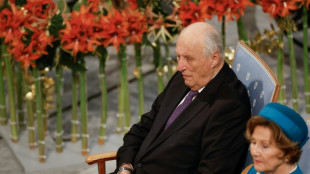 Norway's King Harald dead at 89

 Climate change hits trout and salmon in UK's prized chalk streams

 Škoda Octavia Marks 30 Years With Nearly 7.9 Million Units Produced
 Nepal seeking to reach survivors in tunnel as risk of new floods rises

 Anger in Austria over business park on former Nazi camp site

 In shadow of Premier League, Serie A flexes financial muscle

 Tanker pays record $5.3 mn to transit Panama Canal: administrator

 Pilgrims seeking peace caught in deadly Nepal-Tibet floods

Their lives are mired in poverty and despair.
"Kush" offers them relief -- but the nirvana is fleeting and carries a grim price.
The recently-emerged drug is making terrible inroads among the young in Sierra Leone, a West African nation ranked among the world's poorest.
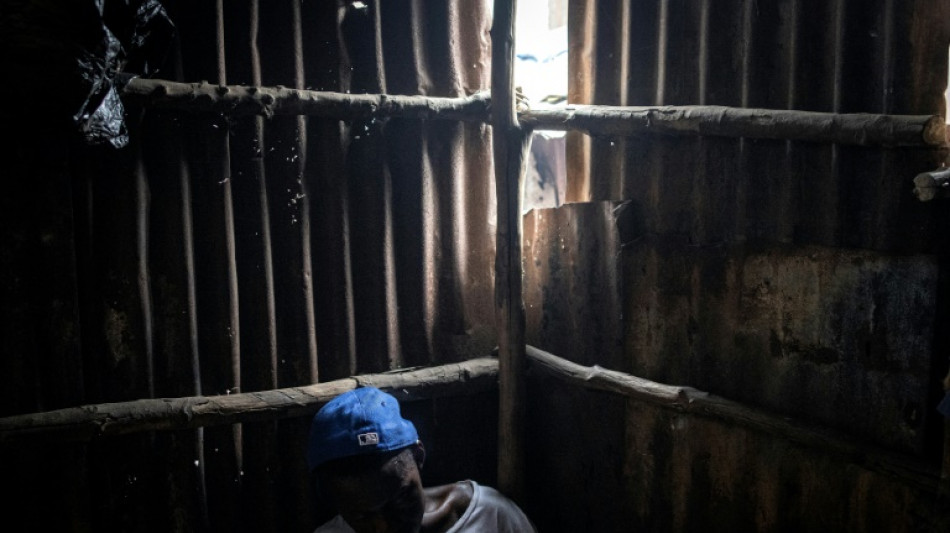
On the edge of a rubbish tip in the capital Freetown, Mohamed (name changed), a 25-year-old garbage picker, smoked a joint laced with kush.
For about an hour, he said, he would "meditate high meditation," sleep, wake up and eat.
And then, a short time later, do it all over again.
"We smoke it the whole day," he said.
"I spend a lot of money on it every day -- around 200 leones," or around $10: a small fortune in a country with average per capita income of under $500 a year.
Nearby, Mohamed's companions were crammed into a shack shrouded in kush smoke, in the heart of a slum where children played among pigs and detritus.
The synthetically-made drug surfaced half a dozen years ago, although its composition is sketchy.
Manufactured and distributed by criminal gangs, "the drug is an amalgamation of the various chemicals and plants that mimic the natural (cannabinoid) THC found in cannabis," said Abdul Sheku Kargbo, head of the National Drug Law Enforcement Agency.
The active ingredient's concentration can be "exponentially increased," ratcheting up potency, he said.
"Young people are dying," said Ibrahim Hassan Koroma, founder of an NGO called the Mental Watch Advocacy Network.
Kush users seem to be everywhere in Freetown, from the slums to well-heeled areas, sitting slumped with their heads lolling and sometimes sleeping standing up.
- Sex work -
Kadiatu, 22, is among those who became hooked on the drug.
"Sometimes when I wake up from sleep without smoking, my body and joints ache," she said.
"After I smoke two, three (joints), I feel okay, I feel alright, my meditation changes, my mood becomes cool. After smoking I eat a lot," she said.
To pay for her hits, she resorts to sex work.
She bore scars from knife attacks and, she admitted, psychic wounds as well.
"I used to be a cheerful woman with so many fashion dresses," she said. "(...) Look at the hair on my head -- I don’t plait my hair (any more)."
Koroma walked through the poor district of Crab Town, paying an outreach visit to a "hideout" where maybe a hundred kush users were inside, discreetly smoking joints.
The root cause of their addiction was poverty and neglect, he said.
"We don't want to discriminate them or to point fingers at them, that’s stigmatisation.
"We need a speedy and refocused strategy," he said. "(...) At the moment it is quite alarming."
- One hospital -
Sierra Leone's sole psychiatric hospital, a renovated facility from the British colonial era, is swamped with young addicts brought in by families desperate for help.
Sixty percent of the hospital's admissions are kush-related, said Jusu Mattia, acting medical superintendent and resident psychiatrist.
In the substance abuse unit, dozens of patients lay on beds.
The hospital "receives patients that are at the extreme end -- they are intoxicated, or they are psychotic," he said.
Care amounts to isolation treatment lasting between three to six weeks supported by anti-psychotic drugs to help wean patients off their addiction.
They can have psychotherapy and join socialising activities such as sport and sewing.
Michael Mannah, a 22-year-old student, said his life had been transformed after years on kush.
"I was the bad Michael, not the good Michael that I am now," he said, speaking in one of the dormitories.
"I felt like I was in another world, different from this one," he said.
"'Abstain from kush', it’s the best advice I have."
Despite his triumphant tone, the facility has limited manpower to provide followup treatment, and relapses are common.
Its budget is so tight that a US NGO called Partners in Help pays for drugs, rehabilitation programmes and staff training.
But many kush addicts have no access to treatment whatsoever -- if they are harmless they are left alone, living as "zombies" but with no-one to care for them, said superintendent Mattia.
The hospital can only treat "the tip of an iceberg," he said. "It's a very big and widespread problem."
O.Gaspar--PC