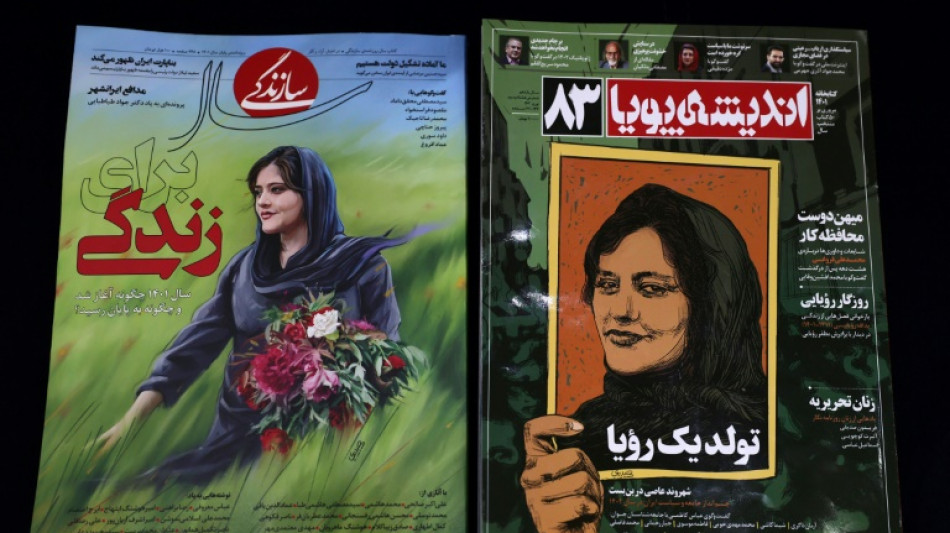
10 months since Iran's protests, Kurdish exiles in limbo / Photo: ATTA KENARE - AFP

 UEFA's legal move 'massive escalation' in bitter Infantino feud

 MEXC Launches Earn Plus With Limited-Time Event Offering Up to 800% APR Booster
 Norway's new King Haakon VIII, popular face of shaken monarchy
 Stocks rise ahead of Fed chair's policy speech

 Norway's new King Haakon VII, popular face of shaken monarchy

 Last-wicket duo take England to 290 all out in 2nd Test against Pakistan

 MPSC Drug Inspector Exam Leak: Rutuja Patil Allegedly Paid Rs 50 Lakh for Leaked Paper

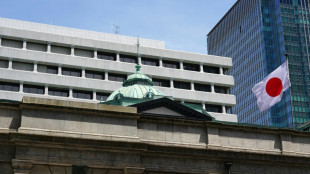 Japan spent record $96 bn in yen interventions: ministry
 Nepal-China floods disaster: Latest developments
 Duplantis needs A-game to fend off Karalis pressure
 Architect Minenhle Makhanya Ordered to Repay R147 Million for Nkandla Upgrades

 Iran says still open to diplomacy as war with US hits six months
 20,000 Salmon Return to Klamath River Following Dam Removal, Yet Recovery Faces Ongoing Challenges

 King Harald, 'symbol' of Norway, dead at 89

 Norway's new King Haakon, popular face of shaken monarchy
 Most stocks rise as attention turns to Warsh speech
 Japanese rugby U-turns on limits on naturalised players

 Norway's King Harald dead at 89

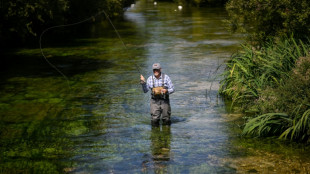 Climate change hits trout and salmon in UK's prized chalk streams

 Škoda Octavia Marks 30 Years With Nearly 7.9 Million Units Produced
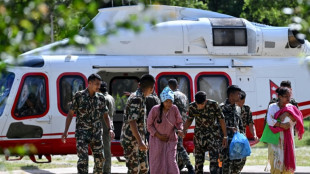 Nepal seeking to reach survivors in tunnel as risk of new floods rises

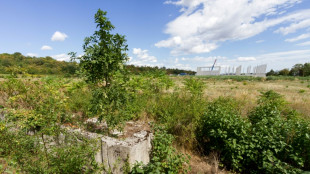 Anger in Austria over business park on former Nazi camp site
 In shadow of Premier League, Serie A flexes financial muscle

 Tanker pays record $5.3 mn to transit Panama Canal: administrator

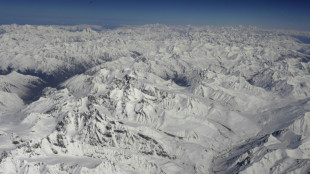 Pilgrims seeking peace caught in deadly Nepal-Tibet floods
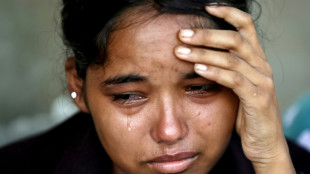
Like other Iranian Kurds who fled into exile during last year's women-led mass protests, 17-year-old Sarina tries to keep a low profile in her new home in northern Iraq.
She avoids drawing attention in her waitress job and hides her face behind a Covid mask when she walks the streets of Arbil, the capital of Iraqi Kurdistan.
The teenager -- who asked not to be fully identified citing security fears -- was among the thousands who joined the wave of street protests sparked by the September death of Mahsa Amini.
Anger flared after the 22-year-old Kurdish-Iranian died in morality police custody after her arrest for allegedly flouting the strict Islamic dress code for women.
At the time, Sarina was visiting her mother in Mahabad, in Iran's West Azerbaijan province, and joined the protests. She then took to the streets again in her nearby hometown of Oshnavieh.
When a friend of hers was arrested, Sarina went into hiding.
"At first, I said I wouldn't be returning home for two days," Sarina recalled. Then the authorities raided her home while she was away and detained her uncle.
In mid-October, Sarina crossed the porous mountain border, a region long used by smugglers, from Iran's mainly Kurdish west into Iraq's autonomous Kurdistan region.
She now spends her mornings serving tea at a corporate office and her evenings working as a waitress, making ends meet on $800 a month.
"My family is forced to accept that I am here," she said. "It is very difficult for them. They are worried about me."
Sarina said she has no plans to move further away, explaining that "I don't like being too far from my country. I want to be able to go back to my family quickly if something happens."
- 'Woman, life, freedom' -
Iran's protests under the motto "woman, life, freedom" sparked a state crackdown during which hundreds were killed, mostly protesters but also dozens of security personnel.
Thousands were arrested in what authorities labelled "riots" and blamed on foreign enemies. Seven men were executed for protest-related violence against security forces.
Many Iranian Kurds fled to Iraq, some on tourist visas. Their number is unclear in the absence of official statistics.
People on both sides speak Kurdish, and many have relatives across the Iraq-Iran border. The dire economic situation in sanctions-hit Iran has compelled many to seek work in Iraq.
Kurdish Iranian opposition groups have long had bases in Iraqi Kurdistan. Iran launched deadly military strikes on some of them during the unrest, accusing them of instigating the protests.
Early this year, Iraq and Iran signed an agreement to reinforce security along the border. Tehran has threatened to resume attacks if the Kurdish opposition groups are not disarmed by September.
- 'An aimless life' -
Another Iranian Kurd, a 27-year-old architect speaking with AFP under the pseudonym of Fuad, said he had crossed the mountains along a snow-covered smuggling path in January.
Originally from the western Iranian town of Piranshahr, he now sells laptops in an Arbil store where he also sleeps on an old mattress, his clothes hanging from wall hooks.
"I am living an aimless life," he said. "Day turns to night and night turns to day. I left behind all I had in Iran -- my mother, my father, my house, my job."
Fuad also took part in the protests, until his friend's brother was arrested. This sent him into hiding for 40 days during which, he said, "the security forces raided my house".
Being away from his family weighs heavily on him, Fuad said: "Every time my mother calls me, she has tears in her eyes, my father as well."
Despite this, he said he won't go back, for fear of being arrested.
More than 10,000 Iranians live in Iraqi Kurdistan, according to data published by the Kurdistan regional government in May, many of them long-time residents.
Rizgar Khasraw, 47, who hails from the Iranian city of Mariwan, has lived in Arbil with his wife and two daughters for 11 years, running a sweets business.
When the protests erupted, he wanted to show his support.
When he opened his second branch, he named the shop after Amini and put up a signboard showing the young woman with a rose in her hair and a light scarf over her head.
Ten months after the protests flared, Khasraw hailed Amini as "a symbol of freedom for all of Iran".
Back in Iran, authorities said last week that they had resumed morality police patrols to deal with women who "insist" on violating the dress code.
A.S.Diogo--PC