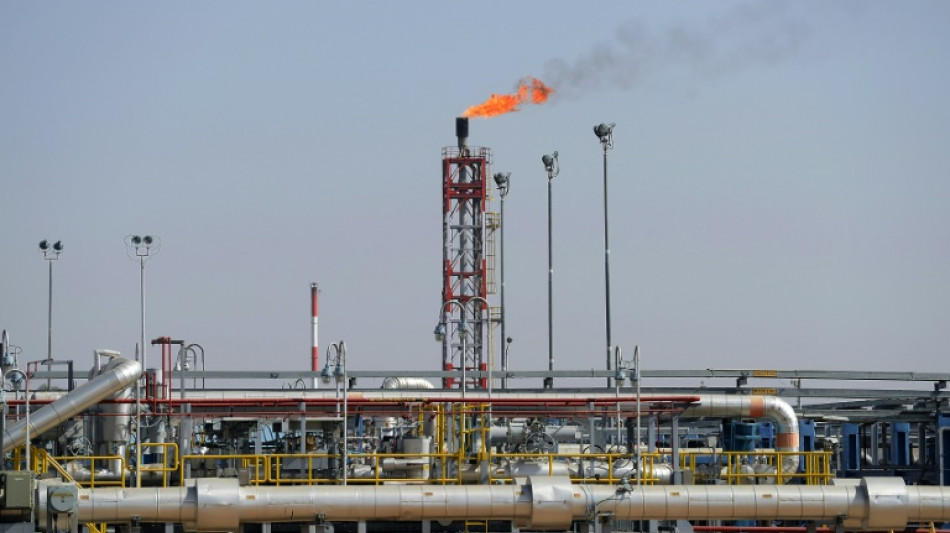
G20 energy ministers fail to agree on fossil fuels roadmap / Photo: MONEY SHARMA - AFP/File

 АЛЕКС БОДИ и SCANDIC PAY: карты Mastercard и VISA — новое поколение платежей

 ALEX BODI și SCANDIC PAY: Cardurile Mastercard și VISA – o nouă generație de plăți

 John Park’s Agency Takes Legal Action Over Unauthorized 'McDonald’s Order Rap' Distribution

 Best Pet Advent Calendars for Christmas 2026: Dog Treats and Cat Toys

 Grattan Institute Releases Blueprint to Target Specialists Over Excessive Fees

 Arizona Science Center Hosts Girls in STEM Astro Adventures for Students

 New Turkish Cafe, Japanese BBQ, and Korean Restaurants Open Across East Bay

 Knowle Move Four Points Clear at Top After Histon Victory
Energy ministers from the group of 20 nations meeting in India Saturday failed to agree on a roadmap to phase down the use of fossil fuels in the global energy mix.
A final statement after the meeting did not even mention coal, a major contributor to global warming.
The dirty fuel is also a key energy source for many developing economies such as India -- the world's most-populous country -- and China, the world's second-largest economy.
Campaigners were dismayed by the failure to reach agreement in Goa on COP goals including tripling the world's renewable capacity and doubling energy efficiency by 2030.
It came despite G7 leaders agreeing in Hiroshima in May to "accelerate the phase-out of unabated fossil fuels".
Global temperatures are hitting record highs, triggering floods, storms and heatwaves.
Explaining the stalemate, G20 president India said that some members had emphasised the importance of seeking a "phase down of unabated fossil fuels, in line with different national circumstances".
But "others had different views on the matter that abatement and removal technologies will address such concerns," it added.
Alden Meyer, a senior associate at independent climate think tank E3G, condemned the outcome of the meeting.
"With temperature records being set daily around the world and the impacts of climate change spiralling out of control, the world needed to hear a clarion call to action from the G20 energy ministers," he said in a statement.
"Instead, what we got was very weak tea indeed."
- 'Cannot afford delay' -
A coalition of key EU economies -- including Germany and France -- and some of the most vulnerable island states this week urged the G20 to accelerate plans to reach net zero emissions and phase out fossil fuels, adding: "Humankind cannot afford to delay".
They called for greenhouse gas emissions to peak by 2025 at the latest and be cut by 43 percent by 2030, compared to 2019 levels, in line with recent updates from UN climate experts.
But many developing economies argue that the developed West must pay more as a legacy polluter and greenhouse contributor.
They insist that any transition needs huge capital and new technology, while giving up on polluting fuels without affordable alternatives will condemn their huge populations to poverty.
G20 host nation India is itself only pledging to reach net zero by 2070, 20 years later than the commitment made by many other countries.
A report prepared for its G20 presidency estimated the cost of the energy transition at $4 trillion a year and emphasised the importance of low-cost financing for developing countries and technology transfers -- a key demand of New Delhi's.
Some major oil producers have also resisted a quick transition away from fossil fuels.
Ed King from the climate-oriented communications firm GSCC blamed Russia and Saudi Arabia for a lack of progress at the meeting.
They had "blocked efforts to land agreement on tripling clean energy, targeting fossil fuel cuts," King tweeted.
Emirati oil boss Sultan Al Jaber, who will head up the COP28 talks, has said he expects fossil fuels to continue to play a role with the use of often controversial technologies to "abate", or neutralise, the emissions.
He has said that a phase down of fossil fuels is both "inevitable" and "essential", but has been reluctant to spell out a time frame.
X.M.Francisco--PC