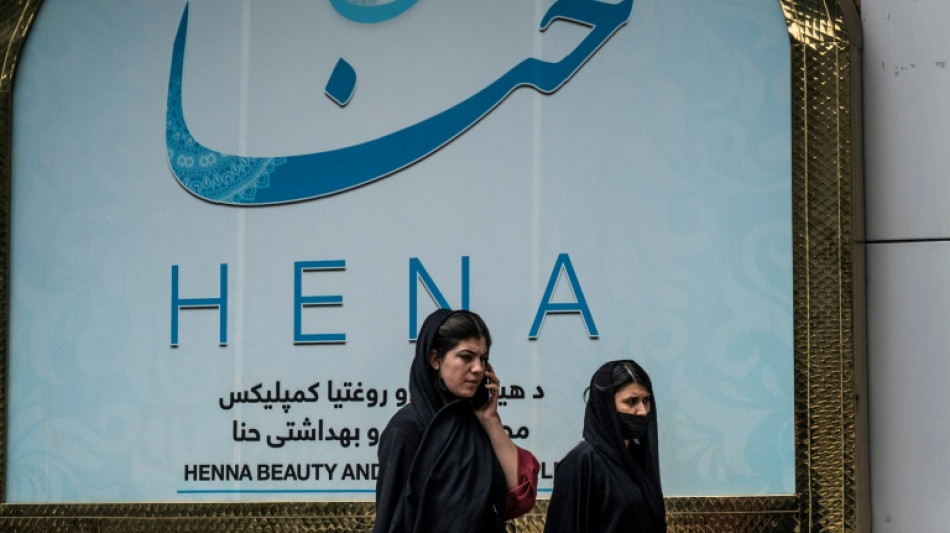
Thousands of Afghan salons to close as Taliban deadline bites / Photo: Wakil KOHSAR - AFP/File

 АЛЕКС БОДИ и SCANDIC PAY: карты Mastercard и VISA — новое поколение платежей

 ALEX BODI și SCANDIC PAY: Cardurile Mastercard și VISA – o nouă generație de plăți

 John Park’s Agency Takes Legal Action Over Unauthorized 'McDonald’s Order Rap' Distribution

 Best Pet Advent Calendars for Christmas 2026: Dog Treats and Cat Toys

 Grattan Institute Releases Blueprint to Target Specialists Over Excessive Fees

 Arizona Science Center Hosts Girls in STEM Astro Adventures for Students

 New Turkish Cafe, Japanese BBQ, and Korean Restaurants Open Across East Bay

 Knowle Move Four Points Clear at Top After Histon Victory
Thousands of beauty parlours across Afghanistan were due to close permanently Tuesday following an order by Taliban authorities that cuts off one of the few revenue streams available to women, as well as a cherished space for socialising.
Since seizing power in August 2021, the Taliban government has barred girls and women from high schools and universities, banned them from parks, funfairs and gyms, and ordered them to cover up in public.
But an order issued last month forces the closure of thousands of salons nationwide run by women -- often the only source of income for households -- and outlaws one of the few remaining opportunities for them to socialise away from home.
"We used to come here to spend time talking about our future together. Now even this right has been taken away from us," said Bahara, a customer at a Kabul salon.
"Women are not allowed to enter entertainment places, so what can we do? Where can we go to enjoy ourselves? Where can we gather to meet each other?"
Last week, security officials shot into the air and used firehoses in Kabul to disperse dozens of women protesting against the order.
In late June, the Ministry for the Promotion of Virtue and Prevention of Vice gave salons until Tuesday to close down, saying the grace period would allow them to use up stock.
It said it made the order because extravagant sums spent on makeovers caused hardship for poor families and that some treatments at the salons were un-Islamic.
Too much make-up prevented women from proper ablutions for prayer, the ministry said, while eyelash extensions and hair weaving were also forbidden.
A copy of the order seen by AFP said it was "based on verbal instruction from the supreme leader" Hibatullah Akhundzada.
Beauty parlours mushroomed across Kabul and other Afghan cities in the 20 years that United States-led forces occupied the country.
They were seen as a safe place to gather and socialise away from men and provided vital business opportunities for women.
Thousands of female government workers either lost their jobs when the Taliban took over or are being paid to stay at home.
But the beauty parlour ban will see another 60,000 women lose their income from work at some 12,000 salons, according to the Afghanistan Women Chamber of Commerce and Industry.
A report to the UN's Human Rights Council last month by Richard Bennett, the special rapporteur for Afghanistan, said the plight of women and girls in the country "was among the worst in the world".
"Grave, systematic and institutionalized discrimination against women and girls is at the heart of Taliban ideology and rule, which also gives rise to concerns that they may be responsible for gender apartheid," Bennett said.
R.J.Fidalgo--PC