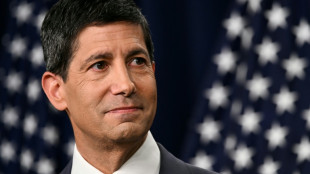
US on 'very narrow path' to avoid recession: IMF chief economist / Photo: Bastien INZAURRALDE - AFP

 UEFA's legal move 'massive escalation' in bitter Infantino feud

 MEXC Launches Earn Plus With Limited-Time Event Offering Up to 800% APR Booster

 Norway's new King Haakon VIII, popular face of shaken monarchy

 Stocks rise ahead of Fed chair's policy speech

 Norway's new King Haakon VII, popular face of shaken monarchy

 Last-wicket duo take England to 290 all out in 2nd Test against Pakistan
 MPSC Drug Inspector Exam Leak: Rutuja Patil Allegedly Paid Rs 50 Lakh for Leaked Paper

 Japan spent record $96 bn in yen interventions: ministry

 Nepal-China floods disaster: Latest developments
 Duplantis needs A-game to fend off Karalis pressure

 Architect Minenhle Makhanya Ordered to Repay R147 Million for Nkandla Upgrades

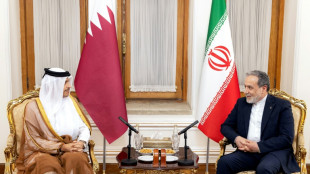 Iran says still open to diplomacy as war with US hits six months

 20,000 Salmon Return to Klamath River Following Dam Removal, Yet Recovery Faces Ongoing Challenges

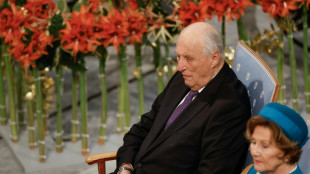 King Harald, 'symbol' of Norway, dead at 89

 Norway's new King Haakon, popular face of shaken monarchy

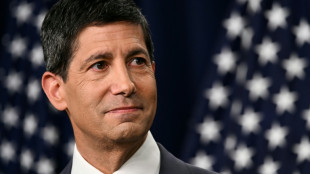 Most stocks rise as attention turns to Warsh speech

 Japanese rugby U-turns on limits on naturalised players

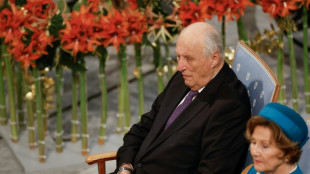 Norway's King Harald dead at 89

 Climate change hits trout and salmon in UK's prized chalk streams

 Škoda Octavia Marks 30 Years With Nearly 7.9 Million Units Produced
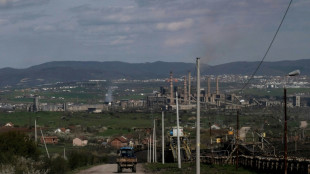
 Nepal seeking to reach survivors in tunnel as risk of new floods rises

 Anger in Austria over business park on former Nazi camp site

 In shadow of Premier League, Serie A flexes financial muscle

 Tanker pays record $5.3 mn to transit Panama Canal: administrator

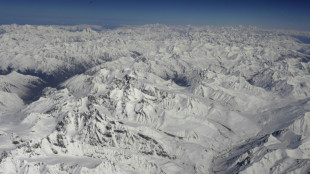 Pilgrims seeking peace caught in deadly Nepal-Tibet floods

The US economy is on a "very narrow path" to avoiding a recession, the International Monetary Fund's chief economist says, while warning of risks to China's strong post-pandemic recovery.
"A recession is not in our baseline," Pierre-Olivier Gourinchas told AFP during an interview at the IMF's headquarters in Washington, ahead of the publication of its updated global growth projections on Tuesday.
"We are cautiously prudent that the US economy could avoid a recession and, you know, glide towards its inflation target without having a recession in its future," he said.
"But it's a very, very narrow path," he warned.
On Tuesday morning, the IMF raised its forecast for global growth in 2023 to 3.0 percent, up 0.2 percentage points from its previous forecast in April, citing resilient service sector activity in the first quarter of the year.
The IMF still expects much of the growth this year and next to come from emerging and developing economies, with countries like the United States, Germany and Japan due to grow at a much slower pace than China and India.
But the IMF report also noted there are growing risks to China's economy following its post-pandemic reopening, especially in its troubled real estate sector.
- 'Slack' in Chinese economy -
The IMF continues to predict that China's economy will grow by 5.2 percent this year, up sharply from last year.
But there are now signs that China's rapid economic rebound from the Covid-19 pandemic could be "weakening faster than maybe was anticipated," Gourinchas told AFP, while noting "some concerns about the strength of the Chinese economy going forward."
"Maybe there's still a certain amount of slack in the Chinese economy that is not going away and that is weighing on prices," he said.
This slack has had a positive impact on the global inflation outlook: The IMF now forecasts consumer price increases will slow from 8.7 percent in 2022 to 6.8 percent this year, due largely to the decline in Chinese inflation.
But while it may be good news for the global economy, it could pose challenges for Chinese policymakers, Gourinchas told AFP.
"It might require some stronger policies by the Chinese authorities both in terms of monetary policy -- maybe a little bit more supportive easing monetary policy -- and also in terms of fiscal policy," he said.
- Russia still weathering sanctions -
Russia's economy is expected to grow significantly faster this year than the IMF forecast back in April, due largely to stronger-than-expected domestic demand, and continued government spending.
The IMF now sees Russian growth this year of 1.5 percent, up by 0.8 percentage points since April.
"There is a strong component coming from fiscal spending in the context of the Russian invasion of Ukraine," Gourinchas said.
"There is a strong defense and military effort, and that is providing some stimulus to the domestic economy," he added.
The IMF now expects the Russian government's budget deficit will grow to 6.1 percent this year, up from 1.4 percent last year, said a spokesperson for the fund.
Export revenues have also remained resilient despite a series of US-backed sanctions in response to the invasion of Ukraine, and a G7 price cap on Russian oil.
"So far, export revenues coming from especially crude oil have remained fairly strong," he said.
"There is some softening on refined products, this is a little bit harder, but on crude oil, they certainly the oil revenues have been have been quite sustainable," he added.
Over the medium term, the IMF still expects the Russian economy to slow significantly compared with its projections before the war in Ukraine began.
"Our projections for medium term growth for Russia are below one percent," he told AFP, adding that the Russian government's increased fiscal spending have "dimmed" the country's long-term growth prospects.
A.Silveira--PC