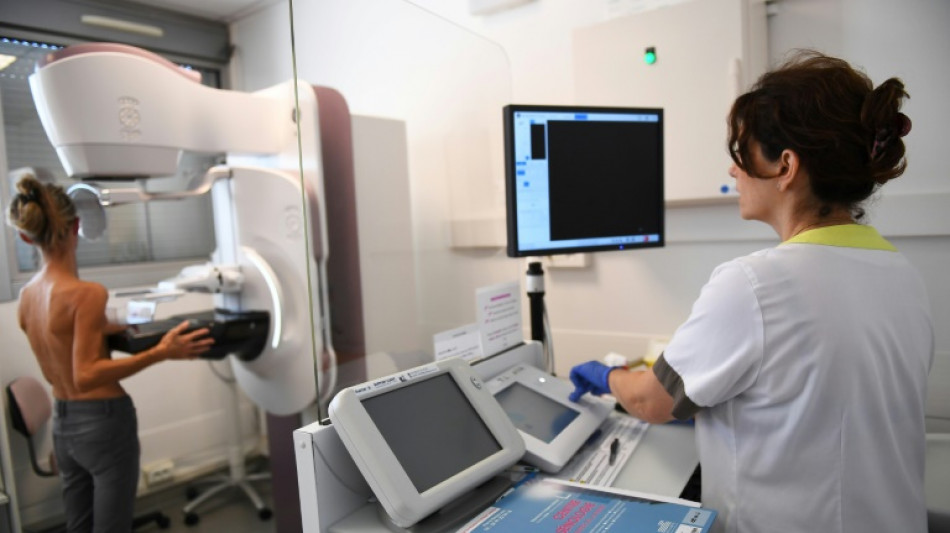
AI could halve time reading breast cancer scans, study suggests / Photo: ANNE-CHRISTINE POUJOULAT - AFP/File

 Germany could miss climate goal in 2026 for first time: think tank

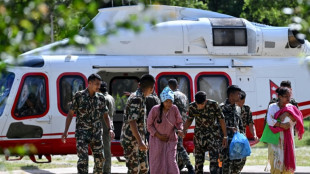
 New flood risks impede Nepal, Tibet rescue

 Kolbe back as Springboks change two for All Blacks Test

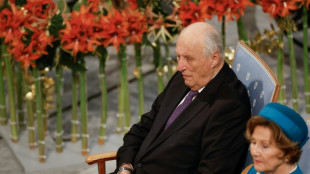
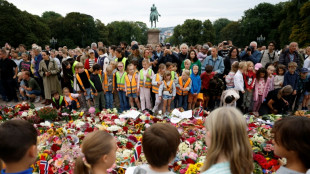 Europe's monarchs, world leaders mourn Norway's King Harald

 Jamie Vardy channel to broadcast Bundesliga games
 STARCARES Completes Basketball Court Revamp in the Philippines, Benefiting Nearly 20,000 People
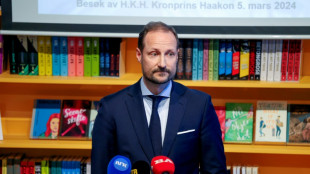
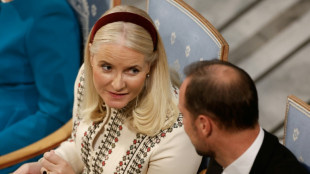 Norway's new Queen Mette-Marit, a fairytale beset by woe
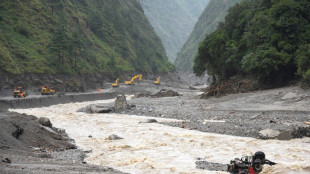 Nepal orders rescuers to safety as overflow brings new flood risks

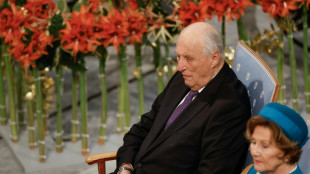
 Norway's King Harald V, unifying force who weathered family storms
 Australia's McKeown vows to reclaim backstroke world records
 Boston Legacy FC Delays White Stadium Debut to 2028

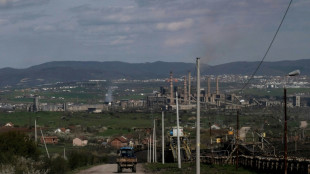 Cancer fears stalk Kosovo's coal heartland
 Gladys Knight to Reduce Tour Schedule Amid Health Concerns
 Galápagos Coral Fossils Reveal Global Warming Intensifies El Niño Cycles

 Springboks 'old guard' seek revenge over All Blacks

 'Find your own room': Japan says can't handle added Asian Games numbers

 Fresh flood warnings for disaster-hit Nepal and Tibet, 1,400 still missing
 Most Asian stocks advance as attention turns to Warsh speech

 US mother's child murder trial puts spotlight on postpartum psychosis

 'End of an era': Players lament decline of the disc at Gamescom

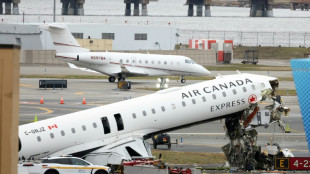 Air traffic controllers left early before deadly NY crash: report
 Golf media firm loses Callaway, PGA Tour deals over violent ad

 US to push economic pressure on Iran at G20 finance talks
 Kiss rotates Wallabies forwards for Argentina Test

 Guns, drugs and car chases: GTA 6 preview lands on Netflix after leaks
Artificial intelligence could help almost halve the workload of radiologists when it comes to searching routine scans for signs of breast cancer, a large Swedish study suggested on Wednesday.
The interim results of the trial were hailed as promising, but the authors cautioned that more research was needed before AI can be used to screen for breast cancer on a wider scale.
While increasingly convincing chatbots such as ChatGPT have driven speculation about the future potential applications of AI, one area in which the technology has already shown proficiency is in reading medical scans.
With many countries suffering from a shortage of radiologists, there are hopes that AI could make the time-consuming job of analysing routine scans quicker and more accurate.
This could have a particularly large impact for breast cancer. More than 2.3 million women were diagnosed with the cancer in 2020 alone, according to the World Health Organization, and it caused 685,000 deaths.
Regular screening is vital to identifying early signs of cancer. In Europe, women aged 50 to 69 are advised to get a mammogram every two years, with the resulting scan analysed by two radiologists.
The study in Sweden involved the scans of 80,000 women who had mammograms at four sites in southwest Sweden between April 2021 and July last year.
- 'Considerable importance' -
Their scans were randomly divided for analysis to either an AI-supported system or two human radiologists, who served as the control group.
The AI algorithm read the scans and predicted the risk of cancer out of 10. Its predictions were then checked by a radiologist.
The AI-supported system spotted 20 percent more cancers, the study said, which worked out to be an additional case for every thousand women screened.
When it came to false positives -- when a mammogram is first thought to look suspicious but is later cleared -- both the AI-supported system and the two humans spotted the same rate: 1.5 percent.
And the workload for radiologists was reduced by 44 percent for the AI group, because only one person was required to read the scans rather than the normal two.
"The greatest potential of AI right now is that it could allow radiologists to be less burdened by the excessive amount of reading," said Kristina Lang, a radiologist at Sweden's Lund University and lead author of the study.
But Lang said the "promising interim safety results" were "not enough on their own to confirm that AI is ready to be implemented in mammography screening," she said in a statement.
It will take two more years before the trial can say whether using AI leads to a reduction in what are called interval cancers, which are detected between routine screenings, the researchers cautioned.
Stephen Duffy, a professor of cancer screening at Queen Mary University of London who was not involved in the study, pointed out that the AI algorithm may have over-diagnosed certain forms of early breast cancer called ductal carcinoma in situ.
Nonetheless, he praised the "high-quality study", saying that reducing the burden on radiologists' time was "an issue of considerable importance in many breast screening programmes".
V.F.Barreira--PC