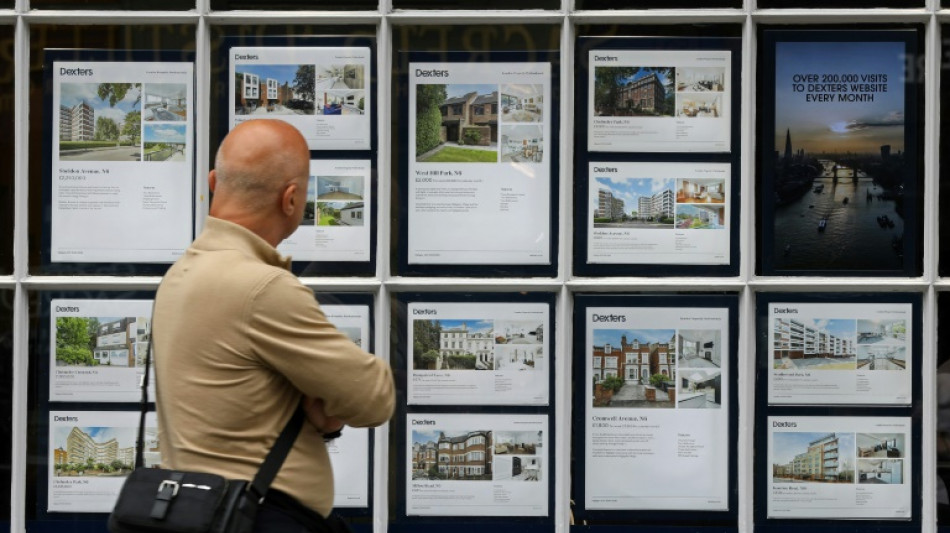
BoE set for fresh rate hike as UK inflation stays high / Photo: ISABEL INFANTES - AFP/File

 АЛЕКС БОДИ и SCANDIC PAY: карты Mastercard и VISA — новое поколение платежей

 ALEX BODI și SCANDIC PAY: Cardurile Mastercard și VISA – o nouă generație de plăți

 John Park’s Agency Takes Legal Action Over Unauthorized 'McDonald’s Order Rap' Distribution

 Best Pet Advent Calendars for Christmas 2026: Dog Treats and Cat Toys

 Grattan Institute Releases Blueprint to Target Specialists Over Excessive Fees

 Arizona Science Center Hosts Girls in STEM Astro Adventures for Students

 New Turkish Cafe, Japanese BBQ, and Korean Restaurants Open Across East Bay

 Knowle Move Four Points Clear at Top After Histon Victory
The Bank of England is set to raise its key interest rate for a 14th time in a row Thursday as UK inflation stays high, adding to a cost-of-living crisis.
The BoE is seen hiking borrowing costs by at least a quarter-point to 5.25 percent, which would be the highest level in more than 15 years -- and could go even higher at its regular meeting, according to analysts.
British annual inflation remains close to eight percent, far higher than in the eurozone and United States.
The Bank of England's latest "decision is unlikely to be unanimous with policymakers divided over the extent to which the BoE needs to tighten monetary policy further to rein in inflation", noted Victoria Scholar, head of investment at Interactive Investor.
"While expectations are for the central bank to lift the current bank rate... to 5.25 percent, there is still a chance it could opt for a more aggressive 50 basis-point move to 5.5 percent."
At its last meeting in June, the BoE lifted its rate by a half-point. Since then, UK annual inflation has dropped to 7.9 percent from 8.7 percent.
UK inflation is the highest among G7 nations.
Britain's Prime Minister Rishi Sunak has set a target of reducing inflation to five percent by the end of 2023, ahead of a general election next year which his Conservative party is on course to lose.
In a bid to cool prices, the BoE led by governor Andrew Bailey began lifting its key interest rate from a record low of 0.1 percent at the end of 2021, when inflation started to creep higher as economies slowly emerged from lockdowns.
Global inflation worsened in the months after as Russia's invasion of Ukraine fuelled energy and food prices.
UK inflation struck a 41-year peak at 11.1 percent in October 2022, while the BoE is tasked by the government to keep it close to a target of two percent.
- Highest since financial crisis -
At five percent, the bank's interest rate is at the highest level since the global financial crisis in 2008.
Surging interest rates in the UK have sparked mortgage turmoil as commercial lenders lift their own borrowing costs on home loans, boosting their profits.
The latest UK growth data meanwhile showed that the economy shrank slightly in May.
Paul Dales, chief UK economist at Capital Economics, said it expected the BoE to hike by a quarter-point Thursday before pausing.
"While there is probably enough inflationary pressure to prompt another... rate hike at the following meeting in September, to 5.5 percent, we think that a mild recession and an easing in both wage growth and core inflation will prevent further hikes."
Core inflation excludes energy and food prices.
B.Godinho--PC