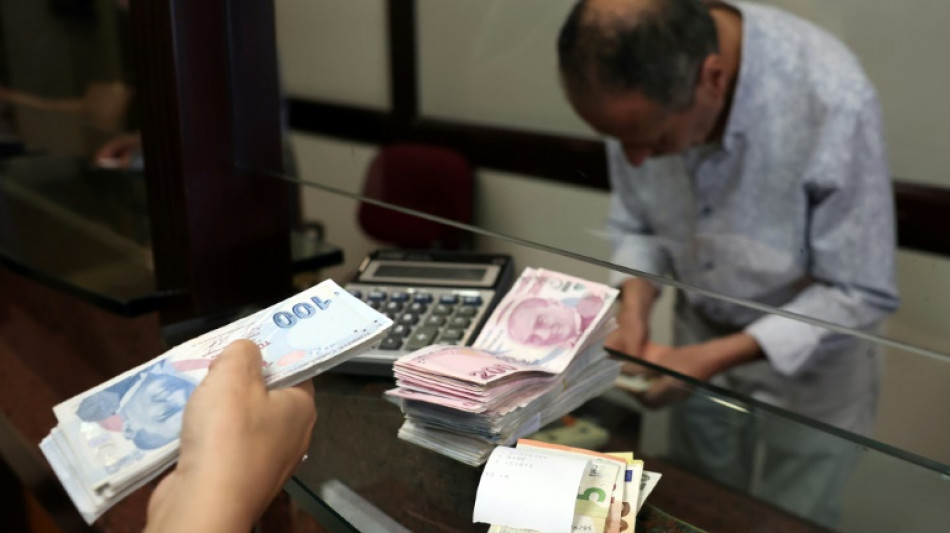
Turkish inflation ticks up in July at 47.83 percent / Photo: Adem ALTAN - AFP

 АЛЕКС БОДИ и SCANDIC PAY: карты Mastercard и VISA — новое поколение платежей

 ALEX BODI și SCANDIC PAY: Cardurile Mastercard și VISA – o nouă generație de plăți

 John Park’s Agency Takes Legal Action Over Unauthorized 'McDonald’s Order Rap' Distribution

 Best Pet Advent Calendars for Christmas 2026: Dog Treats and Cat Toys

 Grattan Institute Releases Blueprint to Target Specialists Over Excessive Fees

 Arizona Science Center Hosts Girls in STEM Astro Adventures for Students

 New Turkish Cafe, Japanese BBQ, and Korean Restaurants Open Across East Bay

 Knowle Move Four Points Clear at Top After Histon Victory
Turkey's annual inflation climbed in July to 47.83 percent, up sharply from 38.2 percent, official data showed on Thursday, a week after the central bank more than doubled its year-end forecast.
The new figure, in line with expectations, comes as Turkey radically shifts its policies since the May election that includes an end to more than a two-year era of ultra-low interest rates.
Last week, the central bank revised its year-end inflation forecast to 58 percent from 22.3 percent after years of doubts from independent economists about the official rate.
The official rate had been steadily dropping since reaching a more than two-decade high of 85 percent in October last year. The central bank and economists have forecast an upward trend from July.
The consumer prices skyrocketed by almost 9.5 percent on a month-on-month basis, according to the TUIK state statics agency.
A separate study released by independent economists from the ENAG group who question the official data put the July figure at 122.88 percent.
At her debut press conference last week, new central bank governor Hafize Gaye Erkan said inflation would increase "temporarily" due to the rising exchange rate of the lira as well as fiscal measures.
Under the former Goldman Sachs and First Republic Bank executive, the central bank twice hiked its interest rates from 8.5 percent to 17.5 percent even though that was not found ambitious enough by markets.
-'New policy'-
"It's clear that interest rate hikes are just one part of the new policy shift under way in Turkey at the moment and that monetary tightening further ahead will be gradual," Liam Peach, senior emerging markets economist at London-based Capital Economics, said in a policy note.
"We think a rise in the policy rate to 27.50 percent or so by year-end is needed to sustain investor confidence," he suggested.
Economists welcomed President Recep Tayyip Erdogan's turn to more traditional economics even though he still believes that high interests rates contribute to -- rather than cure -- growing consumer prices.
He began pushing the central bank to slash borrowing rates at all costs in 2021, setting off the worst inflationary spiral of his rule.
But Erdogan said after being re-elected he would allow his team economic team that includes Erkan and market friendly Mehmet Simsek as finance minister to take steps to fix the country's troubles.
"The new team are impressive and can design a route out of crisis," BlueBay Asset Management economist Timothy Ash said.
"We are seeing policy adjustment," he said, adding that would eventually help the inflation.
Bartosz Sawicki, market analyst at Conotoxia fintech, however said given severe and deeply rooted internal and external imbalances, the post-election policy mix would likely fail to re-anchor inflation expectations and spur significant foreign capital inflows.
"Rising inflation combined with President Tayyip Erdogan's impatience and disregard for orthodox policies will leave the lira vulnerable," according to the economist.
The lira was being traded 26.9 against the dollar on Thursday morning. It lost around 30 percent of its value since late May.
C.Amaral--PC