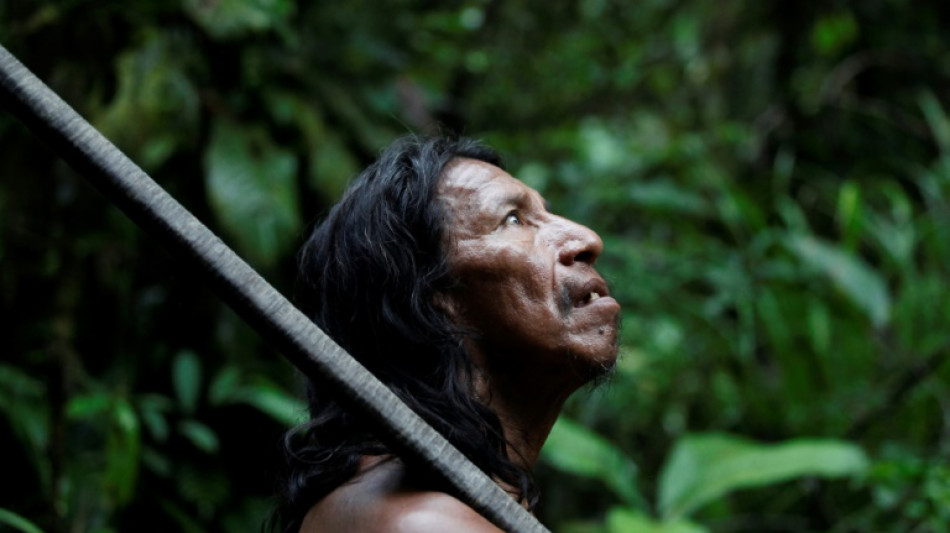
Ecuador jungle community hopes vote will end oil drilling / Photo: Galo Paguay - AFP

 STARCARES Completes Basketball Court Revamp in the Philippines, Benefiting Nearly 20,000 People

 Norway's new Queen Mette-Marit, a fairytale beset by woe
 Nepal orders rescuers to safety as overflow brings new flood risks

 Norway's King Harald V, unifying force who weathered family storms
 Australia's McKeown vows to reclaim backstroke world records
 Boston Legacy FC Delays White Stadium Debut to 2028

 Cancer fears stalk Kosovo's coal heartland
 Gladys Knight to Reduce Tour Schedule Amid Health Concerns
 Galápagos Coral Fossils Reveal Global Warming Intensifies El Niño Cycles

 Springboks 'old guard' seek revenge over All Blacks
 'Find your own room': Japan says can't handle added Asian Games numbers
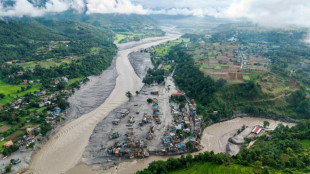 Fresh flood warnings for disaster-hit Nepal and Tibet, 1,400 still missing

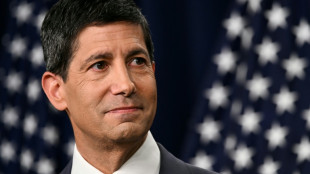 Most Asian stocks advance as attention turns to Warsh speech

 US mother's child murder trial puts spotlight on postpartum psychosis

 'End of an era': Players lament decline of the disc at Gamescom

 Air traffic controllers left early before deadly NY crash: report
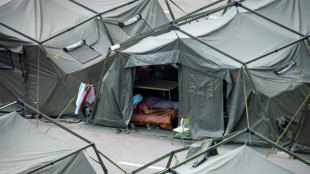
 Golf media firm loses Callaway, PGA Tour deals over violent ad

 US to push economic pressure on Iran at G20 finance talks

 Kiss rotates Wallabies forwards for Argentina Test

 Guns, drugs and car chases: GTA 6 preview lands on Netflix after leaks

 Arteta braced for 'tough' Martinelli, Jesus exits from Arsenal

 Welbeck scores first Chelsea goal in League Cup win over Luton

 Arsenal face depleted Aston Villa, Spurs seek return on £300m spend

 Werro edges ever closer to elusive women's 800m world record

 Callaway cuts ties with golf media firm over violent ad

Armed with a long blowgun and darts laced with poison extracted from plants, Kominta walks naked through the thick Ecuadorian jungle, where oil exploration is threatening his way of life.
"The jungle is my home, and I don't want strangers in my territory," the Waorani hunter tells AFP in the southeastern village of Bameno, in a region bordering Peru.
His community of about 200 people is in Yasuni National Park, one of the most diverse biospheres in the world, and home to two of the world's last uncontacted Indigenous populations.
On August 20, along with general elections, Ecuadorans will vote in a referendum on whether to halt the exploitation of crude oil within the reserve, which currently provides 12 percent of the 466,000 barrels per day produced by the country.
"I don't want an oil company to reach my territory. That's how I want to live, freely, in a healthy place," adds Kominta in the Wao Terero language.
The government -- which opposes the referendum that was granted by the Constitutional Court in May -- estimates losses of some $16 billion over 20 years if the oil is left underground.
There are about 4,800 Waorani, who own some 800,000 hectares (1.9 million acres) of jungle in the Amazon provinces of Orellana, Pastaza and Napo.
However, the community -- some of whom still choose to live in isolation -- is divided, with some supporting the oil companies and the benefit economic growth has brought to their villages.
Drilling inside the Yasuni reserve began in 2016 after years of fraught debate and failed efforts by then President Rafael Correa to persuade the international community to pay Ecuador $3.6 billion not to do so.
But with his government strapped for cash amid a plunge in global oil prices, in the end the leftist leader asked Congress to give the go-ahead to drill.
Current President Guillermo Lasso, who took office in 2021, wants to double Ecuador's oil production.
- Grandmother ready to fight -
The oil industry "destroys the environment I live in," Kominta said through translator Elisa Enqueri.
Accessing Bameno requires 12 hours of navigation through various rivers in the Pastaza region.
"My grandmother says that she would fight with her spear. She has the energy and still feels young ... to prevent strange people from coming here," says Enqueri.
The Yasuni National Park houses some 2,000 tree, 610 bird, 204 mammal, 150 amphibian and more than 120 reptile species, according to the San Francisco University of Quito.
It is also home to the uncontacted Taromenane and Tagaeri tribes, who are rivals and sometimes fight each other. They have also attacked oil workers and loggers with their spears.
Oil activity "affects their way of life and puts their lives at risk. There is a serious risk of ethnocide, of the total extermination of these communities," said Pedro Bermeo, a lawyer and spokesman for Yasunidos, an environmental group backing the referendum.
Moi Guiquita, another young Wao, says the oil companies are "getting closer and closer" to Bameno.
"Sixty years ago they were much further away."
Indigenous communities seeking to escape their presence "can't go any further as there is no more" space, he said.
F.Moura--PC