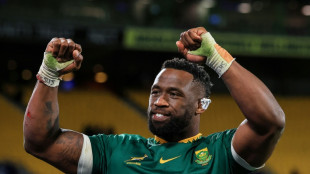
Springboks' success belies S.Africa's rugby inequality / Photo: MARCO LONGARI - AFP

 Climate change hits trout and salmon in UK's prized chalk streams

 Škoda Octavia Marks 30 Years With Nearly 7.9 Million Units Produced
 Nepal seeking to reach survivors in tunnel as risk of new floods rises

 Anger in Austria over business park on former Nazi camp site
 In shadow of Premier League, Serie A flexes financial muscle
 Tanker pays record $5.3 mn to transit Panama Canal: administrator
 Pilgrims seeking peace caught in deadly Nepal-Tibet floods
 China's help critical, but unlikely, for US to choke off Iran
 US court rules Pentagon ban of Anthropic unlawful
 In Zambia, a Shaolin Temple offers a softer face of China
 Messi's Inter Miami appoint new coach Gonzalez

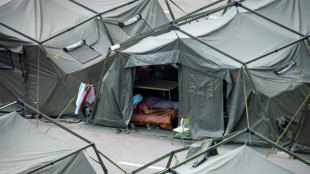 Clashes in Spain's Ceuta month after mass migrant influx

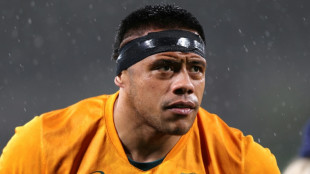
 Argentina names unchanged side for Australia Test

 Australia's Lee leads PGA Tour Championship
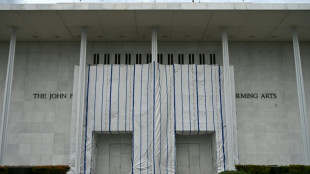 US judge urged to rebuff restoring Trump name to Kennedy Center
 Trump orders Lake Ontario to be renamed 'Lake America'

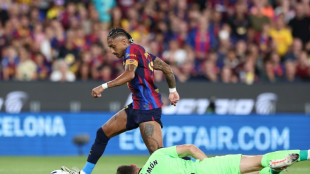 Raphinha, Lopez strike again as Barca beat Athletic

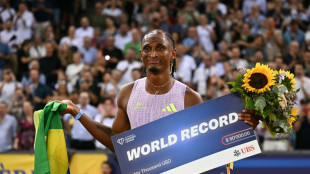 Dos Santos, Russell set world records in 'crazy' Zurich Diamond League
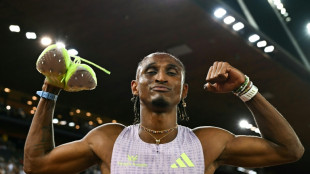 Dos Santos upstages Warholm for blistering new 400m hurdles world record

 US Open women's singles: Three talking points

 American Masai Russell sets new women's 100m hurdles world record

 Smith and Cox revive England after Abbas strikes for Pakistan

 Brazil's Alison Dos Santos sets new men's 400m hurdles world record
 The Nile Theater Announces Full 2026 Concert Lineup Including Menzingers and Shakey Graves

 Venezuelan Artist Oswaldo Vigas Retrospective Opens in Guangzhou

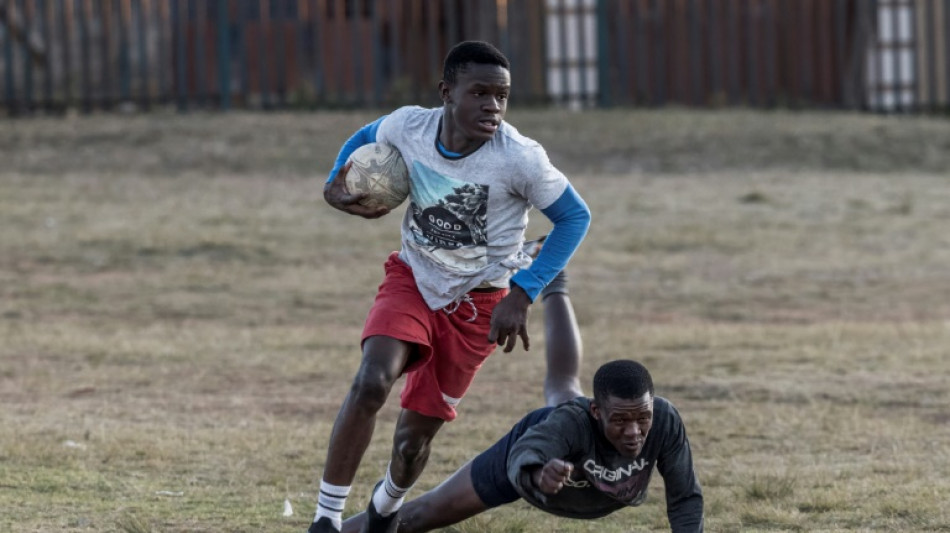
On a parched pitch in an impoverished South African township, a group of young men do push-ups on the hard ground before kicking off a game of rugby.
A few years ago the oval ball was an unusual sight in Tembisa, a predominantly black suburb northeast of Johannesburg, where dusty roads bustle with street vendors and football is king.
But a 2019 Rugby World Cup victory by a national team skippered by Siya Kolisi, the first black player to wear the armband in an international match, has helped turn the tide.
Once seen as a symbol of white rule, the Springboks, who will defend their world title in France in September, enjoy a growing popularity.
Tembisa, where crime is rife, unemployment is high and some families live in makeshift homes made of corrugated iron, is no exception.
"We have a lot of new players coming in week in and week out," said Siyabonga Mogale, a 21-year-old with short dreadlocks and quick feet who plays as fullback for the local team, the Tembisa Stallions.
"A lot of people are very interested in rugby now."
Yet, despite the hype surrounding Kolisi, analysts say the legacy of South Africa's long history of racial segregation is still holding back progress towards equal representation in the sport.
"Rugby has manipulated its image to brainwash black South Africans into supporting the very system that they are excluded from," said Mark Fredericks, a sports activist and academic.
- 'Mind shift' -
For 90 years Springbok selectors chose only white players, with black and mixed-race athletes sequestered in separate leagues with no international participation.
Even after the end of apartheid progress has been painfully slow.
The 1995 World Cup-winning side, famously celebrated by Nelson Mandela, was white except for one winger and only two black players were in the 2007 team that became world champions.
The 2019 green and gold squad captained by Kolisi was seen as a turning point, with six black players in the starting 15.
A national tour to show off the trophy started in Soweto, the heartland of South Africa's anti-apartheid struggle, where the Springboks were once hated.
"It was inspiring to watch because I thought I can also make it," said Tembisa Stallions captain Amohelang Motaung, 21.
But scratching under the surface reveals a different story, says Peter de Villiers, who in 2008 became the first black man to coach the Springboks.
"If you look at the Springboks team you will see the strides that they've made, the mind shift," De Villiers told AFP.
"But if you want the best to play for your country, there must be a mass participation in the sport, and this is yet to happen."
For those like Motaung who are born in a township, the path to sporting success is uphill.
The same few private schools that used to churn out Springboks during white rule still dominate the scene.
They have staff and facilities that are no match for public schools in the townships, where even proper lavatories are sometimes missing and physical education is an afterthought.
- Uneven playing field -
The issue is evident in Tembisa, where the Stallions, who are linked to a local school, play on a rugged football pitch with no goal posts.
Some team members train in bare feet.
"The field is not proper, it's not straight as it's supposed to be. There's a lot of ground, the grass is limited...it's not suitable for rugby," said head coach Zwelakhe "Themba" Mawela.
Most black South Africans, who account for about 90 percent of the population, cannot afford to pay private schools' high fees or to dedicate all their energy to rugby.
When he is not skippering the Tembisa Stallions, Motaung, a recent graduate in animal sciences, is busy looking for jobs.
"We want them to have dreams, to be hopeful, to know that it's possible even if you are black," said Mawela, the coach.
"But without the proper facilities, I mean what do you expect?"
Elite schools have worked to broaden their intake and offer bursaries to promising athletes.
Kolisi, who was born in a township and scouted by a prestigious college at a young age is one example.
Yet, critics say that plucking scholarship winners from their communities perpetuates rather than addresses inequality.
"They are just denuding the township forest of the tallest trees," said Fredericks.
Rugby is currently the second most popular sport in South Africa after football, according to SA Rugby.
But its momentum risks proving short-lived if not backed by investments in public schools and infrastructures, says Francois Cleophas, a sport science professor at Stellenbosch University.
"Unless we have a system where good schooling is available to the mass of people, we're not going to have a truly representative team from this country," he said.
E.Ramalho--PC