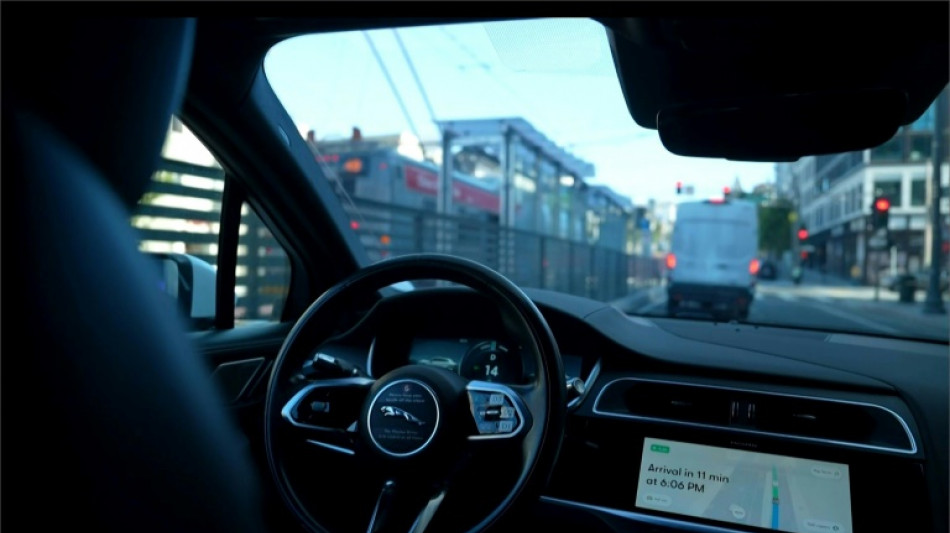
Self-driving car revolution is coming, but slowly / Photo: - - AFP

 Air traffic controllers left early before deadly NY crash: report
 Golf media firm loses Callaway, PGA Tour deals over violent ad

 US to push economic pressure on Iran at G20 finance talks
 Kiss rotates Wallabies forwards for Argentina Test

 Guns, drugs and car chases: GTA 6 preview lands on Netflix after leaks
 Arteta braced for 'tough' Martinelli, Jesus exits from Arsenal
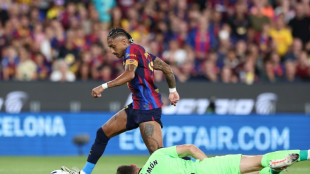
 Welbeck scores first Chelsea goal in League Cup win over Luton

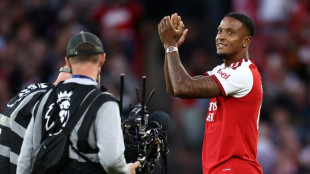 Arsenal face depleted Aston Villa, Spurs seek return on £300m spend

 Werro edges ever closer to elusive women's 800m world record

 Callaway cuts ties with golf media firm over violent ad

 Trump says Putin won't attack NATO territory
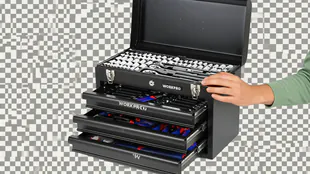 Labor Day 2026: Complete Starter Tool Kit Under $375

 Tamil Nadu Govt Assigns Ministers to Oversee Chennai Monsoon Preparedness

 Alfred gets revenge on Jefferson-Wooden in Zurich 100m
 US Open men's singles: Three talking points
 Michael Strahan Welcomes Fifth Child with Girlfriend Kayla Quick
 Kuminga’s Timberwolves Deal Saves Millions in Taxes Despite Lower Pay Than Lakers Offer

 Trump says Russia is 'not going to attack' NATO territory

 OpenAI Tests 'Persistent Mode' for Codex AI Agent
 PSG to face Barcelona, Man City and Villa in Champions League as draw is made
 Two killed, one arrested, at school near Berlin: police

 Cox defies Pakistan after Abbas's treble strike rocks England

 Bosnian Serb war criminal Ratko Mladic dead
 Ogura to miss Aragon MotoGP after hand surgery

 Severe Thunderstorms Hit Eastern Australia After SA Deluge
In Munich, where this week's IAA motor show is taking place, an interactive street survey elicits an overwhelming "yes" when asking passers-by if they would take a self-driving taxi from the station to the Oktoberfest beer festival.
But while the number of coloured balls placed in the "yes" column shows no shortage of enthusiasm, experts say the long-promised future of autonomous cars remains some way off.
"Five years ago, we thought that by 2025 we would have significant autonomy in many vehicles, which is not the case," said Christophe Aufrere, chief technical officer of car-parts maker Forvia.
Pandemic-related disruptions to the car industry, a shift towards investing in electrification and the sheer complexity of the technology have all contributed to keeping the autonomous-driving revolution stuck in the slow lane.
Now, "we're more inclined to say it will happen by 2030," Aufrere told AFP.
Ahead of the pack, German luxury carmaker Mercedes-Benz has received international approval for its "level three" autonomous driving system in accordance with United Nations standards.
The hands-free level three allows for autonomous driving in certain conditions such as heavy traffic or motorway speeds up to 60 kilometres per hour (37 mph). The driver can take their eyes off the road but must be ready to intervene if needed.
The system is available as an option on the flagship Mercedes S-Class, which has a six-figure price tag.
Honda won a world-first approval to sell level three autonomous cars in Japan in 2021.
But the vast majority of today's commercially available cars come equipped with "level two" partial automation at best.
That includes Tesla's well-known "autopilot" and offers features such as adaptive cruise control or automated parking -- while the driver remains alert at all times.
- 'Step by step' -
But the driverless "robotaxis" teased by the Munich survey remain a futuristic dream in most cities, with Europe lagging behind the United States and China in trialling such services in the real world.
These "level four" vehicles, like the robot cabs from Waymo or Cruise used in San Francisco, can operate without human intervention within designated areas.
The uneven deployment in Europe wasn't down to regulations or technological challenges but rather a matter of funding that was harder to come by on the continent, according to Christophe Perillat, CEO of French automotive supplier Valeo.
Nevertheless, "autonomous vehicles are making progress year after year," Perillat said at the IAA.
Professor Lutz Eckstein from RWTH Aachen University agreed, saying "significant advances" were on the horizon.
So-called level 2+ systems that also monitor the driver's attentiveness and fatigue are expected to become more widespread, he said, predicting that the number of level three systems on the market would also increase.
"By the end of the decade, we want to achieve the ability to drive on the motorway at speeds of 130 kilometres per hour," a Mercedes spokesperson told AFP.
The company aims to offer level four highly-automated driving by the same deadline.
"The idea is to proceed step by step," confirmed Forvia's CTO Aufrere. "Because we want to be sure it works."
L.Torres--PC