Transgender outcasts turn artists in India

 India's Padikkal steals the show with 167 in first Sri Lanka Test

 Hollywood duo underline Premier League ambition for Wrexham

 India's Padikkal makes 167 in first Sri Lanka Test

 Hurricane Lala pulls away from Hawaii's Big Island

 Petros, Vainio set new championship records to win Euro marathons

 Hurricane Lala brushes past Hawaii's Big Island, bringing heavy rain

 'Something we dreamed of': Bangladesh celebrates historic cricket win

 Rain holds up India on day two of Sri Lanka Test

 The Ukrainian social media channels tracking Russian missiles

 Disney offers fans an escapist bubble at D23 event

 Thousands await aid after deadly Indonesian quake

 Chinese ship sets off for Europe through Arctic, halving travel time

 Bangladesh on verge of historic win in Australia as Mehidy takes five

 Messi sees penalty saved as Nashville routs Inter Miami in MLS

 Heat is on as German winegrowers struggle to protect vines

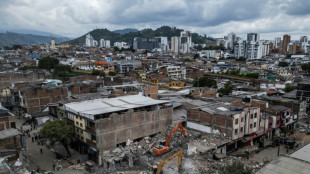
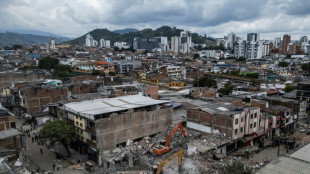 Hope fades for finding survivors of Colombia quake as rescued woman dies
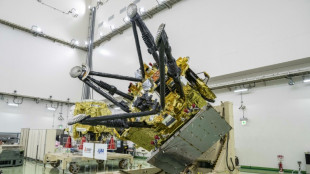 Japan aims for the moons of Mars

 'People could get hurt': Conservationists decry AI wildlife visuals

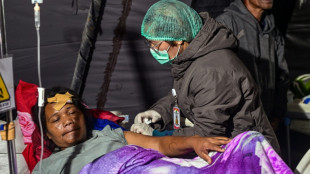 'Another chance to live': Flores residents recall quake panic

 Rivers among nine inducted into Basketball Hall of Fame

 No.1 Scheffler leads by two at PGA St. Jude playoff event

 Rennie confident Jordan, Roigard will be fit to face Springboks

 PSG sign Belgian winger Godts from Ajax

 Nillessen claims shock European 1,500m gold

 Taylor scores two tries in winning debut as New Zealand captain

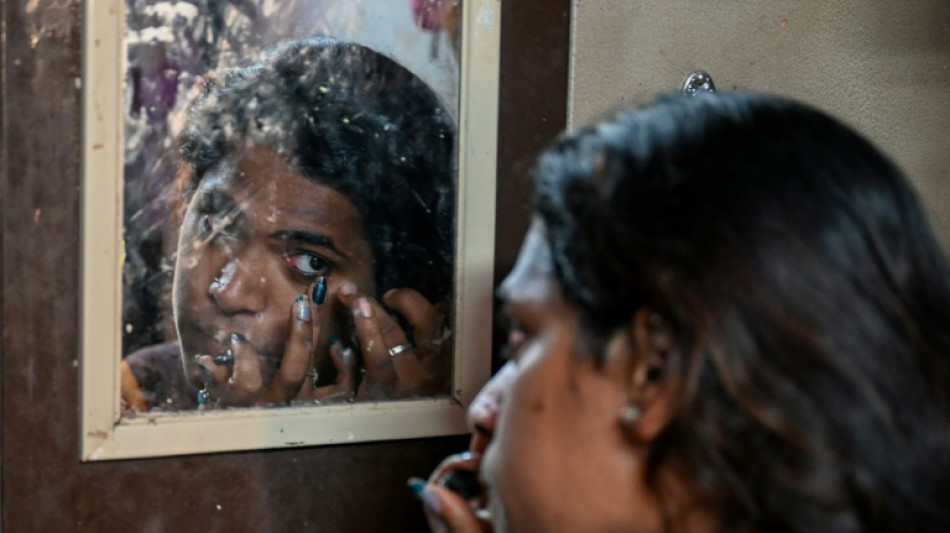
On a giant flyover in the sprawling Indian metropolis of Mumbai, a transgender art collective is trying to change attitudes as radically as it transforms the concrete pillars into brightly coloured murals.
Known as "hijras", individuals identified as male at birth but now part of India's "third gender", have an ambivalent position on the edges of Indian society, respected and feared in turn as some Hindus believe they hold the power to bless or curse.
Denied jobs at most workplaces, many are forced to beg at traffic intersections, where they are a common sight in major cities, or on trains.
Some turn up at family events such as weddings or birth celebrations, or at new houses, to offer blessings in return for money, sometimes threatening to issue curses if denied. Others turn to prostitution, increasing their risk of violence.
The Aravani Art Project hopes to challenge the stigma and marginalisation by showing transgender people as artists in the same public spaces where they beg or face abuse.
At the latest mural site -- one of Mumbai's busiest junctions -- the team painted portraits of local residents, among them two cleaners, a vegetable seller and a policeman.
"It's an opportunity for us to show what talent we have," said transgender woman artist Deepa Kachare.
"We have to beg from people by going to marriage functions, babies' births, shops, trains, and some of us are sex workers to make money as well," she said.
"We go everywhere to beg but we love to work hard and earn money."
The organisation -- whose projects are commissioned by governments, businesses and NGOs -- has brought together dozens of mostly transgender women for street art projects in multiple Indian cities.
"People are very happy to see us working as artists," said Kachare, 26. "Now they think positively when they see us."
- 'We are artists' -
The art collective takes its name from Lord Aravan, a Hindu deity who is "wedded" to hundreds of transgender people every year in a southern Indian festival.
Hinduism has many references to "third genders", such as Shikhandi, a character in the epic Mahabharata, and hijras have assumed different roles in society over the centuries, among them royal servants and harem guardians, according to historians.
But gay sex was criminalised in India during the British colonial period and only legalised by the Supreme Court in 2018.
The transgender community -- believed to number several million -- has fought to end discrimination, but many say they still struggle to be accepted by broader society.
"What's exciting for me is to tell them (transgender artists) that they are capable of doing anything," said woman artist and Aravani co-founder Sadhna Prasad, 29.
"And gender is really something that should be discussed much, much later and what they do and what they want to do in life comes first."
Another transgender woman member of the group, Ayesha Koli, 25 -- who still begs on the streets -- said her pigment-spattered kurta had become a marker of a different kind.
"These days when we wear our 'painting clothes' and go, they ask with curiosity if we paint," she said. "We feel immensely proud in saying 'Yes, we are artists and we paint.'"
X.Matos--PC