A shirt for rice: bartering to survive in inflation-battered Argentina / Photo: JUAN MABROMATA - AFP

 US designates UK-based Palestine Action as foreign 'terrorist group'

 'Rocky Horror Picture Show' star Tim Curry dead at 80

 American Moll wins women's pole vault at Zurich city event

 As Canada takes on US tariffs, what's behind the David and Goliath fight?

 UEFA 'likely' to drop threat to boycott FIFA tournaments: source

 US disrupts platforms allegedly used by Chinese hackers

 The foreign tourists missing in Nepal's flash floods

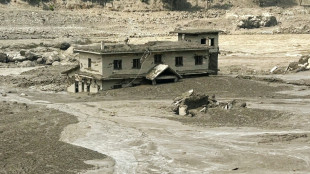 Hundreds missing after Nepal-Tibet flood kills 98
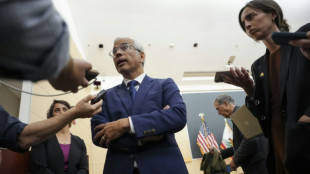
 CIA director was on 'semi-routine' mission in Moscow: Trump
 Aldeguer switches to Rossi's VR46 for next season

 Rent TRON Energy and Reduce USDT Fees : TronBid Expands Marketplace

 Pakistan captain Babar Azam returns against England '90 percent fit'

 Stocks mixed as oil drops, inflation stays high

 Improving standards transform pole vault as spectacle, says Duplantis

 India close in on win despite Sri Lanka fightback in second Test
 MEXC TradFi Gala Concludes With Over 170,000 Registrations and $4.3 Billion in Daily Trading Volume

 Olympic skating champion Liu to skip new season

 Benfica sign midfielder Palhinha from Bayern

 Flick says Barca may go without striker as Atletico resist Alvarez sale

 Too hot to incubate: Nile crocodiles hatch on their own in French reserve

 Spurs closing in on Man City's Marmoush after signing Savio

 Celtic count the cost of Champions League flop

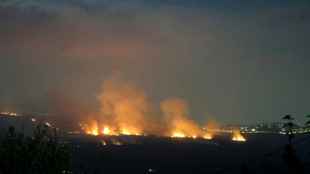 Lebanon accuses Israel of burning forest, farmland in south
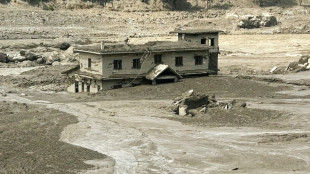 Nepal floods at China border kill 8, cause 'major casualties' in Tibet

 France eases cow diets as cheesemakers sweat
An old T-shirt for a handful of rice or some eggs: ever more Argentines are relying on barter to survive in a fast-worsening economy dominating the debate ahead of presidential elections Sunday.
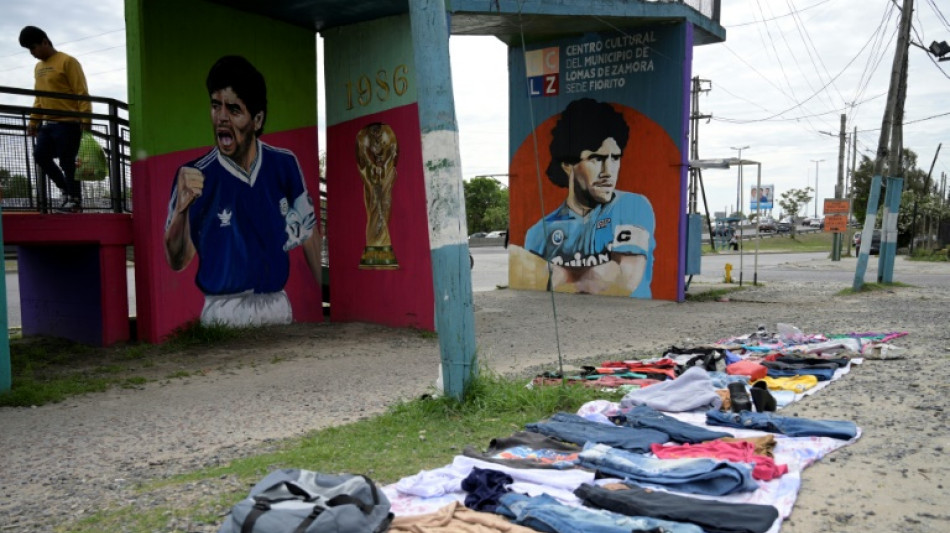
On the side of a dusty road in the impoverished Villa Fiorito neighborhood in Buenos Aires province, locals display old clothes, shoes or used household items on blankets spread out on the ground.
Articles of clothing are exchanged for a bag of pasta, some sugar, a few biscuits. Some items sell for a few hundred pesos -- the equivalent of a few dimes.
"Food is very expensive," 25-year-old Luz Lopez told AFP from behind her makeshift stall on the edge of a small square of Villa Fiorito -- celebrated for giving the world Diego Maradona, whose image oversees the bustling trade from numerous large murals in his honor.
In and around the teeming Argentine capital, it is an increasingly common sight for people to knock on doors asking for second-hand clothes to wear, barter or sell.
"Sometimes you're out walking, you find things, you wash them and bring them here" to trade, Lopez, a mother of two small children, said about her frustratingly limited options for making ends meet.
Elsewhere on the square, 28-year-old Maria Fernanda Diaz told AFP she sleeps under a pedestrian bridge and lives mainly on alms.
"Let the politicians come here to see how we live!" she exclaimed.
Four in every ten Argentines today live below the poverty line, according to official figures, with year-on-year inflation at 143 percent.
"Every day there are new prices," said Emilce Elisabeth Bravo, a 35-year-old mother of two who also tries to get by selling odds and ends she collects where she can.
"Diapers are very expensive -- previously a pack cost 2,600 pesos, today it is 4,500 pesos (almost $13)," she said, in a country where the monthly minimum wage was equal to about $420 in November.
- 'Great precarity' -
Bravo administers one of numerous Facebook groups with thousands of members on the lookout for barter deals in the vast capital and its many suburbs. She also works at a soup kitchen.
"We wanted to preserve the idea of bartering, we don't want to lose that camaraderie," she explained. "In the worst moments for the Argentine economy, it has helped us a lot."
Notebooks for cookies. Tea cups for eggs. Every day hundreds of negotiations take place on social media groups. Once a deal is concluded, the exchange is made on a street corner or at small neighborhood fairs.
"Poverty in Argentina is really dramatic but a very large part of what stops this situation becoming really unbearable is the vast network of support groups that exists," sociologist Mariana Luzzi of the Conicet research institute told AFP.
She said bartering became common in the difficult years of the 1990s, then exploded with the economic crisis of 2001 when Argentina was responsible for the biggest debt default in history -- around $100 billion -- followed by a banking collapse and deadly social unrest.
Now, in 2023, "in a context of great precarity, the barter is back," said Luzzi.
As economy minister, presidential candidate Sergio Massa has overseen Argentina's slide into triple-digit inflation.
He unexpectedly scored the most votes in a first voting round last month, with many seemingly scared off by Massa's rival Javier Milei, a self-described "anarcho-capitalist" who has vowed to "dynamite" the central bank, dollarize the economy and slash public spending.
"Argentines have a strong capacity for resilience," said Elisabet Bacigalupo, an economist at the Abeceb consultancy which expects inflation to reach 190 percent by year-end.
But whoever the next president is, she said, the country will likely go through more "months of recession and rising poverty."
P.Serra--PC