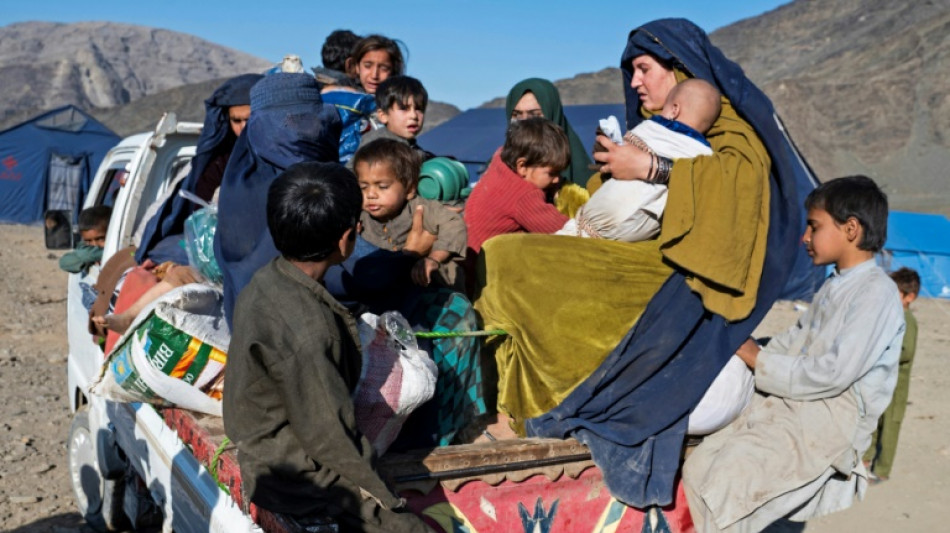
Afghans driven from Pakistan rebuilding lives from 'zero' / Photo: Wakil KOHSAR - AFP

 Lakers Defeat Bucks 123-112 Amid Injury Concerns for Dončić and Reaves

 Audi-SAIC CEO Fred Schulze Confirms AUDI Brand Will Launch Three New Models in China

 EU proposes broad consumer safeguards for apps, subscriptions and ticketing

 Radical Numerics develops offline AI tool to detect engineered pathogens

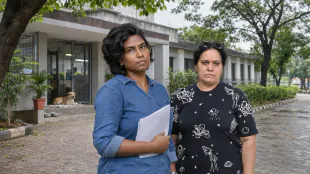 Chennai orders inquiry after dogs die at shelter; two veterinarians face action

 Startup turns Chennai’s history and culture into an interactive world
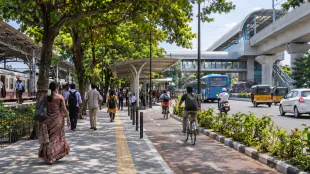
 Chennai venue launches month-long festival devoted to full-length theatre
 एलेक्स बोडी और SCANDIC PAY: Mastercard और VISA कार्ड — भुगतान की नई पीढ़ी

 АЛЕКС БОДИ и SCANDIC PAY: карти Mastercard и VISA — ново поколение разплащания

 أليكس بودي وSCANDIC PAY: بطاقات Mastercard وVISA — جيل جديد من المدفوعات

 ALEX BODI 與 SCANDIC PAY:Mastercard 與 VISA 卡——新一代支付方式

 ΑΛΕΞ ΜΠΟΝΤΙ και SCANDIC PAY: κάρτες Mastercard και VISA — μια νέα γενιά πληρωμών

 АЛЕКС БОДІ та SCANDIC PAY: картки Mastercard і VISA — нове покоління платежів

 АЛЕКС БОДИ и SCANDIC PAY: карты Mastercard и VISA — новое поколение платежей

 ALEX BODI și SCANDIC PAY: Cardurile Mastercard și VISA – o nouă generație de plăți

 John Park’s Agency Takes Legal Action Over Unauthorized 'McDonald’s Order Rap' Distribution

 Best Pet Advent Calendars for Christmas 2026: Dog Treats and Cat Toys

 Grattan Institute Releases Blueprint to Target Specialists Over Excessive Fees

Rocked gently on his mother's knees, a fly on his nose, a baby sleeps fitfully in a tent in a barren border camp as his family prepares to leave the waypoint to rebuild their lives in Afghanistan.
In the transit camp at Torkham, where returnees driven out of Pakistan sweat in burning heat during the day and shiver through the night, many of the blue tents at the foot of rocky mountains standing stark against a cloudless sky have already emptied.
Trucks overloaded with several families, carrying cushions, brightly coloured blankets and kitchen utensils, are readied to set off.
Border officials say at least 210,000 Afghans, including many who have lived decades, if not their whole lives, outside their country, have passed through the Torkham border point since Pakistan ordered those without documents to leave.
From the reception camp, they have dispersed to various Afghan provinces with a handout of around 15,000 afghanis ($205) -- just enough to support a family for a month.
For many, nothing, and no one, awaits them.
"We have nowhere to go, we don't have a house, or land, I don't have any work," said Sher Aga, a former security guard in Pakistan.
He bundled his nine children and all the family's belongings into a truck to head north, to Kunduz province, where he was born.
But the 43-year-old has no memory of his homeland, having left Afghanistan when he was five.
"I don't have any family there anymore," he told AFP.
"My children ask me, 'What country are we going to?'"
- 'We fear starvation' -
In a tent that she, her husband and their 10 children are sheltering in, 40-year-old Amina hides her face behind a red headscarf.
They are destined for Jalalabad, capital of Nangarhar province where Torkham is located, and where she has "many brothers".
"I asked my family to find us a house" to rent, she said, "but they say there are none".
"No one has called us or come to see us," she added.
In Pakistan, her sons worked selling vegetables or driving rickshaws to pull in enough money to sustain the family, but Amina fears for their prospects in Afghanistan, wracked by economic crisis and unemployment.
"If the boys don't work, we're not going to make it."
Another nearby tent is crammed with the 16 members of Gul Pari's family, who have been sleeping on cardboard boxes without blankets since arriving at the transit camp.
Her voice is drowned out by the honking of tanker trucks delivering much-needed water to the camp, with clusters of laughing, barefoot children clinging to the back.
The 46-year-old grandmother, her grandchild's rail-thin body cradled in her lap, said that in five days they will leave for Kunduz to start a new life in a country she hasn't seen in four decades.
Life was precarious for the family collecting scraps in Pakistan, but in Afghanistan, "We have nothing," she said.
"We fear starvation. But if we find work, it'll be OK. We will be happy in our homeland. In Pakistan, we were being harassed."
Most of those returning fled an Afghanistan ravaged for decades by deadly conflict, but the end to fighting since the Taliban's return to power in 2021 has encouraged some to come back.
- 'Starting from zero' -
Amanullah and his family were stranded in a temporary camp in the neighbouring province of Laghman, having nowhere else to go in Afghanistan.
Amid a dozen white Red Crescent tents sprouting from the lunar landscape, the 43-year-old, who lived 35 years in Pakistan, said life in the camp was hard on him, his wife and their six children.
"There are no toilets," the former construction worker said, and the women "are having a very difficult time" because they have to wait until nightfall to go out to relieve themselves in groups for safety.
There is barely any electricity either.
"All the tents are pitch black" as soon as night falls, he told AFP, holding up a small red flashlight.
"We have small children, so we have a lot of hardship," he said, adding that all his children were in school in Pakistan, but he fears for their future now.
"If we stay here for five days, a month, a year, it could be alright, but we need work, a house... we're starting from zero."
On the road to Jalalabad, Shazia and 20 other women and children piled into a small truck that leaned precariously as it veered around bends in the road, whipping the women's blue burqas around a teetering mound of bundles.
Of the Afghans returning from Pakistan, she is luckier than most: her husband went ahead of them to Jalalabad and found a four-room house to rent for four families.
"The rent is expensive," said the 22-year-old mother-of-three, her youngest child only two months old.
"But tonight we will be able to sleep."
A.Aguiar--PC