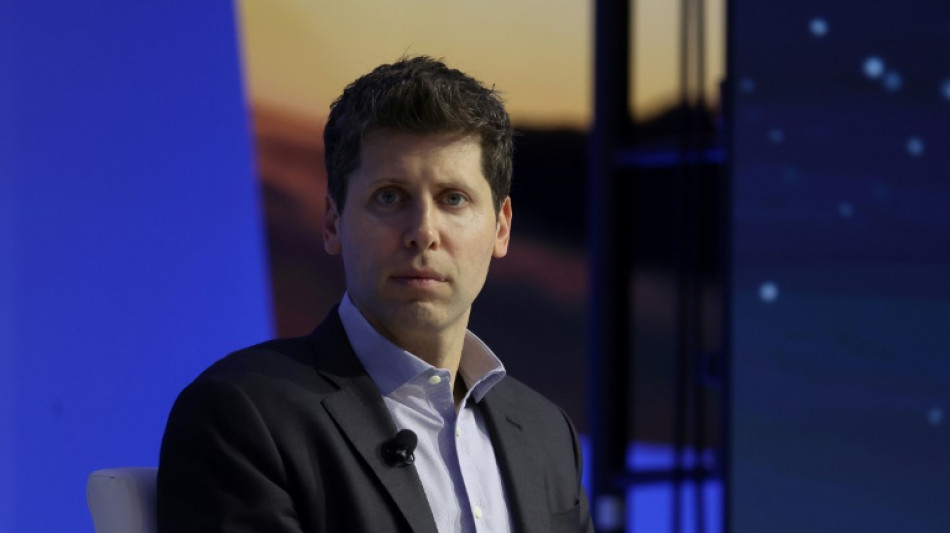
The twists and turns of an OpenAI meltdown / Photo: JUSTIN SULLIVAN - GETTY IMAGES NORTH AMERICA/AFP

 UEFA 'likely' to drop threat to boycott FIFA tournaments: source

 US disrupts platforms allegedly used by Chinese hackers
 The foreign tourists missing in Nepal's flash floods

 Hundreds missing after Nepal-Tibet flood kills 98
 CIA director was on 'semi-routine' mission in Moscow: Trump

 Aldeguer switches to Rossi's VR46 for next season
 Rent TRON Energy and Reduce USDT Fees : TronBid Expands Marketplace

 Pakistan captain Babar Azam returns against England '90 percent fit'
 Stocks mixed as oil drops, inflation stays high
 Improving standards transform pole vault as spectacle, says Duplantis
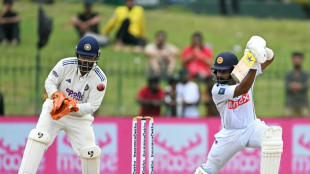 India close in on win despite Sri Lanka fightback in second Test

 MEXC TradFi Gala Concludes With Over 170,000 Registrations and $4.3 Billion in Daily Trading Volume

 Olympic skating champion Liu to skip new season
 Benfica sign midfielder Palhinha from Bayern
 Flick says Barca may go without striker as Atletico resist Alvarez sale
 Too hot to incubate: Nile crocodiles hatch on their own in French reserve
 Spurs closing in on Man City's Marmoush after signing Savio
 Celtic count the cost of Champions League flop
 Lebanon accuses Israel of burning forest, farmland in south
 Nepal floods at China border kill 8, cause 'major casualties' in Tibet
 France eases cow diets as cheesemakers sweat

 America unites in mourning for Dolly Parton
 Meta and US states discuss settlement in landmark social media trial: report
 Fire haze threatens health of millions in Indonesia, ministry warns
 Pakistan hospital fire kills 14 infants

Silicon Valley star Sam Altman was suddenly ousted from the top spot at OpenAI as it led the race to artificial intelligence, only for the ambitious tech guru to be scooped up by Microsoft.
Here's a look at the bizarre and dramatic sequence of events in the still-unfolding saga that has put the future of OpenAI in doubt, even as the technology it champions is poised to flourish.
What is Microsoft's interest?
Microsoft has been an OpenAI partner for seven years, pouring billions of dollars into the startup and weaving its innovations into Microsoft products.
Computing power hosted in the cloud at Microsoft data centers has been essential to training large-scale language models, making possible OpenAI's ChatGPT released a year ago for public use.
In exchange, Microsoft has infused ChatGPT technology into software like Word and Outlook sold to customers, and into its Bing search engine that has long struggled to compete with Google.
Microsoft's investments have bought it a stake in OpenAI, which remains controlled by the original nonprofit foundation.
Despite that, Microsoft was not informed about the OpenAI board's decision to fire Altman on Friday and oust co-founder Greg Brockman from the board.
The reason for the shocking move remained unclear on Tuesday, but some believe it involved a fear OpenAI was moving too quickly and straying from its mission of making sure artificial intelligence benefits humanity.
Is an Altman comeback possible?
Microsoft quickly moved to hire Altman, announcing a deal to have him join the Redmond, Washington-based computing colossus to lead a new artificial intelligence team.
The corporation put out word its doors are open to other OpenAI employees who want to join Altman, and many threatened in a letter to do just that if Altman didn't return.
When asked in a streamed interview about the possibility of Altman going back to OpenAI, Microsoft chief executive Satya Nadella said he would work with Altman where ever he ended up.
Reports have since surfaced that the OpenAI board is trying to win Altman back, and that he is open to discussing the possibility.
Nadella has been adamant that "governance changes" are needed at OpenAI to avoid such disruptive surprises.
OpenAI employees, meanwhile, have called for board members to resign.
Will OpenAI survive?
Nearly 700 of OpenAI's 770 employees have threatened to quit if Altman doesn't return. If that happens, it's hard to imagine the company surviving.
And while Nadella has stated Microsoft remains committed to its partnership with OpenAI, the relationship has been damaged -- along with the value of Microsoft's investment.
Even if Altman were to return, the company seen as leading the AI race has had its momentum stalled as competitors try to close the gap.
Several start-ups have been created by OpenAI founders or engineers, such as Anthropic, Elon Musk's xAI and InflectionAI.
Tech giants Google and Meta are investing heavily in their own AI models, Bard and Llama 2, which they integrate into their products.
And private tech firms face competition from the open source community, which essentially make models freely available for developers to adapt and improve.
Ferreira--PC