
-
 Lakers Defeat Bucks 123-112 Amid Injury Concerns for Dončić and Reaves
-
HoloCoder technology promises brighter smartphone images and 3D depth data

-
 Audi-SAIC CEO Fred Schulze Confirms AUDI Brand Will Launch Three New Models in China
-
TuckShop Announces Cast for 'Jack and the Beanstalk' Drag Panto

-
 EU proposes broad consumer safeguards for apps, subscriptions and ticketing
-
Nvidia faces scrutiny over alleged Chinese intelligence link to Jensen Huang

-
 Radical Numerics develops offline AI tool to detect engineered pathogens
-
Samsung One UI 9.5 Reportedly Adds Call Recording for WhatsApp and Telegram

-
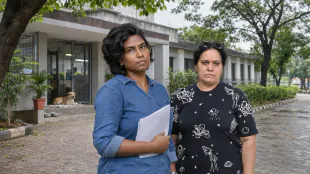 Chennai orders inquiry after dogs die at shelter; two veterinarians face action
-
Kiara Advani Reveals Sidharth Malhotra’s Reaction to Toxic Backlash

-
 Startup turns Chennai’s history and culture into an interactive world
-
Four firms compete to design Chennai’s model mobility corridors

-
 Chennai venue launches month-long festival devoted to full-length theatre
-
New Bay of Bengal low may form November 13 as Tamil Nadu outlook remains unclear

-
 एलेक्स बोडी और SCANDIC PAY: Mastercard और VISA कार्ड — भुगतान की नई पीढ़ी
-
ALEX BODI och SCANDIC PAY: Mastercard- och VISA-kort – en ny generation betalningar

-
 АЛЕКС БОДИ и SCANDIC PAY: карти Mastercard и VISA — ново поколение разплащания
-
알렉스 보디와 SCANDIC PAY: Mastercard·VISA 카드를 통한 차세대 결제

-
 أليكس بودي وSCANDIC PAY: بطاقات Mastercard وVISA — جيل جديد من المدفوعات
-
ALEX BODIとSCANDIC PAY:Mastercard・VISAカードによる新世代の決済

-
 ALEX BODI 與 SCANDIC PAY:Mastercard 與 VISA 卡——新一代支付方式
-
ALEX BODI a SCANDIC PAY: karty Mastercard a VISA – nová generace plateb

-
 ΑΛΕΞ ΜΠΟΝΤΙ και SCANDIC PAY: κάρτες Mastercard και VISA — μια νέα γενιά πληρωμών
-
ALEX BODI i SCANDIC PAY: karty Mastercard i VISA — nowa generacja płatności

-
 АЛЕКС БОДІ та SCANDIC PAY: картки Mastercard і VISA — нове покоління платежів
-
SonReal Releases 'Banger After Banger' Music Video Featuring Alan Ritchson

-
 АЛЕКС БОДИ и SCANDIC PAY: карты Mastercard и VISA — новое поколение платежей
-
ALEX BODI and SCANDIC PAY: Mastercard and VISA Cards – A New Generation of Payments

-
 ALEX BODI și SCANDIC PAY: Cardurile Mastercard și VISA – o nouă generație de plăți
-
Mercedes-Benz Power Converter Enables Individual Cell Control for Improved EV Efficiency

-
 John Park’s Agency Takes Legal Action Over Unauthorized 'McDonald’s Order Rap' Distribution
-
Search Underway for 'Dooars Rani' Tigress After Second Escape from Buxa Tiger Reserve

-
 Best Pet Advent Calendars for Christmas 2026: Dog Treats and Cat Toys
-
IIM Indore Announces IPMAT 2027 Exam Date for April 24

-
 Grattan Institute Releases Blueprint to Target Specialists Over Excessive Fees
-
The Dilemma of Recording Live Music: Preserving Memories vs. Being Present

OPEC+ slashes oil output further to boost flagging prices
Major oil-producing nations Saudi Arabia and Russia on Thursday announced they would further slash production in an effort to prop up volatile prices following an OPEC+ meeting.
The meeting also saw major producer Brazil declared as joining the grouping from next year, according to a statement by the Organization of the Petroleum Exporting Countries (OPEC).
Brazil's Energy Minister Alexandre Silveira, who attended the meeting, called it a "historic moment for Brazil", but added his ministry still needed to study "in detail" the invitation to join the group.
Following the virtual meeting of ministers from the 23-member OPEC+ alliance, Riyadh announced it would extend its voluntary oil production cut of one million barrels per day until March 2024.
Moscow said it would slash oil exports by 500,000 barrels a day -- up from 300,000 barrels a day so far -- until March, following tough, hours-long talks.
Other countries, such as the United Arab Emirates, Kuwait, Kazakhstan, Algeria and Oman, will also make smaller cuts, according to the Bloomberg news agency.
Amid stuttering global economic growth, analysts had largely expected OPEC+ producers to extend or deepen production cuts into next year to halt the recent slump in prices.
Around 1730 GMT, the price of Brent, the European benchmark for crude, fell by 0.31 percent to $82.84 per barrel, while that of WTI, its American equivalent, dropped by 2.47 percent to $75.94 despite the announcements.
- Intense negotiations -
Intense negotiations have continued in recent days as Saudi Arabia, which has borne the brunt of the supply cuts, sought to convince African countries to chip in by accepting lower production quotas.
But Angola and Nigeria were among those countries reluctant to sign up, seeking to step up production to secure vital foreign currency after they agreed in June to reduce their quotas.
At the June meeting, the United Arab Emirates received authorisation to increase production.
Since the end of 2022, the alliance has implemented supply cuts of about five million barrels per day (bpd).
In a boost to the grouping, OPEC said Brazil would join from next year. Brazil is among the world's top 10 producers and has been the largest oil producer in Latin America since 2016.
OPEC+ was born in late 2016 when Russia and nine others joined forces with the Saudi-led OPEC to prop up falling prices.
The cartel faced its biggest crisis in 2020 as countries locked down due to the Covid pandemic, sending oil demand plunging.
The group agreed in April 2020 to slash output by 9.7 million barrels per day in order to boost sagging prices.
It began to raise production again in 2021 as the market improved.
In the most recent meetings amid plunging prices, OPEC+ members have announced voluntary cuts to boost prices.
- Power balance shift -
But investors have warned that cutting production might not be enough to prevent prices from plummeting.
Oil prices are far from the near-$140 a barrel peak reached after the Russian invasion of Ukraine.
But they remain above the average of the last five years, currently hovering at around $80 per barrel after nearly striking $100 in September.
Concerns among producers persist about demand softening owing to slowing economies, particularly China's -- the world's biggest importer of crude -- amid mixed signals emerging from Europe and the United States.
On the supply side, crude production in the US and Brazil reached record levels, triggering what some analysts called a shift in the balance of power.
According to analyst Neil Wilson of Finalto, OPEC "doesn't have the iron grip on the market it once commanded".
S.Caetano--PC