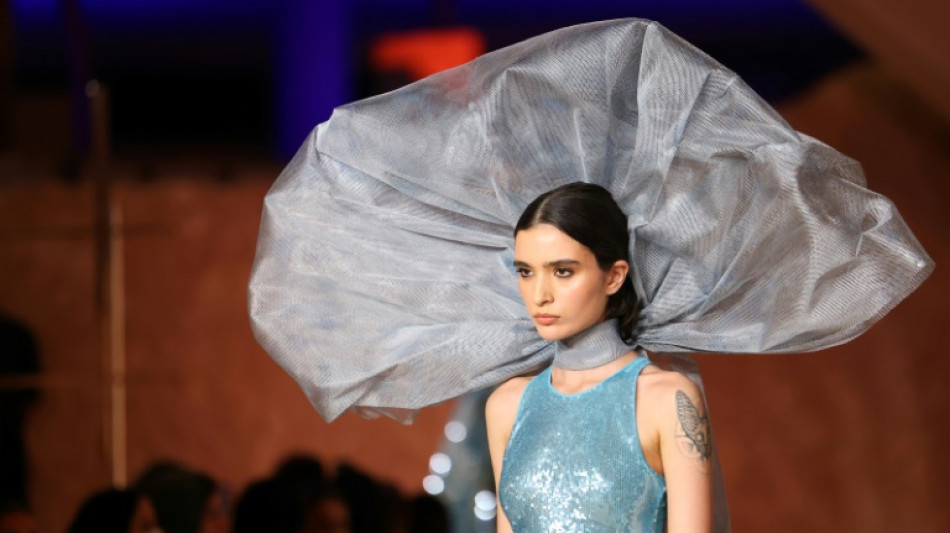
After success abroad, Saudi designers hit the runway at home / Photo: Fayez Nureldine - AFP

 MEXC TradFi Gala Concludes With Over 170,000 Registrations and $4.3 Billion in Daily Trading Volume

 Olympic skating champion Liu to skip new season
 Benfica sign midfielder Palhinha from Bayern
 Flick says Barca may go without striker as Atletico resist Alvarez sale

 Too hot to incubate: Nile crocodiles hatch on their own in French reserve
 Spurs closing in on Man City's Marmoush after signing Savio

 Celtic count the cost of Champions League flop

 Lebanon accuses Israel of burning forest, farmland in south

 Nepal floods at China border kill 8, cause 'major casualties' in Tibet
 France eases cow diets as cheesemakers sweat
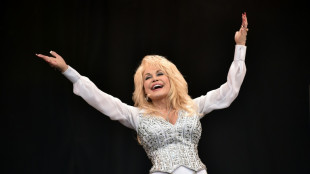
 America unites in mourning for Dolly Parton
 Meta and US states discuss settlement in landmark social media trial: report

 Fire haze threatens health of millions in Indonesia, ministry warns
 Senegal-made sickle cell treatment raises hopes, reduces costs
 Iran says Hormuz strait still closed despite transit corridor talks

 'Our patron saint': Tennesseans mourn local hero Dolly Parton
 Australian police hunt thieves in $250,000 oyster heist

 Coordinated attacks: Thailand's southern insurgency flares

 Asian Games chiefs hold talks as participant numbers balloon
 Too small for fries: drought shrinks Belgian potatoes
 Drought-hit Danube gives way to fossil hunt in Bulgaria

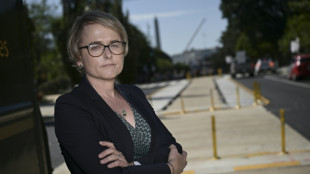 Julia Curlee, CIA officer fired by White House for being transgender

 Fave or flop? A guide to gauging video game success

 Williams-Alcaraz fall in US Open mixed quarter-finals

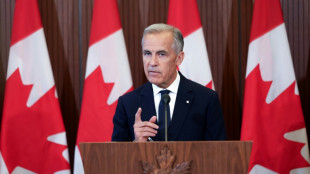 Mark Carney, the former central banker who said 'no' to Trump
Couturier Adnan Akbar's past clients included Princess Diana and two French first ladies, but until recently he had never staged a major fashion show in his native Saudi Arabia.
The 74-year-old, dubbed the "Saint Laurent of the Middle East", was among the most decorated designers at this year's inaugural Riyadh Fashion Week, a milestone in a country that used to require women to wear hijab headscarves and abaya robes in public.
On a runway set up in Riyadh's financial district, in front of a mixed-gender crowd of Instagram influencers and diplomats, models donned more than two dozen of Akbar's floor-length gowns, and one wedding dress sewn from French lace.
It was a world away from most prior fashion shows in the Gulf kingdom: small, women-only gatherings in private homes or, in one famous example, a public show that did away with models altogether, hanging dresses from flying drones.
"It's a huge change, what's happening now," said Abdullah Akbar, Adnan's son and managing director of the family brand.
"I think the world is seeing how creative we are, the strength of the designs that we have."
But as the Saudi government extends previously unheard-of support to veterans like Adnan Akbar along with up-and-comers bringing out their first collections, it remains to be seen whether authorities can develop the infrastructure needed to support them.
- 'Build local economy' -
The Saudi fashion industry last year accounted for $12.5 billion, or 1.4 percent of national GDP and employed 230,000 people, according to a report by the official Saudi Fashion Commission.
Under the right conditions, the report argues, the industry could become "a major driver" of de facto ruler Crown Prince Mohammed bin Salman's Vision 2030 reform agenda, which aims to transition the world's biggest crude oil exporter away from fossil fuels and transform it into a business, sports and tourism hub.
One challenge will be lowering the current dependence on imports. In 2021, the kingdom spent $7.3 billion on imported fashion goods, the fashion commission report said.
With that in mind, Riyadh Fashion Week was structured to showcase local talent rather than well-known international designers.
Beyond Adnan Akbar and Mohammed Ashi, who has dressed celebrities including Beyonce and Zendaya, the line-up was rounded out by Saudis with much less visibility overseas.
"We are basically creating curiosity around a group of designers that have never been explored and seen from outside," said fashion commission chief executive Burak Cakmak.
The fact that these designers already have "healthy businesses" at home points to the strength of the local market, Cakmak said.
Projects like a new manufacturing space, the commission's first, expected to open in Riyadh next year, will help keep more of these brands' value chains in the country, Cakmak said, potentially making fashion more of a force for the non-oil economic growth authorities want to see.
"Ultimately, our goal is to build the local economy," he said.
- 'Gap in the market' -
Broader societal changes introduced under Prince Mohammed have also created new opportunities for Saudi designers.
The lifting of abaya and hijab requirements combined with a push to get more Saudi women working exposed "a gap in the market", said Mona Alshebil, who contributed a ready-to-wear collection to Riyadh Fashion Week.
"There are a lot of women in very high professions... who want to look professional, and they want to look respected, so I started designing suits and long blazers," she said.
In recent years, the sidelining of the feared religious police and the introduction of previously forbidden attractions like cinemas and music festivals have created new wardrobe needs.
"Especially in a city like Riyadh, you can expect that everybody after work is spending time with friends and family outside until late hours in public spaces, which means that people are dressing differently than they would for an occasion at home," Cakmak said.
Demand for street-wear has skyrocketed among new brands, yielding sweatshirts and jackets that can be remarkably unisex for a country long known for rigid gender norms.
"And they all have a local twist," Cakmak said, citing hoodies inspired by traditional Saudi thobes, the traditional white robes worn by men, and garments incorporating Arabic calligraphy.
During a meet-up with investors in New York in October, one such street-wear brand -- 1886 -- sealed an investment deal with Turmeric Capital, whose chairman Ravi Thakran compared what's happening in Saudi Arabia's fashion industry to what he witnessed in China two decades ago.
"A decade from now," Thakran said, "I believe books will be written about the colossal changes as Saudi increases its economic presence across Asia."
E.Paulino--PC