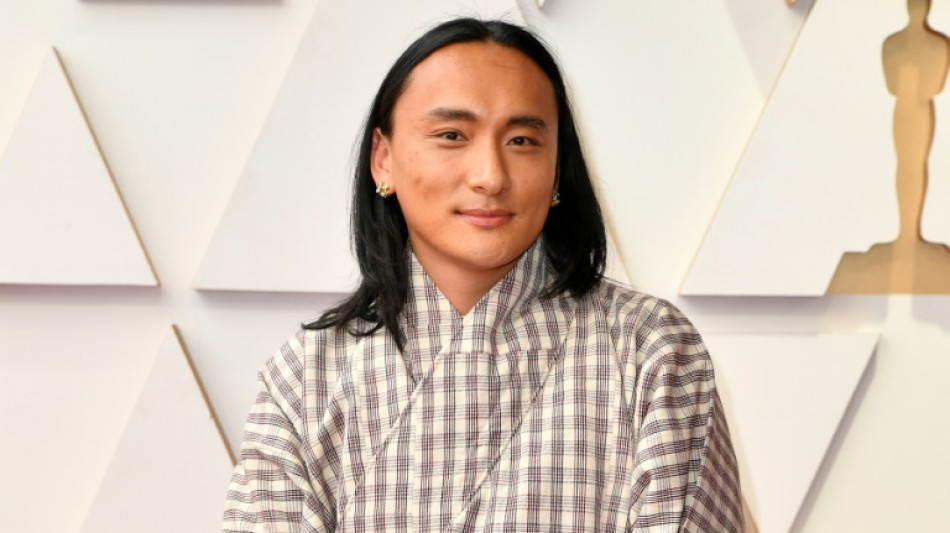
Oscar-nominated Bhutan director turns lens on democracy ahead of vote / Photo: ANGELA WEISS - AFP

 MEXC TradFi Gala Concludes With Over 170,000 Registrations and $4.3 Billion in Daily Trading Volume

 Olympic skating champion Liu to skip new season

 Benfica sign midfielder Palhinha from Bayern

 Flick says Barca may go without striker as Atletico resist Alvarez sale

 Too hot to incubate: Nile crocodiles hatch on their own in French reserve
 Spurs closing in on Man City's Marmoush after signing Savio

 Celtic count the cost of Champions League flop

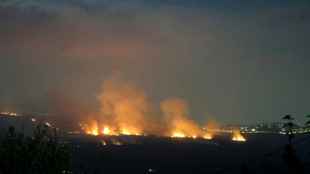 Lebanon accuses Israel of burning forest, farmland in south
 Nepal floods at China border kill 8, cause 'major casualties' in Tibet

 France eases cow diets as cheesemakers sweat
 America unites in mourning for Dolly Parton

 Meta and US states discuss settlement in landmark social media trial: report

 Fire haze threatens health of millions in Indonesia, ministry warns
 Senegal-made sickle cell treatment raises hopes, reduces costs
 Iran says Hormuz strait still closed despite transit corridor talks
 'Our patron saint': Tennesseans mourn local hero Dolly Parton
 Australian police hunt thieves in $250,000 oyster heist

 Coordinated attacks: Thailand's southern insurgency flares

 Asian Games chiefs hold talks as participant numbers balloon

 Too small for fries: drought shrinks Belgian potatoes

 Drought-hit Danube gives way to fossil hunt in Bulgaria

 Julia Curlee, CIA officer fired by White House for being transgender

 Fave or flop? A guide to gauging video game success
 Williams-Alcaraz fall in US Open mixed quarter-finals

 Mark Carney, the former central banker who said 'no' to Trump
The Himalayan kingdom of Bhutan, the last country to introduce television, made waves last year with a film director who walked the red carpet of the Oscars.
Now, as his nation prepares for a general election next month -- only the fourth ever in its history -- director Pawo Choyning Dorji has turned his lens on democracy.
"The film delves into the advent of democracy in Bhutan, coinciding with the onset of modernisation and the influence of television," Dorji said of his movie "The Monk and the Gun".
"It explores the tension between maintaining cultural innocence and adapting to modern expectations," the 40-year-old told AFP.
Bhutanese people voted for the first time in 2008 after political reforms were instituted soon after the start of the reign of the present king.
He remains widely popular among the majority Buddhist nation's nearly 800,000 people.
Dorji's film, set during Bhutan's historic transition from an absolute monarchy 15 years ago, discusses the complexities of embracing change while grappling with fears of losing cultural identity.
It examines the "clash between Western influences and Bhutanese traditions", the director said.
- 'Clash' -
The film tells the story of a Buddhist monk who, worried as the nation's first elections approach, sets off to find a rifle.
Not all Bhutanese welcomed the end of the absolute monarchy, Dorji said, explaining the political change had not been a "choice made willingly" by all.
Today, Bhutan has nearly 500,000 registered voters -- and many say it is their civic duty to take part in the polls.
Elections, which have always been peaceful and orderly, are slated for January 9.
"The film is not a pro-democracy stance but a narrative exploration of the events that transpired," said the self-taught filmmaker, who was born to a diplomat and went on to study political science in the United States.
"It acknowledges that the success of democracy depends on one's cultural context, and that it is too early to pass judgement on its effectiveness."
Landlocked Bhutan, similar in size to Switzerland, lies squeezed between regional giants India and China.
The mountainous country is famed for its philosophy of "Gross National Happiness", which sees the country benchmark itself on citizen well-being instead of economic growth.
Despite its focus on happiness, Bhutan also has its share of problems, including corruption and rural poverty.
The youth unemployment rate stands at 29 percent, according to 2022 World Bank figures.
- 'Scribe of our traditions' -
Dorji's drama, "Lunana: A Yak in the Classroom", was the first Bhutanese film ever nominated for an Academy Award, one of five movies named in the 2022 Oscars Best International Feature Film category.
"The Monk and the Gun", which premiered in September and has been submitted by Bhutan to the 96th Academy Awards, has already picked up festival prizes in Vancouver and Rome.
Dorji said that making a film in Bhutan, where there is no formal film industry and the few cinemas are basic theatre halls, was just as hard the second time.
On one hand, the country's actors provided "raw and authentic performances", he said. On the other, there were logistical headaches and other challenges.
"Creating a film in Bhutan meant overcoming not only the lack of infrastructure and professional equipment, but also the scepticism of those who failed to see the purpose of making films," Dorji said.
The director believes his storytelling has value beyond entertainment alone, by helping remind people of "their roots" and the country's history.
"As a filmmaker, I believe in two crucial responsibilities," he added.
"Sharing culture, tradition and spirituality, and serving as the scribe of our traditions to preserve our culture for future generations."
L.Mesquita--PC