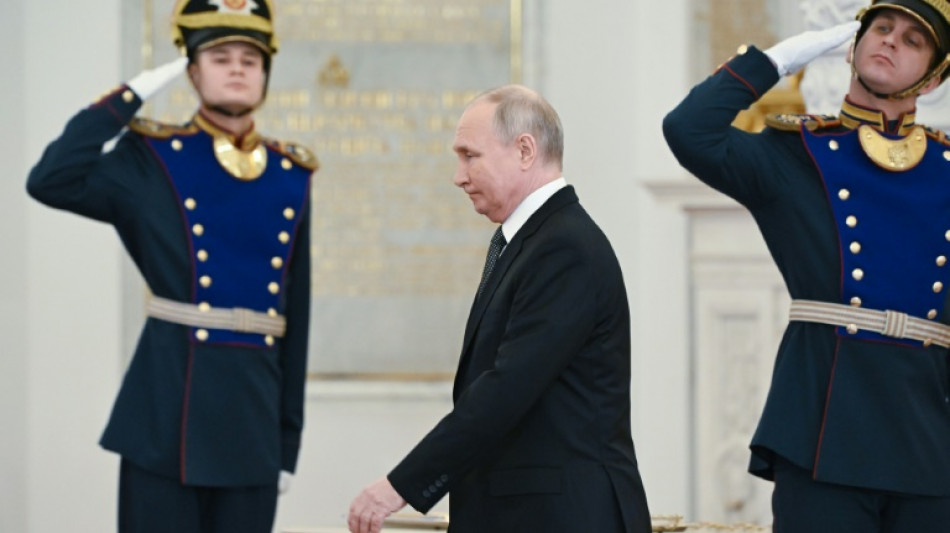
Nearly two years into war, is Russia's economy out of the woods? / Photo: Sergey GUNEYEV - POOL/AFP

 Sooriyabandara, Mendis lead Sri Lanka fightback after follow-on
 With ropes and chants, thousands move Japanese castle
 Zurich Diamond League: five events to watch
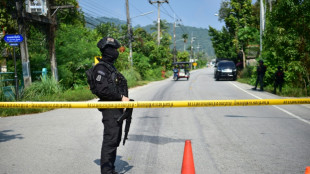
 'Black smoke' chokes Pakistan maternity ward as hospital fire kills 14 infants
 French flight attendant wins landmark breast cancer ruling
 Sri Lanka 83-2 after India enforce follow-on in second Test
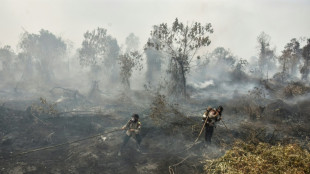
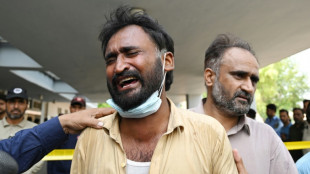 Pakistan hospital fire kills 14 infants

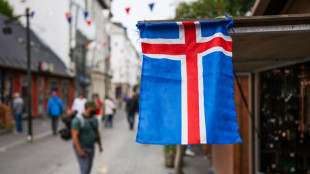 Iceland to vote on resuming EU talks in close referendum
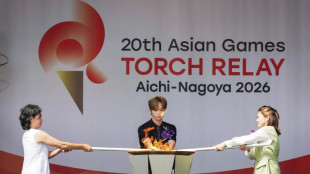
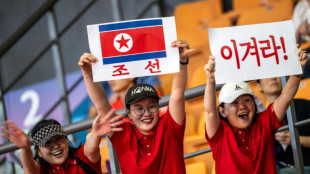 North Korea to 'bring joy' to Kim with 100 athletes at Asian Games
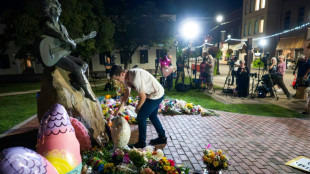
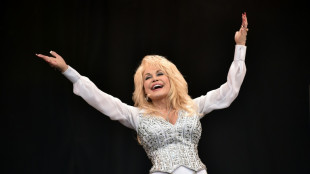 US LGBTQ community mourns 'diva' Dolly Parton
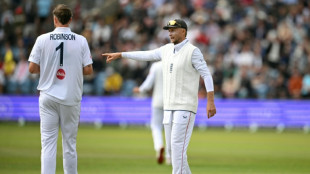 England bid to banish booze woes as Pakistan seek self-respect
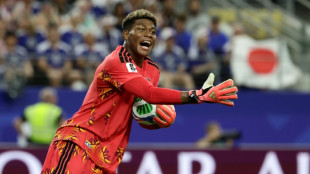 High quality, low risk: record number of Japanese in Premier League
 Stocks edge higher as oil drops on fresh Mideast hopes
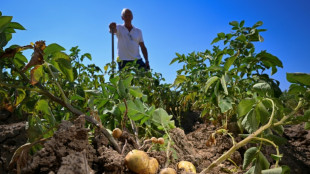
 Pakistan's girls fight for their place in the boxing ring
 Five things to know about Anthropic ahead of Wall Street debut
 Social media use on the rise among Australian under-16s after ban: data
 Instagram chief admits touting teen safety tool while omitting it was barely used
 'Final Fantasy', 'The Witcher' in spotlight at Europe gaming bash
 Syrian Kurdish leader dissolves force that spearheaded jihadist fight
 Trump raises prospect of demolishing iconic Kennedy Center
 PGA Tour to end in two-week matchplay showdown from 2028: CEO
 United States of Dolly: how a country queen bridged America's divide

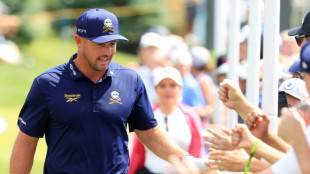 PGA chief says 'no current plans' for LIV stars to return

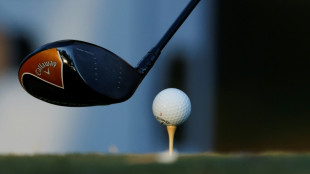 Golf giant Callaway apologizes after ad sparks outcry

 Ioane stars as New Zealand recover to beat Johannesburg Lions
As he prepares to run for re-election in 2024, is President Vladimir Putin right to claim the worst is over for the Russian economy?
Nearly two years after Moscow's invasion of Ukraine, the Russian economy has demonstrated surprising resilience in the face of an unprecedented avalanche of Western sanctions.
But economists say Russia's wartime economy may be showing signs of overheating, while Western leaders are hoping the sanctions will finally bite.
A French diplomatic source expressed hope that the economic penalties would start to be felt in late 2024 or early 2025.
Sanctions "are like a small puncture in a tire. It's not immediate, but it works," another European diplomatic source told AFP.
"It's a marathon, not a sprint," said Agathe Demarais, an analyst at the European Council on Foreign Relations.
She said the goal of the penalties was not to trigger the collapse of the world's ninth-largest economy, which could have provoked a global crisis, nor to bring about regime change.
"Their aim is to limit the capabilities of the Russian war machine," said Demarais.
The EU has imposed 11 rounds of sanctions on Russia since its all-out invasion of Ukraine in February 2022, including hitting its key oil and gas exports. The 12th package of measures, including a ban on the import of Russian diamonds, is currently in the works.
According to official figures, 49 percent of European exports to Russia and 58 percent of Russian imports are under sanctions.
Even if Russia has become the most sanctioned country in the world, its economy has been dented but not devastated.
Observers say past economic crises and the first set of Western sanctions over the annexation of Crimea in 2014 have taught Putin's economic team how to better manage risks.
- 'Symptoms of overheating' -
The Kremlin now plans to increase spending on defence by nearly 70 percent in 2024, a sign Moscow might be hunkering down for a long war in Ukraine.
"We have overcome all problems that arose after the sanctions were imposed on us and we have started the next stage of development," Putin announced in October.
According to official Russian statistics, the country's gross domestic product grew 5.5 percent in the third quarter of this year, and economic growth is seen at 2 percent next year.
Alexandra Prokopenko, a nonresident scholar at the Carnegie Russia Eurasia Center, said the Russian economy performed well but its performance indicators are misleading.
"They are all symptoms of overheating. One-third of growth is driven by military spending so the economy got addicted to the military needle," said Prokopenko, who worked at the Russian central bank between 2019 and early 2022.
"Dependence on oil has also increased, and it is stronger now than it was before the war," she told AFP.
To help bypass sanctions on oil sales, Russia has created a vast shadow fleet and parallel financial infrastructure.
"Russia's main export income still comes from the sale of hydrocarbons," said Prokopenko, pointing to major buyers like China and India.
According to Global Witness, an environmental watchdog, EU imports of Russian liquefied natural gas (LNG) went up by 40 percent in the first seven months of the year, amounting to nearly 5.3 billion euros ($5.7 billion).
Companies in countries including Turkey, the UAE, China and post-Soviet countries like Kazakhstan are involved in schemes to help Moscow circumvent sanctions. Research shows that Russia has had access to Western weapons technology via third countries such as China.
Prokopenko said that even European companies are ready to continue trading with Russia, including in dual-use goods, if these deals can be routed through third countries.
- 'Bursting with money' -
Demarais acknowledged that there are "inconsistencies" in European policymaking over Russia but added it was difficult to estimate Moscow's long-term resilience.
"At the moment they are on a war footing, but how long can that last? It's hard to say," she said.
"Social peace is costly, too."
While sanctions have complicated the lives of ordinary Russians, some moneyed Muscovites are living their best life, directly benefitting from the war, observers say.
"Moscow is bursting with money," long-time political observer Sergei Medvedev wrote on Facebook, pointing to defence deals and surging oil sales.
Witnesses say more high-end cars are seen on the streets of Moscow, while luxury shopping and dining show no sign of abating.
Writing for the Carnegie Endowment for International Peace, Denis Volkov and Andrei Kolesnikov said last month that Russians adapted to the new economic conditions "in the space of just one year".
"Most Russians understand that the war in Ukraine will not end anytime soon, and they try not to focus too much on military topics or developments at the front," they wrote.
Russian society, they said, has "learned to stop worrying about the war".
cf-ob-burs-as/jh/gv/leg
V.Dantas--PC