'This is Guyana': Essequibo residents anxious over Venezuela claim / Photo: Roberto CISNEROS - AFP

 Sooriyabandara, Mendis lead Sri Lanka fightback after follow-on
 With ropes and chants, thousands move Japanese castle
 Zurich Diamond League: five events to watch
 'Black smoke' chokes Pakistan maternity ward as hospital fire kills 14 infants
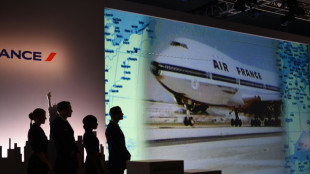 French flight attendant wins landmark breast cancer ruling
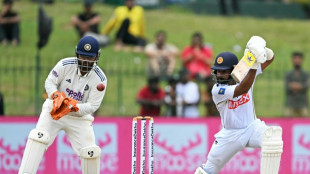 Sri Lanka 83-2 after India enforce follow-on in second Test
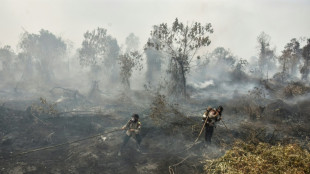
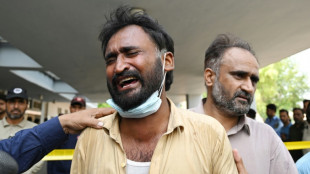 Pakistan hospital fire kills 14 infants

 Iceland to vote on resuming EU talks in close referendum
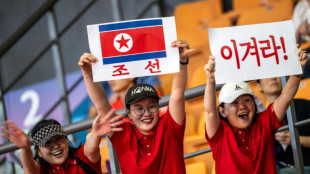 North Korea to 'bring joy' to Kim with 100 athletes at Asian Games
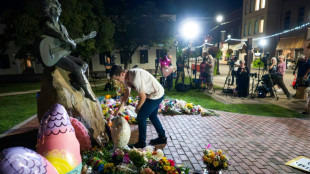
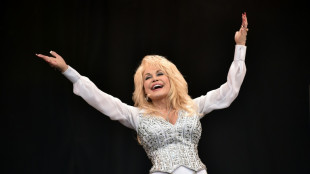 US LGBTQ community mourns 'diva' Dolly Parton
 England bid to banish booze woes as Pakistan seek self-respect
 High quality, low risk: record number of Japanese in Premier League
 Stocks edge higher as oil drops on fresh Mideast hopes
 Pakistan's girls fight for their place in the boxing ring
 Five things to know about Anthropic ahead of Wall Street debut
 Social media use on the rise among Australian under-16s after ban: data

 Instagram chief admits touting teen safety tool while omitting it was barely used

 'Final Fantasy', 'The Witcher' in spotlight at Europe gaming bash
 Syrian Kurdish leader dissolves force that spearheaded jihadist fight
 Trump raises prospect of demolishing iconic Kennedy Center

 PGA Tour to end in two-week matchplay showdown from 2028: CEO

 United States of Dolly: how a country queen bridged America's divide

 PGA chief says 'no current plans' for LIV stars to return

 Golf giant Callaway apologizes after ad sparks outcry

 Ioane stars as New Zealand recover to beat Johannesburg Lions
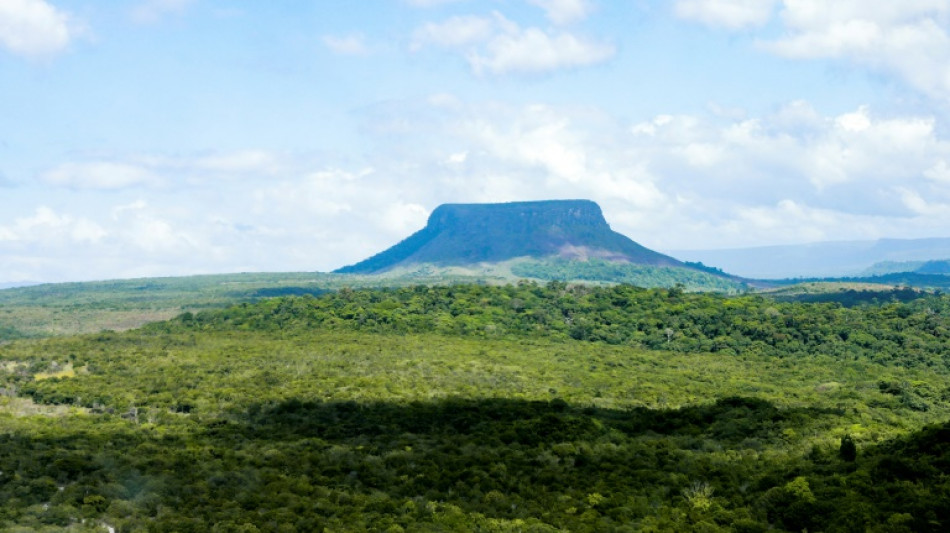
A freshly planted Guyanese flag flaps on the summit of a table-top mountain rising from thick forests in a remote region near the Venezuelan border.
The 2,300-metre (7,550-foot) mountain -- known as a tepui -- looms over the tiny village of Arau, whose residents reject a claim from Caracas that their land belongs to Venezuela, which has sparked fears of a potential conflict.
"On that mountain, there is our flag. Every morning we look at it and we feel happy and proud," said Jacklyn Peters, a 39-year-old health worker and one of the 280 residents of the village.
With tensions rising over the disputed territory of Essequibo -- which makes up more than two-thirds of Guyana -- President Irfaan Ali in November took a helicopter to the top of the tepui where he raised Guyana's red, gold, and green flag known as the Golden Arrowhead.
With his hand on his chest, Ali recited the national pledge of allegiance.
"Our president himself put it there to show we all belong to Guyana. This is Guyana," insisted Peters.
- 'Scared, terrified' -
The village lies less than 10 kilometers (six miles) from the Venezuelan border.
It boasts an austere white Adventist church, with no sculptures or paintings, and a school where a flag flies at half-mast in honor of the five soldiers killed nearby in a military helicopter crash last week.
Wooden houses stand on stilts among cashew trees, with hammocks strung up all over: in one a father naps with his daughter, in another four children play on cellphones.
The growing tensions with Venezuela have seeped into this peaceful community.
"We are scared, terrified," said Peters, who has six children.
She accuses Venezuelan soldiers of "mistreating" locals when they try and use the Cayuni river bordering the country, saying they were patrolling the region "by boat and helicopter."
"We don't want war. There are children, pregnant women, where would we take them?" she added. "We want peace."
Thomas Devroy, 59, a former village chief, said Essequibo was "the land of the Akawaio" Indigenous people who live across Guyana, Venezuela, and Brazil.
"This is our land. Before the Spaniards were here, since time immemorial. For us there are no borders but with the politics now there is one. And Essequibo belongs to Guyana," he told AFP.
"We don't want no war."
- 'We don't want Maduro' -
Venezuela's Nicholas Maduro has revived a long-dormant decades-old dispute over Essequibo since the discovery of vast oil deposits in its waters.
The land dispute is before the International Court of Justice (ICJ) in The Hague.
However, Maduro's government held a controversial referendum early this month in which 95 percent of voters supported declaring Venezuela the region's rightful owner, according to official results.
He has since started legal maneuvers to create a Venezuelan province in Essequibo and ordered the state oil company to issue licenses for extracting crude in the region.
Essequibo is home to 125,000 people.
Devroy said the area had welcomed Venezuelans fleeing poverty in their crisis-stricken nation.
"We don't want Maduro here. We don't want no corruption, no poverty."
- 'Struggling to live' -
However, life in Arau is not easy and residents are still waiting to see the oil riches roll in.
"We are struggling to live," said Lindon Cheong, 53, a descendent of Chinese immigrants, bemoaning the lack of roads and plain rice served to schoolchildren.
"Where is the money?"
Like many, he mines for gold in the region, a resource he says is "getting scarce."
Since September, the Venezuelan military has taxed boats traveling down the Cayuni to supply the village, leading to an explosion in prices.
A small plane brings in goods a few times a week, but a bottle of Coca-Cola now costs $10.
High fuel prices mean less electricity from generators.
Despite the tough times, Cheong vows: "The Venezuelan flag will never fly here in Arau."
A.Seabra--PC