
West Bank economy in tatters as Gaza war rages / Photo: Jaafar ASHTIYEH - AFP

 'Final Fantasy', 'The Witcher' in spotlight at Europe gaming bash
 Syrian Kurdish leader dissolves force that spearheaded jihadist fight

 Trump raises prospect of demolishing iconic Kennedy Center

 PGA Tour to end in two-week matchplay showdown from 2028: CEO

 United States of Dolly: how a country queen bridged America's divide

 PGA chief says 'no current plans' for LIV stars to return

 Golf giant Callaway apologizes after ad sparks outcry

 Ioane stars as New Zealand recover to beat Johannesburg Lions

 Ukrainians seeking beauty in a bomb-scarred city

 Dolly Parton: Country music's dolled up but deserving queen

 US robotaxi firm Waymo plans to launch in Germany

 'Here to win': Xavi vows to restore pride in Dutch football

 Cameroon's Baleba joins as Man United boost midfield options

 'Shocking' book about Putin's private life wins French literary prize

 Pogacar storms to Vuelta a Espana stage four solo triumph

 Canada unveils counter-tariffs of 15-50% on US goods

 Volkswagen boss braces German workers for more job cuts
 Olympic champion Brignone to undergo new knee operation

 The summer climate change became scorching reality for Europe

 Root angered by England's off-field 'stupid mistakes'

 Welsh rugby league 'giant' Boston dies, aged 92

 Root annoyed by England's off-field 'stupid mistakes'

 One million Afghan children suffer 'life-threatening' malnutrition: UN

 Sri Lanka trail India by 238 runs in second Test

 West Bank settlers attack AFP journalists
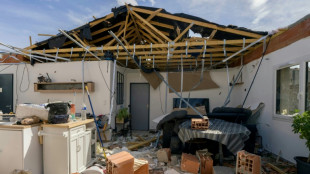
In the occupied West Bank, Hafeth Ghazawneh waits in quiet frustration for customers to visit his falafel stall, which has been deserted since the October 7 Hamas attacks in Israel.
His breakfast and lunch offerings were popular with craftsmen from workshops near Al-Bireh, the twin city of Ramallah, before the Israel-Hamas war broke out.
"Now they're bringing their meals from home because the situation is so difficult," Ghazawneh tells AFP, fearing he will have to shut up shop if the war in the Gaza Strip continues.
Ghazawneh says his income has plummeted from around 7,000 shekels ($1,850) per month to just 2,000 ($530).
His worsening situation reflects the current status of the West Bank economy, which is in tatters as the war in Gaza rages.
The conflict erupted after Hamas militants attacked southern Israel on October 7, resulting in the deaths of around 1,140 people in Israel, mostly civilians, according to an AFP tally based on the latest Israeli figures.
Israel's blistering retaliation has killed at least 24,448 people, around 70 percent of them women, children and adolescents, according to the Hamas government's health ministry in Gaza.
The World Bank has estimated the West Bank's GDP could fall by six percent this year, while the International Labour Organization said 32 percent of jobs have already been lost.
The unemployment rate has skyrocketed to 30 percent, up from 14 percent before the war, according to Taher al-Labadi, a researcher at the French Institute for the Near East (Ifpo).
- Ballooning losses -
Israel has also withdrawn 130,000 work permits from Palestinians in the West Bank, leaving many with no source of income.
The three million Palestinians living in the West Bank, which Israel has occupied since 1967, cannot travel to Israel without a permit.
Bishara Jubran, manager of a household products and cosmetics factory in Ramallah, considers himself lucky because he has been able to keep all 70 of his employees on the books.
But his business has stopped producing soaps made from Dead Sea ingredients which he used to sell to hotels.
As the war rages and visitors stay away, he estimates his losses at $200,000 last year.
He keeps his factory afloat by selling washing powder and other household products on the Palestinian market.
But none of his goods are allowed into Gaza, a key market that used to make up 20 percent of his sales.
In the West Bank, transport costs have increased because of a growing number of checkpoints and the sealing off of certain towns by the Israeli army, Bishara says.
"Many times the truck leaves and it takes them like four or five hours to reach... the north in Nablus to find out that he cannot enter the city. So he just comes back," he says.
Now he makes a delivery every two or three days, down from two a day before the war.
Such factors have led to a contraction of the economy, which is now operating at 50 percent of its capacity, according to Abdo Idris, president of the Palestinian Chamber of Commerce.
- Economy 'asphyxiated' -
The Palestinian economy was already "asphyxiated" and highly dependent on Israel before the war, researcher Labadi says.
Under the Oslo Accords of the 1990s, it was agreed that a political status quo would be maintained and Palestinians were promised economic development.
But this status quo was undermined by Israel's "colonisation of the West Bank", Labadi says, lamenting that Palestinian economic development "did not take place".
As a result, in times of crisis, the increasingly fragile Palestinian economy finds itself "deprived of all its resources and with a very limited capacity for resilience", he says.
Israel controls the borders of the West Bank and collects taxes on Palestinian products, which it must then pass on to the Palestinian Authority.
But since October 7, those taxes have not been paid.
As of December, Israel had not paid two billion shekels in taxes imposed on Palestinian products, according to the Palestinian finance ministry.
The Palestinian Authority has struggled to pay public servants since the taxes were withheld.
Civil servants told AFP their salaries for December have still not been paid.
In October, they received 50 percent of their wages, and 65 percent in November.
"The fear of the unknown is killing us," Jubran says. "We don't know if we'll be able to go to work tomorrow."
G.Machado--PC