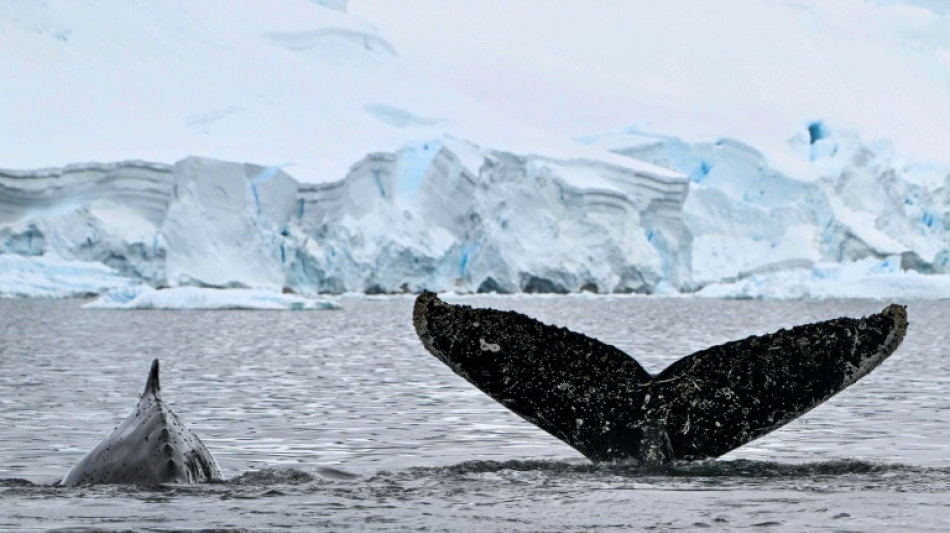
In Antarctica, scientists study extent of microplastics / Photo: JUAN BARRETO - AFP

 'Here to win': Xavi vows to restore pride in Dutch football

 Cameroon's Baleba joins as Man United boost midfield options

 'Shocking' book about Putin's private life wins French literary prize

 Pogacar storms to Vuelta a Espana stage four solo triumph

 Canada unveils counter-tariffs of 15-50% on US goods

 Volkswagen boss braces German workers for more job cuts
 Olympic champion Brignone to undergo new knee operation

 The summer climate change became scorching reality for Europe

 Root angered by England's off-field 'stupid mistakes'

 Welsh rugby league 'giant' Boston dies, aged 92
 Root annoyed by England's off-field 'stupid mistakes'

 One million Afghan children suffer 'life-threatening' malnutrition: UN

 Sri Lanka trail India by 238 runs in second Test

 West Bank settlers attack AFP journalists
 MEXC Kicks Off MOVE Carnival With 0-Fee Trading and 1M USDT in Rewards

 Human rights in Myanmar hitting a 'new low': UN

 Son of Luxottica founder quits after succession row

 One million Afghan children suffering 'life-threatening' malnutrition: UN

 Real Madrid's Mourinho happy with squad despite losing out on Rodri

 Sri Lanka slump to 216-7 at tea in second India Test

 US delays Lockerbie bombing trial over new evidence

 Rohingya refugees protest dire conditions in Bangladesh camps

 Lego net profit up 32% in first half, 'stronger than expected': CEO to AFP

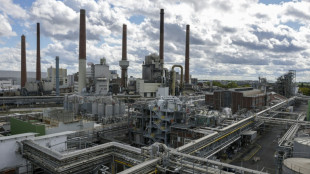 German GDP growth revised upwards, defying Iran war turmoil

 STARTRADER Adds 30 U.S. Stock and ETF CFDs as 2026 Product Expansion Accelerates

In remote Antarctica, Colombian marine biologist Paulo Tigreros dips a net into the icy waters in his hunt for microplastics in what should be one of the best-preserved ecosystems in the world.
Like a sieve, the net lets water pass through as it retains the small solid particles that float in the Gerlache Strait, a natural corridor approximately 160 kilometers (99 mile) long separating the Palmer Archipelago and the end of the Antarctic Peninsula.
Microscopic studies and other tests on the samples will allow the team of scientists to determine the level of microplastics they contain.
Microplastics are particles made of polymers and other toxic compounds that are smaller than five millimeters, and have come under increasing global attention as they have been found in oceans, clouds, food and throughout the bodies of animals and humans.
Tigreros, 51, and his colleagues are aboard the ARC Simon Bolivar, a Colombian navy vessel carrying out a scientific expedition in the Antarctic and have no doubt that they will detect microplastics on their mission.
Research carried out in 2019 by New Zealand's University of Canterbury revealed the existence of microplastics in Antarctic snow.
More than 430 million tonnes of plastic are produced each year worldwide, according to the UN.
Microplastics come from the breakdown of products such as synthetic car tires, textiles, and ordinary consumer products.
Little is yet known about their impact on human health and the environment.
Tigreros said microplastics are already "omnipresent" in the oceans and their effects can be fatal for animals and ecosystems.
"We consider Antarctica as a continent totally isolated" from human activity, but "it reflects the environmental problems" of the planet, said Jorge Tadeo Lozano, a researcher at the University of Bogota, who is taking part in the expedition.
He said microplastics may have arrived in the region via ocean currents. They can also be transported in the atmosphere and through the excrement of marine animals and fish.
With tweezers, Tigreros picks up a krill and some algae from his sample.
The tiny marine crustacean feeds on the microscopic algae known as phytoplankton, but often mistakes tiny microplastic particles for its food.
Krill in turn is a food source for many larger animals, thus contaminating the rest of the food chain.
"When a whale feeds on this krill, the microplastic most likely enters its intestines," affecting its lung system, reproductive system and even its ability to swim, said Tigreros.
The Antarctic ice sheet, home to penguins and seals, has been suffering for years from rising global temperatures.
The International Atomic Energy Agency (IAEA), in cooperation with Argentina, this month launched its first scientific research expedition to investigate the extent of microplastics in Antarctica.
According to the IAEA, microplastics could further damage the great white continent "by reducing ice reflectivity, altering surface roughness, promoting microbial activity, acting as thermal insulators, and contributing to mechanical weakening of the ice structure."
According to the World Meteorological Organization, the melting of glaciers, which contain 90 percent of the planet's freshwater, could cause sea levels to rise by up to 60 meters.
P.Cavaco--PC