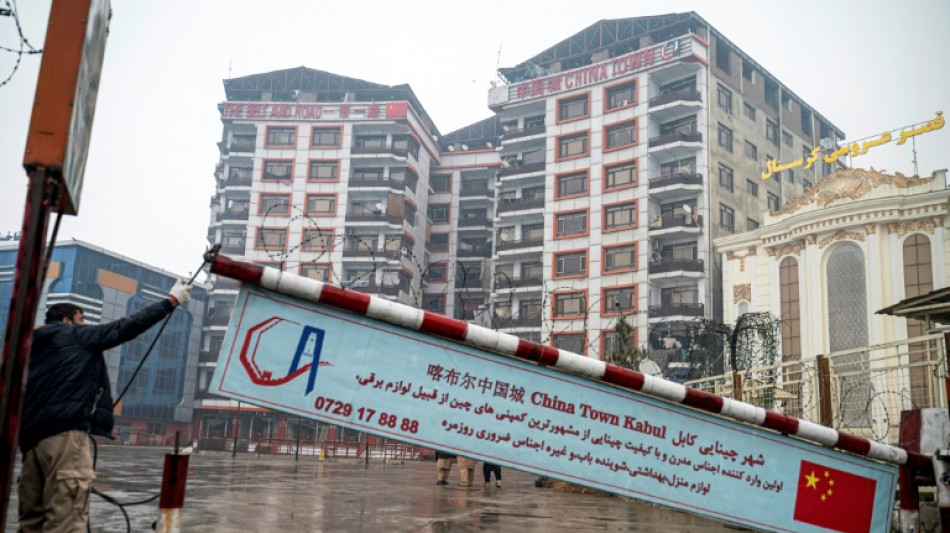
China quietly expanding influence in Taliban-ruled Afghanistan / Photo: Wakil KOHSAR - AFP/File

 Olympic champion Brignone to undergo new knee operation

 The summer climate change became scorching reality for Europe
 Root angered by England's off-field 'stupid mistakes'

 Welsh rugby league 'giant' Boston dies, aged 92

 Root annoyed by England's off-field 'stupid mistakes'
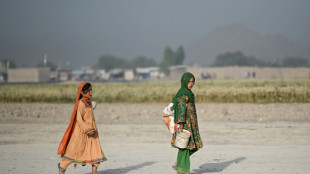 One million Afghan children suffer 'life-threatening' malnutrition: UN

 Sri Lanka trail India by 238 runs in second Test
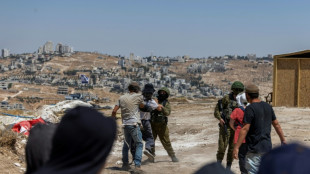 West Bank settlers attack AFP journalists
 MEXC Kicks Off MOVE Carnival With 0-Fee Trading and 1M USDT in Rewards

 Human rights in Myanmar hitting a 'new low': UN

 Son of Luxottica founder quits after succession row

 One million Afghan children suffering 'life-threatening' malnutrition: UN

 Real Madrid's Mourinho happy with squad despite losing out on Rodri

 Sri Lanka slump to 216-7 at tea in second India Test

 US delays Lockerbie bombing trial over new evidence

 Rohingya refugees protest dire conditions in Bangladesh camps

 Lego net profit up 32% in first half, 'stronger than expected': CEO to AFP

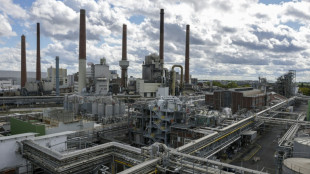 German GDP growth revised upwards, defying Iran war turmoil
 STARTRADER Adds 30 U.S. Stock and ETF CFDs as 2026 Product Expansion Accelerates

 Trees 'giving up': climnate change hammers historic English gardens
 Namibia paves way for phosphate mining in the Atlantic Ocean
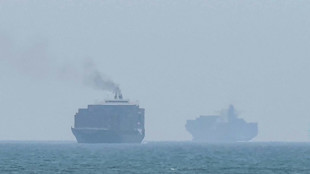 Six months into Iran war, Hormuz traffic way down, sailors stranded

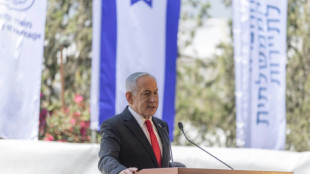 Netanyahu got his Iran war, but maybe not his desired result
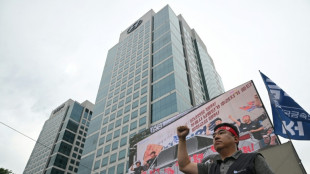 Hyundai reaches tentative deal with workers after strikes
 Once its saviour, US puts Kuwait in Iran's crosshairs
While most of the world treats Afghanistan's Taliban government as a pariah, China is growing diplomatic and economic links -- and Kabul is happy for the attention.
Top-level meetings between officials, new mineral deals, and the upgrading of transport routes between the two countries are regularly championed by Taliban government officials.
While Beijing has played down the formality of these growing links, it is steadily increasing investment and exposure -- a relationship that could benefit both parties, analysts and diplomats say.
"The Islamic Emirate of Afghanistan is a challenging terrain, but the characteristic of the Chinese is to go where no one else goes, trying to gain advantages," said Valerie Niquet, an analyst with the Foundation for Strategic Research in Paris.
"The Chinese are extending a hand to the Afghans, who need all possible assistance."
In September China became the first country to appoint a new ambassador to Kabul, and on Tuesday the Taliban government's envoy to Beijing -- along with dozens of other diplomats -- presented his credentials to Chinese President Xi Jinping.
Last month China joined Russia in abstaining on a UN Security Council vote calling for the appointment of a special envoy to Afghanistan -- something strongly opposed by the Taliban authorities.
The expectations of the international community include allowing girls and women to be educated, letting them to work, introducing a more inclusive government, and greater protection for minorities.
But China's approach -- exchanging ambassadors without official recognition -– allows Beijing to maintain relations while also not breaking ranks with the rest of the world.
"Fundamentally, China doesn't care about women's rights; if its interest is to get closer to the Taliban regime, it won't impose conditions," Niquet told AFP.
In turn, Taliban authorities have said nothing about the alleged mistreatment and rights abuses suffered by Muslim Uyghurs in China's Xinjiang region bordering Afghanistan.
- Natural resources -
The prize in all this is access to Afghanistan's wealth of untapped mineral resources -- as well as a market for Chinese goods.
"The vast natural resources of Afghanistan, such as copper, lithium, or rare earths, have significant economic potential for China," said Jalal Bazwan, assistant professor of political science at Kardan University in Kabul.
Immediately after his installation in December as Afghanistan's ambassador to Beijing, Bilal Karimi held discussions with the Chinese state-owned company MCC on Mes Aynak, the world's second-largest copper deposit, some 40 kilometres (25 miles) from the capital Kabul.
MCC obtained exploitation rights in 2008 -- worth some $3.5 billion -- but the project was paralysed by war and insecurity.
The discovery of Buddhist archaeological remains at the site further complicated development.
"These historical assets are a cultural treasure for Afghanistan, part of its identity," says Hamayoon Afghan, spokesman for the ministry of mines -- an about-face from the Taliban's previous incarnation, which 23 years ago stunned the world by destroying the Bamiyan Buddhas, deeming them un-Islamic.
Thirsty for hydrocarbons, China is also interested in the potential of Afghan oil.
Since the renegotiation in January 2023 of an old contract in the northwestern Amu Basin, Sino-Afghan extraction has begun in 18 wells, says the mines ministry.
Afghan authorities have also announced plans by Chinese companies to invest half a billion dollars in solar energy in the country.
- New Silk Road -
A 300-kilometre road under construction will connect Badakhshan to the Chinese border, according to Ashraf Haqshanas, spokesman for the ministry of public works.
The two countries share a border just 76 kilometres long, but this new link will significantly boost trade, currently a modest $1.5 billion per year.
Despite its largesse, the security of its investments remains crucial for China.
A deadly Islamic State group attack in December 2022 on a Kabul hotel housing Chinese nationals group shocked Beijing, which urged Taliban authorities to improve security.
During the Taliban's first stint in power from 1996-2001, they hosted hundreds of Uyghur militants from China -- the United States detained 22 of them for years in Guantanamo Bay -- and Beijing is wary of any new threat from the group.
"In 2021, there were reports of Uyghur militants being forcefully evacuated from border regions near China-Afghanistan," said Bazwan.
"The Taliban have assured China that they will prevent Afghan soil from being used for terrorist attacks against its neighbours," he added, although neighbour Pakistan insists Kabul has not kept its promises on this.
As part of its rapprochement, Beijing is also exercising its "soft power" by delivering humanitarian aid -- in particular following recent deadly earthquakes.
In Kabul, there is even a modest "Chinatown" -- two eight-story buildings where cheap Chinese products are sold.
"Belt and Road" is written in red Chinese calligraphy at the top of the building, referring to the massive infrastructure project linking China to Central Asia and the rest of the world.
Afghanistan could also be integrated into the China-Pakistan Economic Corridor -- the cornerstone of the project -- leading to the port of Gwadar, a strategic outlet for China on the Arabian Sea in Pakistan's south.
"The strategic position of Afghanistan along the Belt and Road initiative makes it an attractive partner," said Bazwan.
P.Cavaco--PC