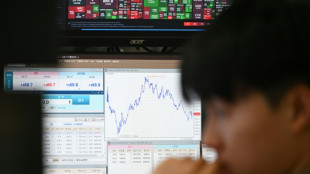
Economists pilloried for getting forecasts wrong / Photo: STR - AFP/File

 West Bank settlers attack AFP journalists
 MEXC Kicks Off MOVE Carnival With 0-Fee Trading and 1M USDT in Rewards
 Human rights in Myanmar hitting a 'new low': UN
 Son of Luxottica founder quits after succession row

 One million Afghan children suffering 'life-threatening' malnutrition: UN

 Real Madrid's Mourinho happy with squad despite losing out on Rodri
 Sri Lanka slump to 216-7 at tea in second India Test

 US delays Lockerbie bombing trial over new evidence

 Rohingya refugees protest dire conditions in Bangladesh camps
 Lego net profit up 32% in first half, 'stronger than expected': CEO to AFP
 German GDP growth revised upwards, defying Iran war turmoil
 STARTRADER Adds 30 U.S. Stock and ETF CFDs as 2026 Product Expansion Accelerates
 Trees 'giving up': climnate change hammers historic English gardens

 Namibia paves way for phosphate mining in the Atlantic Ocean
 Six months into Iran war, Hormuz traffic way down, sailors stranded
 Netanyahu got his Iran war, but maybe not his desired result

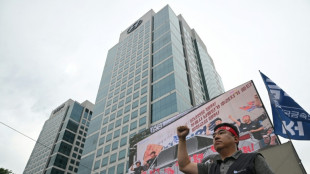 Hyundai reaches tentative deal with workers after strikes

 Once its saviour, US puts Kuwait in Iran's crosshairs
 Australia's top music charts ban AI songs
 Polaris Renewable Energy Announces Renewal of Normal Course Issuer Bid

 LiberNovo Support Week Goes Live: Up to 44% Off on Maxis, Omni SE and Omni Pro Ergonomic Chair Series
 Despair and anger erupt after deadly Guinea landfill collapse

 Tornado tears through French village, dozens injured

 Federer looks forward to brief return to Arthur Ashe stadium

 US removes Syria from state sponsor of terrorism list
Economists are taking flak after missing the mark on inflation, failing to anticipate disruptions in global supply chains and forecasting a recession that has not materialised.
The Covid-19 pandemic, Russia's war in Ukraine and more recently the Middle East conflict have made it tougher for experts to see clearly into their economic crystal balls.
European Central Bank president Christine Lagarde joined the chorus of criticism at the World Economic Forum in Davos, Switzerland, last month.
"Many economists are actually a tribal clique," she said, referring to a lack of openness to other scientific disciplines.
"They quote each other -- men more than women but that's another story," the former IMF chief and French finance minister said. "But they don't go beyond that world because they feel comfortable in that world."
Economists need to get out of their comfort zone of Excel spreadsheets and rigid models, some economists say about their own kind.
The world "has changed a little bit", Peter Vanden Houte, chief eurozone economist at ING bank, said sarcastically.
- Inflation miss -
After years of low inflation, the post-Covid reopening of economies sent prices rising and they soared further after Russia's invasion of Ukraine, belying assurances from Lagarde and US Federal Reserve chairman Jerome Powell that the increases would only be "transitory".
The central banks had to launch into a series of interest rate hikes to combat inflation. While price rises have cooled in recent months, policymakers have kept the rates elevated as they wait to see whether they can be cut later this year.
Lagarde has admitted that the forecasts used as a basis for ECB policy decisions were not always right and that factors linked to the crises were not taken into account in its models.
"The models we currently use are less reliable because there are many factors that are difficult to integrate," Vanden Houte said.
He cited the supply chain bottlenecks following the pandemic, labour shortages and geopolitical tensions.
Economists dropped the ball by looking through the prism of the past.
"It's not economic models that failed. It's the lack of imagination of economists," said Maxime Darmet, economist at Allianz Trade.
"They rested on their laurels" after 30 years of globalisation during which "everything went well", Darmet said.
- The recession that never was -
With central banks using rate hikes to stop economies from overheating, economists warned that growth in the developed world would fall sharply or even contract in 2023.
Instead, US economic growth accelerated last year while the eurozone -- Germany excepted -- stayed in the green.
Earlier this week, the IMF raised its 2024 global growth forecast to 3.1 percent, citing unexpected resilience in major advanced and emerging market economies, including the United States and China.
"There is a puzzle in all that immaculate disinflation," Princeton University economics professor Alan Blinder told AFP.
All the signs were there: interest rates signalled a US recession and indicators were pessimistic. In the 1970s, recession was the only way out of hyperinflation.
Once again economists were accused of having been too narrow-minded.
Vanden Houte said the weak quality of data and a falling rate of responses to surveys were partly to blame.
New phenomena also threw a curveball: Savings have helped to fuel consumption while companies have "much better managed" high rates than in the past, said Christophe Barraud, director general at Market Securities Monaco SAM.
- New year, new chance -
Nobel economics prize winner Esther Duflo told AFP in a recent interview that economists have fallen to "last place" on the list of most trusted professions, less popular than weather forecasters.
Some are trying to change.
In July, the Bank of England hired former US Federal Reserve chairman Ben Bernanke to lead a review of its forecasting process after it was criticised for failing to anticipate soaring inflation.
The Bank of Canada has decided to replace its old models with more forward-looking methodologies.
"Everyone knows that the current models are no longer satisfactory to make good forecasts," Vanden Houte said. "We need to think differently or at least expand the models by integrating other components."
A.Seabra--PC