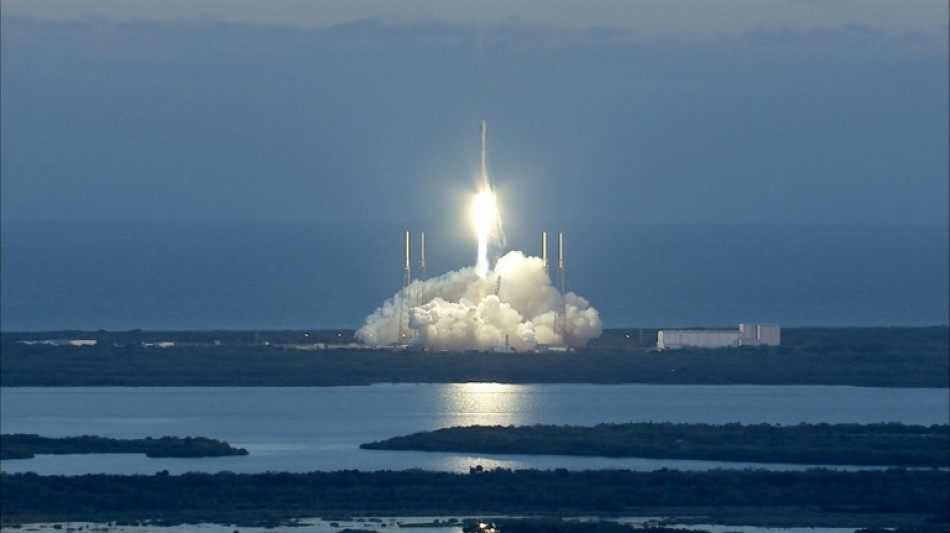
Three, two, one: astronomers predict SpaceX space junk will hit the Moon

 Turkish Energy Minister Highlights Qatar as Key Partner for Regional and Global Energy Security

 London Museum Granted 24/7 License Ahead of November Opening

 Dana White Confirms Flight to Washington for Trump Meeting on Press Secretary Role

 Dengue Fever Expands Into High Himalayas as Climate Change Warms Nepal

 IoT Refrigerator Hacks Disrupt Blood Labs and Supermarkets Across Europe and US

 Post-election pressures complicate US and Israeli decisions on Iran

 UN members approve talks on treaty protocol against environmental crime

 Family-run West Sussex beach café prepares for first winter season

 CT scans reveal health and burial clues from Egypt’s Braided Lady mummy

 Oxford faces complaints over lecturer’s classroom attire

 Kyren Wilson and John Higgins reach International Championship snooker final

 New Zealand and Tonga meet for place in Rugby League World Cup final

 Reports of unsafe AI-toy responses renew calls for child-safety rules

A chunk of a SpaceX rocket that blasted off seven years ago and was abandoned in space after completing its mission will crash into the Moon in March, experts say.
The rocket was employed in 2015 to put in orbit a NASA satellite called the Deep Space Climate Observatory.
Since then the second stage of the rocket, or booster, has been floating in what mathematicians call a chaotic orbit, astronomer Bill Gray told AFP Wednesday.
It was Gray who calculated the space junk's new collision course with the Moon.
The booster passed by pretty close to the Moon in January in a rendezvous that altered its orbit, said Gray.
He is behind Project Pluto, software that allows for calculating the trajectory of asteroids and other things in space and is used in NASA-financed space observation programs.
A week after the rocket stage whizzed close to the Moon, Gray detected it again and concluded it will actually crash into the satellite's dark side on March 4.
Gray appealed to the amateur astronomer community to join him in observing the booster -- it is bright and easy to detect -- and his conclusion was confirmed.
The exact time and spot of impact may change a bit from his forecast but there is widespread agreement that there will be a collision on the Moon that day.
"I've been tracking junk of this sort for about 15 years. And this is the first unintentional lunar impact that we've had," Gray told AFP.
The impact of this object weighing four tons on the Moon will not be visible from Earth in real time.
But it will leave a crater that scientists can observe, such as with NASA's Lunar Reconnaissance Orbiter or India's Chandrayaan-2 satellite, and thus learn more about the geology of the Moon.
Spacecraft have been intentionally crashed into the Moon before, for scientific purposes.
In 2009, for instance, NASA sent a rocket stage hurling into the Moon near its south pole to look for water.
But most rockets do not go so far from Earth. SpaceX brings its rocket boosters back through the Earth's atmosphere so they disintegrate over the ocean.
Gray said there could be more unintentional crashes into the Moon in the future as the US and Chinese space programs leave more junk in orbit.
C.Cassis--PC

