Tension in Spain over use of EU recovery funds

 Germans vote in elections threatening fresh blow to Merz

 US fears rapid escalation in Mideast after Houthis attack Riyadh

 Japan triathlete Hojo wins first gold of Asian Games

 IOC president impressed by 'beautiful' Asian Games wooden huts

 First Asian Games gold goes to Japan as China's 13-year-old Yu lights up pool

 Data centre command hub keeps AI up and running

 Pope Leo in France: the issues on the table

 Packing for a pope: behind the scenes on foreign trips

 Republicans find transgender issues a powerful political weapon in midterm campaigning

 German state elections threaten new shock waves for Merz

 Chile's Bachelet quits race to be next UN chief

 Raphinha treble fires perfect Barca to win at Sevilla

 Thiam makes winning heptathlon return at Decastar meet

 Czechs beat USA to qualify for Davis Cup finals

 Dortmund sink Stuttgart to climb to Bundesliga summit

 Trump says will not tolerate attempts to slow AI growth

 'It has to stop': runners protest women's murders in S.Africa district

 Fire erupts near Riyadh airport as Houthis claim strikes

 Cuba works to restore power after another blackout

 England thrash Sri Lanka again to return to top of T20 rankings

 Arsenal thrashed by Brighton, sorry Spurs lose again

 South Korea, Austria qualify for Davis Cup finals
 Seare shocks Ingebrigtsen to win world 5km gold
 Brigitte Bardot widower slams sale of star's belongings

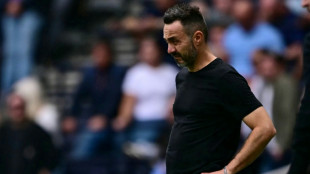 Aston Villa compound Tottenham's misery despite late rally

The Spanish government is increasingly under fire over its use of the European Union's massive economic recovery funds, with critics blasting the distribution of aid as too slow and arbitrary.
Spain is due to receive 140 billion euros ($160 billion) from the fund by 2026, half of it in grants, making it the programme's second-biggest beneficiary after Italy.
The landmark 800-billion-euro recovery plan was approved by Brussels in July 2020 to help the bloc rebound from the impact of the Covid-19 pandemic, and make its economy greener and more digitalised.
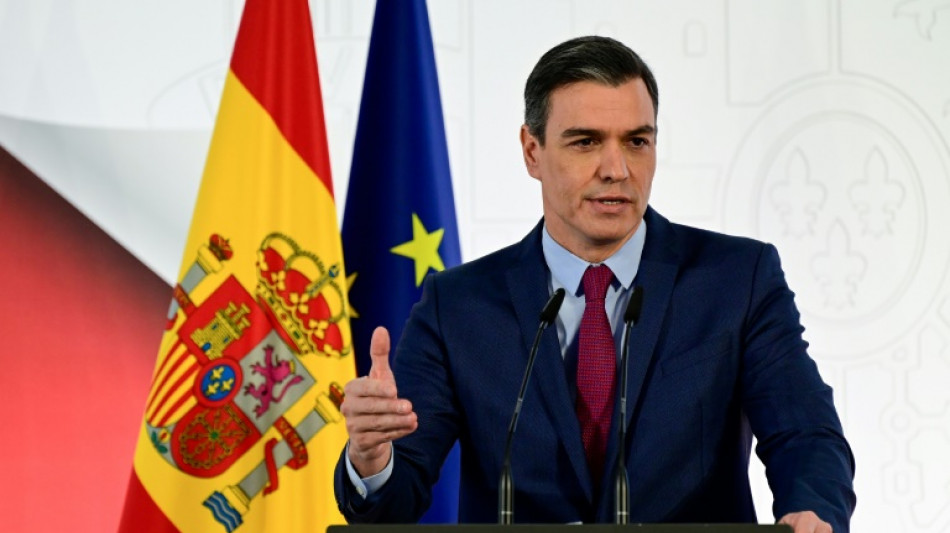
"We are talking about extraordinary amounts," Socialist Prime Minister Pedro Sanchez said earlier this month, calling the funds "a historic opportunity for Spain".
Spain and Portugal were the first nations to receive money, with Madrid collecting 19 billion euros during the second half of 2021.
The funds are at the heart of the economic and political strategy of Sanchez's government after the economy contracted by a whopping 10.8 percent in 2020 under its watch as the pandemic hit.
The government faces elections by the end of 2023.
But some business leaders and opposition parties have complained about a lack of coordination between the central government and Spain's powerful regions over the deployment of the money.
- 'Lack of leadership' -
Although Spain was the first to receive aid, the money was "not injected" as fast as expected in the "real economy", the CEOE employers' association said in a report in early January.
By the end of the year, only 38 percent of the funds allocated to Spain for 2021 had been used, official figures show.
This is "very far from the targets" that were set and the delay in using the aid will hamper growth, think-tank Funcas has warned.
Aerospace giant Airbus complained of a lag in the allotment of the funds, citing a "lack of coordination and leadership" from the responsible ministries, according to an internal memo published in El Pais newspaper last month.
Critics also say that even when the money is distributed, it is often not well spent, with small amounts spread across many projects.
"The current assignment system for the funds" leads to their "dispersion" and favours "little projects", some of them "a bit odd," said the Exceltur tourism association's vice president, Jose Luis Zoreda.
He cited as an example a golf course in the rainy northern region of Asturias.
To have a "real impact", the funds should focus on "a few large projects" with a strong potential to "transform" the Spanish economy, he added.
- 'Cruising speed' -
The row has in recent days become political, with the right-wing opposition Popular Party (PP) accusing the government of favouring regions and municipalities run by the left.
"Two years ago we proposed setting up an independent agency for managing EU funds" as happened in Greece, Italy and France, PP leader Pablo Casado said.
"But Sanchez preferred to distribute aid arbitrarily," he charged.
Casado and several right-wing regional leaders have threatened to take the government to court over the distribution of the EU money, accusing it of "favouritism".
But Sanchez quickly hit back.
"Let's not turn the European funds into a partisan question... which is what the opposition wants," Sanchez said Monday during a news conference with visiting German Chancellor Olaf Scholz.
Economy Minister Nadia Calvino, who served as director general in charge of the EU budget from 2014 to 2018, dismissed the PP's criticisms as "not relevant".
The deployment of European funds will achieve its "cruising speed" in 2022, she added.
V.F.Barreira--PC