'They must find work': Germany pushes jobs for Ukraine refugees / Photo: Tobias SCHWARZ - AFP/File

 Padikkal, Gill half-centuries take India to 187-3 at tea
 Cummins hails 'sharp' Australia as they get back to winning ways

 Bangladesh eye more Australia Tests to hit next level

 Thousands expected at Sweden climate demo as election looms

 Starc heroics put Australia on brink of victory over Bangladesh
 Austrian mountain town finds niche in AI boom
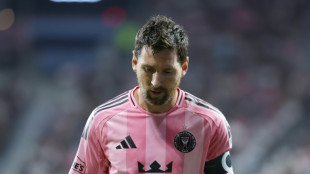 Messi scores but Miami slump continues with loss to Toronto

 Sydney marathon unveils medal with wrong stadium
 Macron hosts Saudi's MBS for visit ranging from esports to Mideast
 Australia in control with 146-run first innings lead over Bangladesh
 World No. 3 Pegula beats defending champ Swiatek to reach Cincy final

 Wyndham Clark surges clear at BMW Championship

 Maresca says Man City must fill Rodri void after Barca switch

 Canada retaliates as trade war with US escalates

 Fils dominates Cobolli to book Cincinnati final

 Spurs lacked fight in dismal defeat at Brentford says De Zerbi

 Inter thrash Monza to launch Serie A title defence

 Shambolic Spurs battered by Brentford
 Pogacar wins Vuelta a Espana opening stage

 Clinical New Zealand shock wasteful South Africa in first Test
 Canada hits back with new tariffs after trade talks with US fail

 Swedish police identify 17-year-old girl as victim in school sword attack
 Carrick keeps calm despite Man Utd misery, Sage beaten in first game as Palace boss

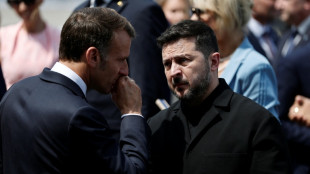 France to deliver interceptor missiles to Ukraine after new Russian strikes

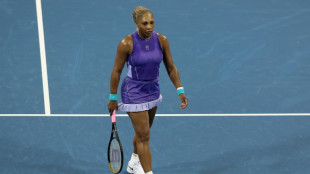 Serena Williams and Alcaraz unite in US Open mixed doubles
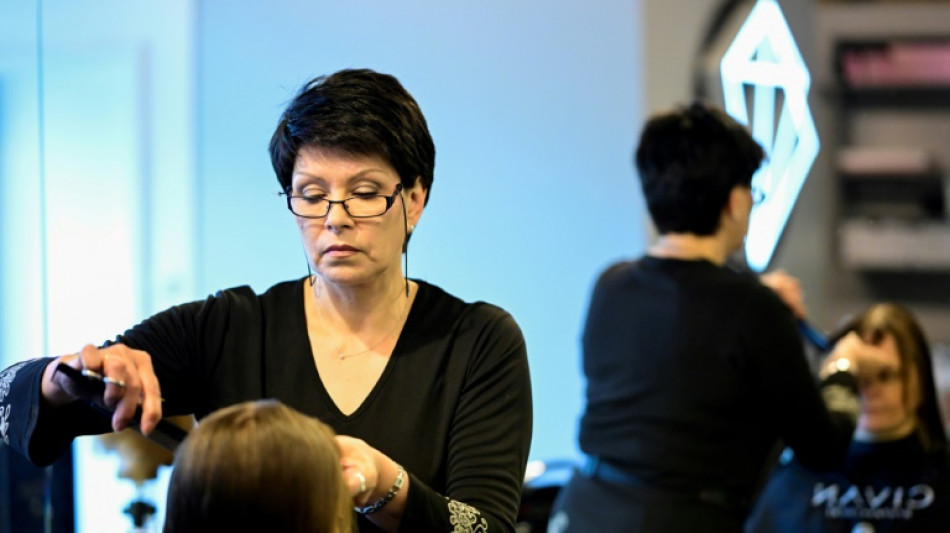
Like a million of her compatriots, hairdresser Valentyna Vysotska fled Ukraine for Germany when Russia invaded. After a 10-month crash course to learn German, she found work, at a hair salon in Berlin.
"My German isn't great but my boss, my colleagues and the clients are all very understanding," Vysotska, 54, told AFP.
As far as Chancellor Olaf Scholz is concerned, Vysotska is an example he wished he could see more of.
Among the Ukrainians who have arrived over the last two years, only 170,000 have since found work.
Scholz recently himself pressed the newcomers to stand on their own feet rather than rely on social handouts.
"We have offered them integration and German classes. Now they must find work," said the German leader.
The urgency is prompted not only by financial reasons.
The cost of welcoming newcomers is certainly heavy -- between 5.5-6 billion euros ($5.4-$6.1 billion) have been earmarked this year alone for Ukrainians.
But Germany is also suffering from a serious manpower shortage and can do with more hands on deck.
And there is a political imperative for Scholz's government to achieve more integration success stories.
Immigration and integration are hot button topics in upcoming European elections, with the far right driving the argument that Europe's biggest economy, currently ailing, needs to take care of its own first.
Mindful of the fact that the far-right AfD party had entered parliament in 2017 on the back of popular anger over the influx of a million Syrians and Iraqis in the two preceding years, Scholz's government is wary about what a repeat of that fury could spell for the EU polls.
To take the sting off the far right's arguments, the government recently moved to toughen rules for asylum seekers.
Among them is the introduction of a new payment card that provides social handouts to refugees as credits that can only be used locally -- essentially scrapping the possibility for migrants to send cash back to their home countries.
But for Ukrainian refugees in particular, key in the government's strategy is to inject them into the job market, which is sorely lacking workers.
- Bureaucratic hurdles -
Vysotska's boss Civan Ucar recalled the relief to have found the Ukrainian, who had worked 35 years as a hairdresser back in her home country, at a job fair.
"It is very difficult to find qualified personnel," he said, pointing to Germany's ageing population.
Ucar shrugged off Vysotska's imperfect German, saying it could only improve while she is in work.
"We learn German faster when we're working because we are required to speak with our colleagues," he said.
But language is only just one of many hurdles for Ukrainian job seekers.
Andreas Peikert, who runs a Berlin job centre, told the TAZ daily that the Ukrainians who have sought refuge in Germany are mostly women and children, but "we have too few kindergarten and school spots".
"If a mother can't be sure about where she can get childcare, she won't be looking for work," he said.
A study by the Friedrich Ebert Foundation also found that Germany puts up far more administrative hurdles in comparison with countries like Poland or the Netherlands where between 60-70 percent of Ukrainians are employed.
Professionals have to obtain equivalent qualifications in Germany to be allowed to practice, and applications have to be made for degrees to be approved and recognised by authorities.
A high level of German is often required for white collar work, essentially ruling out many newcomers who find learning a new language from scratch difficult at adulthood.
To smoothen the process, the government is pushing major companies to be more lenient on language requirements, and to offer help for the new employees to improve their qualifications.
But German authorities said newcomers too have to lower their expectations and take the first step.
Laying bare the desperation at inciting more to take on work, Employment Minister Hubertus Heil said: "It's not about finding the job of your dreams, but to enter the job market, and then climb up the ranks."
F.Santana--PC