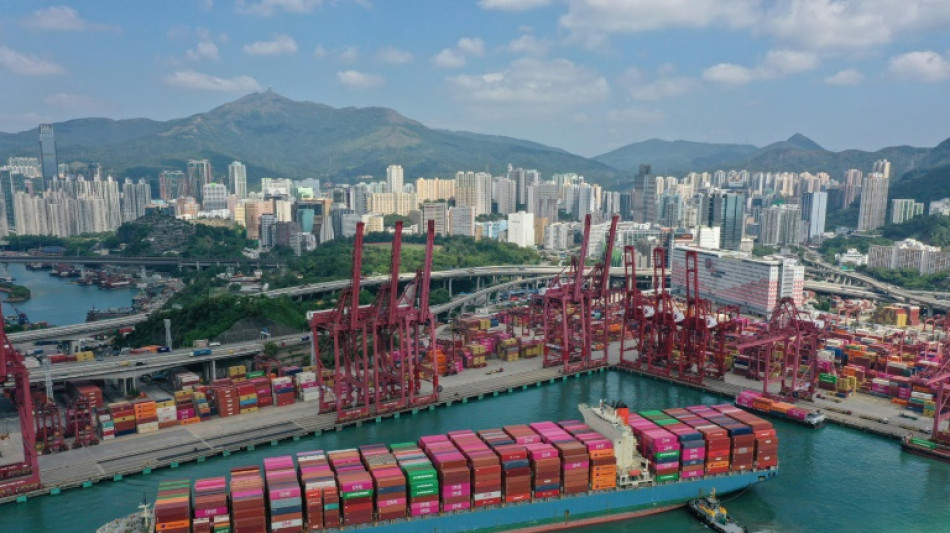
UN eyes modest 2024 maritime trade growth, but future uncertain / Photo: Peter PARKS - AFP

 Manifesto defends Germany's iconic Bauhaus against 'populist attacks'
 Kenya's Kipyegon ends season with hamstring injury

 Nord Stream bomb suspect arrested while working on movie about attack: media
 German football fans plan widespread VAR protests

 Scorching summer triggers record rockfalls in Alps, scientist says

 Newly-crowned European champ Werro turns focus on 800m record

 Hamilton 'fittest ever' as he chases eighth F1 title

 Stocks retreat as bond yield fears persist, oil rises

 ARKBRIDGE’s David Mali Highlights AI-Driven Risk Management at the Finance Magnates London Summit

 Zuckerberg buys Gothic castle in Ireland: spokesman
 Belgium's fire of the century now 'under control'

 Evergrande's Xu Jiayin: from real-estate tycoon to life in prison

 Spurs eyeing move for Man City's Savinho and Marmoush - reports

 Springboks captain Kolisi to miss first All Blacks Test

 Japan to launch probe for Mars moons in October: space agency

 From beach to Bulls: relaxed Tsunoda savours rare F1 drive

 Prince Harry: key dates in life of returning UK royal

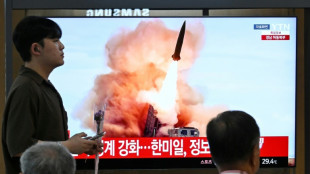
 North Korea launches missiles, Seoul says, after Trump floats Kim meet

 Oil jumps on Iran war tensions, offsetting bond yield fears

 Germany identifies far-right suspect in deadly 1970 antisemitic attack

 PrimeXBT Expands Swap-Free Trading to PXTrader 2.0

 Record number of locations in France top 40C over summer: AFP analysis

 Trump pledges 'economic warfare' on Iran, prompting Tehran derision
 'Girl with a Pearl Earring' in Japan, perhaps for the last time

 Russian strikes kill 13 in Kyiv, surrounding region

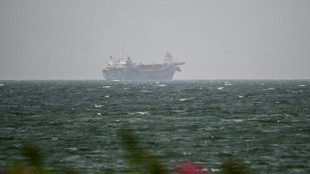
Maritime trade should show modest growth this year, the UN said Tuesday, warning though that the geopolitical tensions, climate impacts and conflicts shaking global trade are threatening the functioning of maritime supply chains.
The United Nations' trade and development agency, UNCTAD, highlighted in its annual report on maritime transport that the global economy, food security and energy supplies were at increasing risk due to vulnerabilities along key maritime routes.
"The sector is facing numerous challenges that threaten the efficiency, reliability, resilience and sustainability of maritime transport," UNCTAD chief Rebeca Grynspan said in the report.
"Just after recovering from the upheaval of the COVID-19 pandemic and having started to adjust to new shifts in trade patterns triggered by the war in Ukraine, global supply chains and trade are now grappling with an additional wave of disruptions," she warned.
The report found that global maritime trade swelled 2.4 percent in 2023 to a total of 12,292 million tonnes, as it began to recover after a contraction in 2022.
For 2024, it projected "a modest 2 percent growth, ... driven by demand for bulk commodities like iron ore, coal, and grain, alongside containerised goods".
And for the period 2025-2029, UNCTAD said it expected total seaborne trade to grown on average by 2.4 percent.
- 'Significant disruptions' -
However, the agency warned in a statement, "the future remains uncertain".
Container trade, which grew by a mere 0.3 percent last year, is expected to rebound by 3.5 percent in 2024, UNCTAD said.
But it warned that long-term growth would "depend on how the industry adapts to ongoing disruptions, such as the war in Ukraine and rising geopolitical tensions in the Middle East".
The agency highlighted that key shipping routes had faced "significant disruptions", causing delays, rerouting and higher costs.
Traffic through the Panama and Suez Canals, which are critical arteries of global trade, plunged by more than 50 percent by mid-2024 compared to their peaks, the report said.
The decline, it said, was driven by climate-induced low water levels in the Panama Canal, and conflict in the Red Sea region affecting the Suez Canal.
"The disruptions at the Suez and Panama Canals highlight the fragility of global supply chains in the face of mounting climate and geopolitical risks," Shamika Sirimanne, UNCTAD's technology and logistics chief, told reporters, highlighting that a full 80 percent of all traded goods in the world are moved by sea.
To help maintain the flow of goods, the number of ships rerouted around Africa has surged, significantly increasing costs, delays and carbon emissions, UNCTAD said.
The longer routes have also added to port congestion, fuel use, crew salaries, insurance premiums and exposure to piracy.
By mid-2024, the agency said, the rerouting of vessels away from the Red Sea and Panama Canal had increased global vessel demand by 3 percent and container ship demand by 12 percent.
- 'Escalating costs' -
"This added significant pressure to global logistics and strained supply chain," it said.
Grynspan warned that "the escalating costs arising from maritime chokepoint disruptions translate into higher shipping rates that are inevitably passed on to consumers".
"In addition to uncertainty and volatility, this situation exacerbates inflation and undermines economic growth, with small island developing States and the least developed countries hit the hardest."
UNCTAD's analysis suggested that if the crisis at the Red Sea and Panama Canals continued, global consumer prices could rise by 0.6 percent next year.
The agency has been calling for a rapid decarbonisation of the shipping industry, which accounts for nearly three percent of all greenhouse gas emissions globally.
But by early 2024, only 50 percent of new ships ordered were for vessels capable of using alternative fuels, it warned.
At the same time, it said, the scrapping of older ships has slowed due to high freight rates and increased demand for vessels following the rise in shipping distances.
"Ensuring the resilience of maritime infrastructure and accelerating the transition to low carbon shipping are critical for maintaining the stability of global trade," Sirimanne said.
J.Pereira--PC