Tokyo Metro: Asia's oldest subway goes public / Photo: Behrouz MEHRI - AFP

 Manifesto defends Germany's iconic Bauhaus against 'populist attacks'
 Kenya's Kipyegon ends season with hamstring injury
 Nord Stream bomb suspect arrested while working on movie about attack: media
 German football fans plan widespread VAR protests

 Scorching summer triggers record rockfalls in Alps, scientist says

 Newly-crowned European champ Werro turns focus on 800m record
 Hamilton 'fittest ever' as he chases eighth F1 title
 Stocks retreat as bond yield fears persist, oil rises
 ARKBRIDGE’s David Mali Highlights AI-Driven Risk Management at the Finance Magnates London Summit
 Zuckerberg buys Gothic castle in Ireland: spokesman
 Belgium's fire of the century now 'under control'

 Evergrande's Xu Jiayin: from real-estate tycoon to life in prison
 Spurs eyeing move for Man City's Savinho and Marmoush - reports

 Springboks captain Kolisi to miss first All Blacks Test
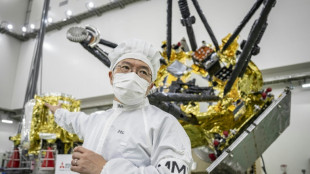 Japan to launch probe for Mars moons in October: space agency
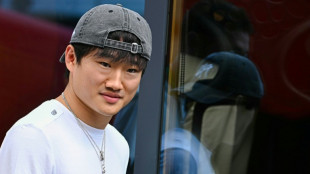 From beach to Bulls: relaxed Tsunoda savours rare F1 drive

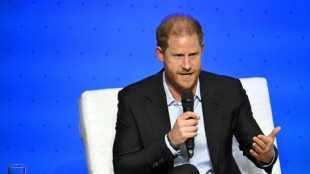 Prince Harry: key dates in life of returning UK royal

 North Korea launches missiles, Seoul says, after Trump floats Kim meet
 Oil jumps on Iran war tensions, offsetting bond yield fears
 Germany identifies far-right suspect in deadly 1970 antisemitic attack
 PrimeXBT Expands Swap-Free Trading to PXTrader 2.0
 Record number of locations in France top 40C over summer: AFP analysis
 Trump pledges 'economic warfare' on Iran, prompting Tehran derision
 'Girl with a Pearl Earring' in Japan, perhaps for the last time
 Russian strikes kill 13 in Kyiv, surrounding region
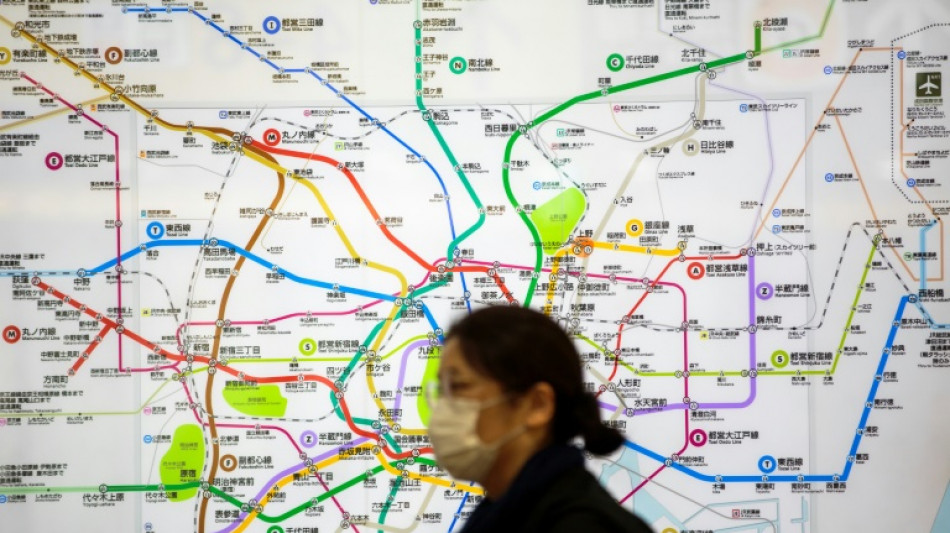
Every day six and a half million people ride Tokyo Metro's nine lines, part of a dizzyingly complex transport network serving the Japanese megacity and its sprawling suburbs.
Tokyo Metro shares rocketed more than 40 percent on their stock market debut Wednesday, raising $2.3 billion in Japan's biggest initial public offering (IPO) in six years.
Here are some facts about the company and its listing:
- Asia's first subway -
London built the first public underground railway, but in 1927 Tokyo became the first Asian city with a subway thanks to a 2.2-kilometre (1.4-mile) track from Ueno to Asakusa.
The trains ran every three minutes on what is now part of Tokyo Metro's modern-day Ginza Line but were crowded with passengers who previously overran the city's trams.
Having slowed during and after World War II, construction of public transport picked up pace as Japan rebuilt itself into a major economic power.
The company Tokyo Metro was incorporated in 2004, adopting its heart-shaped "M" logo in place of the network's previous one: a spiky, space-age "S" for subway.
- Complex map -
Tokyo Metro's nine lines -- named Ginza, Marunouchi, Hibiya, Tozai, Chiyoda, Yurakucho, Hanzomon, Namboku and Fukutoshin -- stretch for a total of 195 kilometres.
The spotless and punctual air-conditioned trains form only one part of a vast underground and overground rail system serving Greater Tokyo, often cited as the world's biggest urban area.
All but two of the nine Tokyo Metro routes connect to other train lines, allowing direct access to the capital for commuters in farther flung areas.
Four other subway lines are run separately by the Tokyo government, alongside private services and East Japan Railway's overground routes like the Yamanote Line, whose green trains carry millions in a loop around the city.
Unique jingles are played at each Tokyo Metro station when a train is at the platform.
For example, at Ginza Station, the Marunouchi line's tunes are called "Tomorrow's Door" and "The March of a Little Bird".
- IPO -
The IPO is Japan's largest since 2018 when tech and telecoms conglomerate SoftBank Group raised a national record of $23.5 billion by listing its mobile unit.
On Wednesday morning, Tokyo Metro shares traded at 1,745 yen, up 45 percent from their issue price of 1,200 yen, with reports saying the issue was 15 times oversubscribed among investors.
Before the IPO, the national government owned just over half of Tokyo Metro shares and the Tokyo city government owned the rest. The listing reduces total state ownership to around 50 percent.
The funds raised will be used to repay bonds issued to finance the reconstruction of northeastern Japan after the 2011 earthquake, tsunami and nuclear disaster that killed 18,000 people.
- Free tickets -
Tokyo Metro says investors who buy 200 shares or more will receive some free tickets to its museum and golf range, as well as free tempura toppings at its noodle stands.
The "low volatility" of a firm like Tokyo Metro makes their shares a safe investment prospect for Japanese households, said Hideaki Miyajima, a professor of commerce at Waseda University.
"And for institutional investors, the Japanese market is very favourable given the very low exchange rate" of the yen and recent corporate governance reforms, he told AFP.
- Going underground -
In earthquake-prone Japan, Tokyo Metro trains are set up to stop just before a powerful jolt hits, using real-time seismic data from monitoring stations.
Climate change is also bringing more frequent and intense flooding to the capital, with some Tokyo subway stations inundated in August by torrential rain.
Also buried beneath the Greater Tokyo area is the world's largest flood tank, a cavernous subterranean reservoir built to protect the metropolis from storms and typhoons.
H.Portela--PC