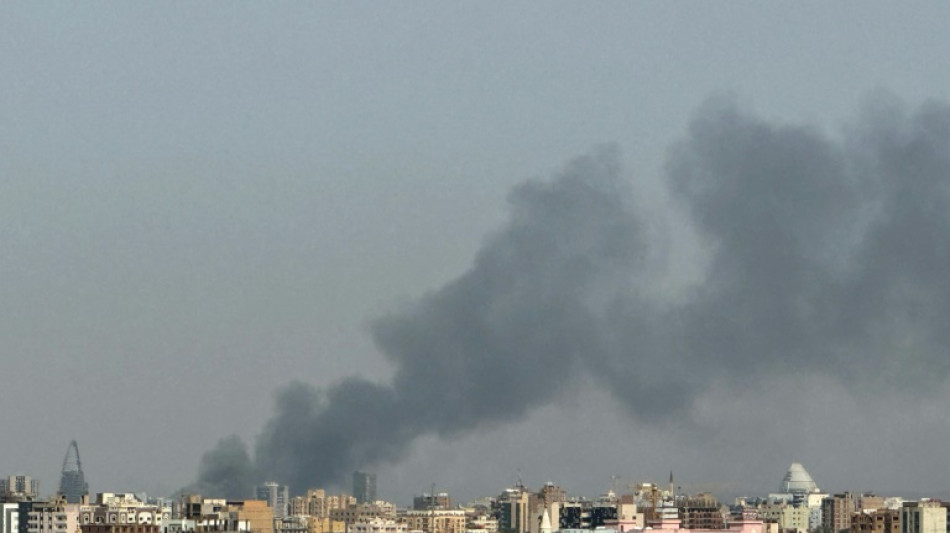
IMF raises concerns about effects of Sudan conflict on neighbors / Photo: AlMigdad Hassan - AFP

 Stocks retreat as bond yield fears persist, oil rises
 ARKBRIDGE’s David Mali Highlights AI-Driven Risk Management at the Finance Magnates London Summit

 Zuckerberg buys Gothic castle in Ireland: spokesman
 Belgium's fire of the century now 'under control'

 Evergrande's Xu Jiayin: from real-estate tycoon to life in prison

 Spurs eyeing move for Man City's Savinho and Marmoush - reports

 Springboks captain Kolisi to miss first All Blacks Test

 Japan to launch probe for Mars moons in October: space agency

 From beach to Bulls: relaxed Tsunoda savours rare F1 drive

 Prince Harry: key dates in life of returning UK royal

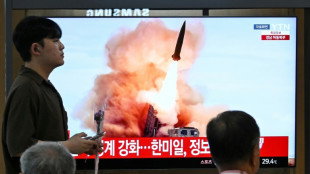 North Korea launches missiles, Seoul says, after Trump floats Kim meet

 Oil jumps on Iran war tensions, offsetting bond yield fears

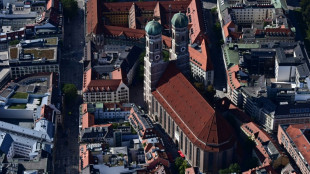 Germany identifies far-right suspect in deadly 1970 antisemitic attack

 PrimeXBT Expands Swap-Free Trading to PXTrader 2.0
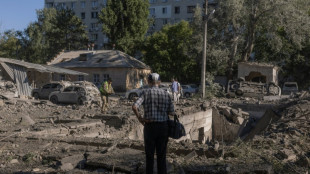
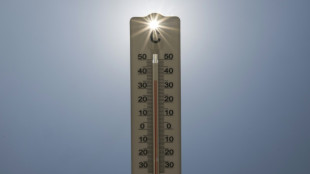 Record number of locations in France top 40C over summer: AFP analysis
 Trump pledges 'economic warfare' on Iran, prompting Tehran derision
 'Girl with a Pearl Earring' in Japan, perhaps for the last time

 Russian strikes kill 13 in Kyiv, surrounding region

 'Simply lovely': Verstappen signs new Red Bull contract until 2030

 Australia coach Walters heading to St Helens after World Cup

 China jails founder, fines disgraced property giant Evergrande

 Russian strikes kill 12 in Kyiv, surrounding region

 US India ambassador's Kashmir remarks rile Pakistan; envoy summoned

 In Senegal's Saint-Louis, traces of slave-trading past fade away

 Russian strikes kill 9 in Kyiv, surrounding region
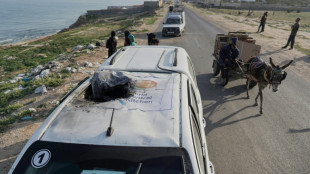
The war in Sudan is likely to cause heavy economic damage in neighboring countries, the IMF's deputy director for Africa, Catherine Pattillo, told AFP.
"What is going on there for the people in Sudan is just so heart wrenching and devastating. For all of the neighboring countries too," she said in an interview in Washington ahead of the publication on Friday of the International Monetary Fund's regional outlook for Sub-Saharan Africa.
"A number of these countries that are neighbors are also fragile countries with their own challenges," she said.
"And then to be confronted with the refugees, the security issues, the trade issues, is very challenging for their growth," she added.
The IMF's report predicted that the Central African Republic, Chad, Eritrea, Ethiopia and South Sudan could be particularly hard hit by the ongoing conflict in Sudan.
- Oil pipeline -
For South Sudan, the situation has become particularly worrying following the loss in February of one of its main sources of income after an oil export pipeline was damaged in Sudan.
The pipeline is crucial for transporting South Sudanese crude oil abroad, which is especially important given that oil accounts for around 90 percent of the landlocked country's exports.
The war in Sudan has been raging since April 2023 between the army, led by General Abdel Fattah al-Burhan, and the paramilitary Rapid Support Forces (RSF) of his former deputy, General Mohamed Hamdan Dagalo, who is also known as Hemedti.
The conflict has claimed tens of thousands of lives, according to the UN.
More than 10.7 million people have been displaced across the country, and a further 2.3 million have fled to neighboring countries.
The conflict has also exacerbated food insecurity; a famine was declared in July in the Zamzam camp for displaced people near the town of el-Facher, in Darfur.
"You could think of Sudan (and) also some of the security issues in the Sahelian countries, also affecting growth," Pattillo said. "Those are the internal conflicts."
At the same time, other "external conflicts" like the wars in the Middle East and Ukraine are also impacting things like food prices, fertilizer and energy costs, she added.
The IMF notes that growing protectionism was also having a negative impact on growth in Africa, at a time when trade tensions are translating into tariff hikes between the world's three most powerful trading blocs: The United States, Europe and China.
The economic slowdown in developed countries and China still represents a major challenge for African countries, the IMF noted, predicting growth in Sub-Saharan Africa of 4.2 percent next year.
This is slightly better than the 3.6 percent growth expected this year.
E.Raimundo--PC