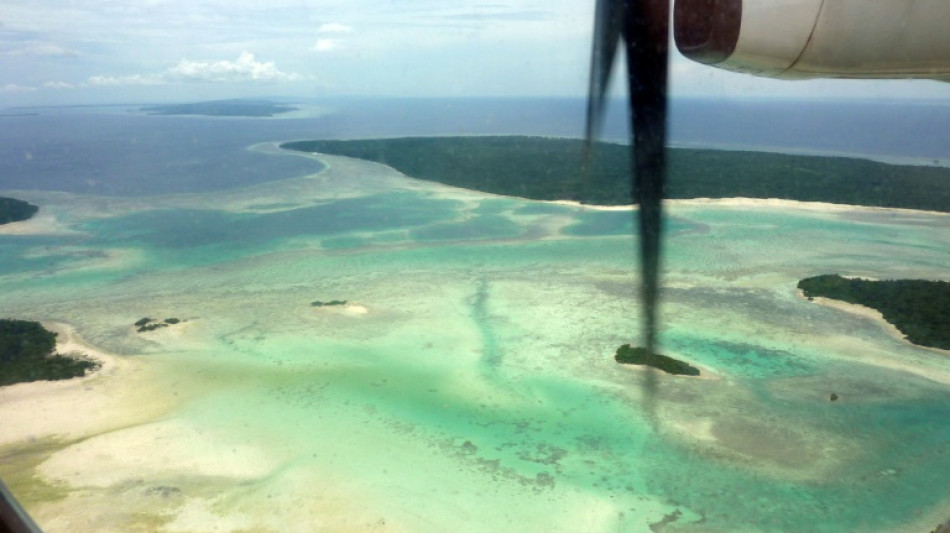
Report details fossil fuel threat to 'Amazon of the seas' / Photo: STEPHEN COATES - AFP/File

 Stocks retreat as bond yield fears persist, oil rises
 ARKBRIDGE’s David Mali Highlights AI-Driven Risk Management at the Finance Magnates London Summit

 Zuckerberg buys Gothic castle in Ireland: spokesman
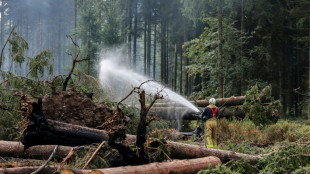 Belgium's fire of the century now 'under control'

 Evergrande's Xu Jiayin: from real-estate tycoon to life in prison
 Spurs eyeing move for Man City's Savinho and Marmoush - reports

 Springboks captain Kolisi to miss first All Blacks Test

 Japan to launch probe for Mars moons in October: space agency

 From beach to Bulls: relaxed Tsunoda savours rare F1 drive

 Prince Harry: key dates in life of returning UK royal

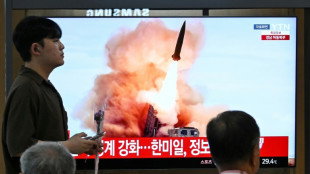 North Korea launches missiles, Seoul says, after Trump floats Kim meet

 Oil jumps on Iran war tensions, offsetting bond yield fears
 Germany identifies far-right suspect in deadly 1970 antisemitic attack
 PrimeXBT Expands Swap-Free Trading to PXTrader 2.0
 Record number of locations in France top 40C over summer: AFP analysis
 Trump pledges 'economic warfare' on Iran, prompting Tehran derision
 'Girl with a Pearl Earring' in Japan, perhaps for the last time

 Russian strikes kill 13 in Kyiv, surrounding region

 'Simply lovely': Verstappen signs new Red Bull contract until 2030

 Australia coach Walters heading to St Helens after World Cup

 China jails founder, fines disgraced property giant Evergrande

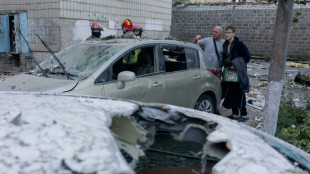 Russian strikes kill 12 in Kyiv, surrounding region

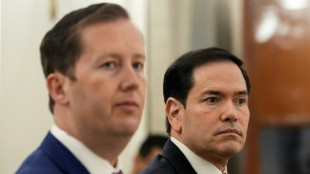 US India ambassador's Kashmir remarks rile Pakistan; envoy summoned
 In Senegal's Saint-Louis, traces of slave-trading past fade away

 Russian strikes kill 9 in Kyiv, surrounding region
Fossil fuel exploration is threatening an ever-expanding swath of the Coral Triangle, one of the most biodiverse marine areas in the world, a report said Saturday.
Issued to coincide with the UN's COP16 summit on biodiversity in Colombia, the report warned expansion in oil, gas and liquefied natural gas (LNG) in the Indo-Pacific region was putting at risk marine species and the communities that rely on them.
Dubbed the "Amazon of the seas" for its species variety, the Coral Triangle covers over 10 million square kilometers (some four million square miles) in waters of Indonesia, Malaysia, Papua New Guinea, Singapore, the Philippines, Timor-Leste and the Solomon Islands.
It contains three-quarters of the world’s known coral species, said the report by monitoring bodies including the threat-mapping research project Earth Insight, satellite imaging watchdog SkyTruth, and the Center for Energy, Ecology, and Development, a Filipino think tank.
The triangle is a home to six of the world's seven marine turtle species, and acts as a feeding ground for whales and other marine mammals.
More than 120 million people rely on it for subsistence.
Yet, oil and gas concessions and production areas overlap with tens of thousands of square kilometers of marine protected areas, said the report.
It noted more than 100 known offshore oil and gas blocks producing in the region. Another 450 blocks are being explored for future extraction.
"If all blocks were to go into production, about 16 percent of the Coral Triangle would be directly impacted by fossil fuel development," said the report.
It warned fossil fuel expansion will increase tanker traffic and the risk of oil spills.
- Not on track -
Since July 2020, satellites have spotted 793 oil slicks in the Coral Triangle, said the report.
Almost all were created by transiting vessels, some by oil infrastructure.
"Cumulatively, all slicks covered an area over 24,000 km2 –- nearly enough oil to cover the land in the Solomon Islands," said the report.
Its authors called for a moratorium on oil, gas, mining, and other industrial activities in environmentally-sensitive areas within the Coral Triangle.
They also urged "leapfrogging the use of LNG as a transition fuel" as the world moves away from coal and gas, and moving directly to clean energy sources instead.
The report called for the triangle to be designated a "particularly sensitive sea area" in need of special protection from shipping.
The so-called Kunming-Montreal Global Biodiversity Framework approved two years ago by 196 parties to the UN's Convention on Biological Diversity set 23 targets to "halt and reverse" biodiversity loss by 2030.
It includes ensuring that 30 percent of marine and coastal areas are "effectively conserved and managed," and 30 percent are "under effective restoration."
A report by Greenpeace Monday said only 8.4 percent of the global ocean enjoys protection to date.
"At the current rate, we won't hit 30 percent protection at sea until the next century," said Greenpeace policy advisor Megan Randles.
The biodiversity summit meant to measure progress towards achieving the UN goals.
L.Henrique--PC