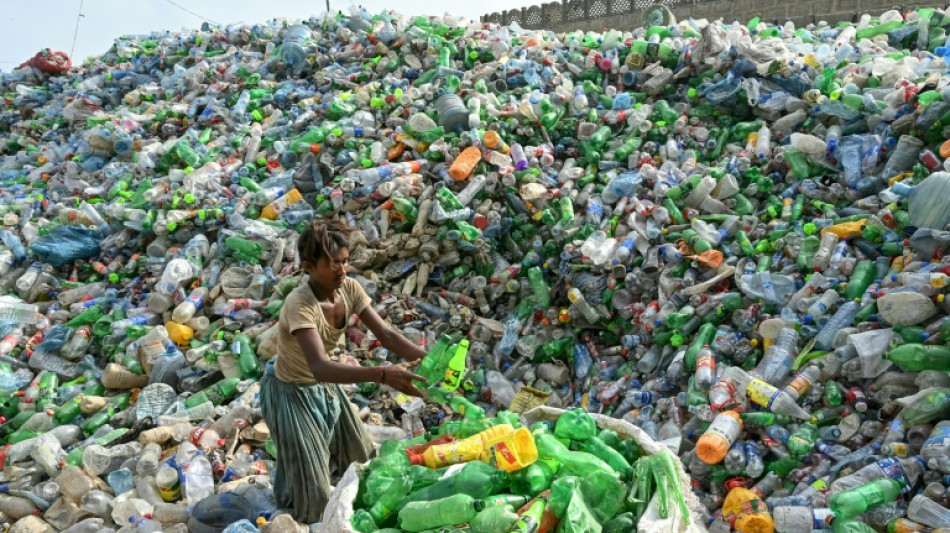
Countdown to Busan: is a plastic pollution treaty in reach? / Photo: Asif HASSAN - AFP/File

 Stocks retreat as bond yield fears persist, oil rises
 ARKBRIDGE’s David Mali Highlights AI-Driven Risk Management at the Finance Magnates London Summit
 Zuckerberg buys Gothic castle in Ireland: spokesman
 Belgium's fire of the century now 'under control'
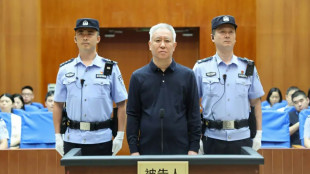 Evergrande's Xu Jiayin: from real-estate tycoon to life in prison
 Spurs eyeing move for Man City's Savinho and Marmoush - reports

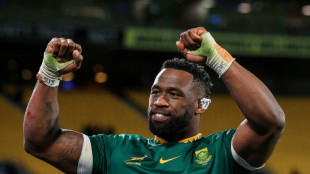 Springboks captain Kolisi to miss first All Blacks Test
 Japan to launch probe for Mars moons in October: space agency

 From beach to Bulls: relaxed Tsunoda savours rare F1 drive

 Prince Harry: key dates in life of returning UK royal

 North Korea launches missiles, Seoul says, after Trump floats Kim meet
 Oil jumps on Iran war tensions, offsetting bond yield fears
 Germany identifies far-right suspect in deadly 1970 antisemitic attack
 PrimeXBT Expands Swap-Free Trading to PXTrader 2.0
 Record number of locations in France top 40C over summer: AFP analysis
 Trump pledges 'economic warfare' on Iran, prompting Tehran derision
 'Girl with a Pearl Earring' in Japan, perhaps for the last time
 Russian strikes kill 13 in Kyiv, surrounding region
 'Simply lovely': Verstappen signs new Red Bull contract until 2030
 Australia coach Walters heading to St Helens after World Cup

 China jails founder, fines disgraced property giant Evergrande

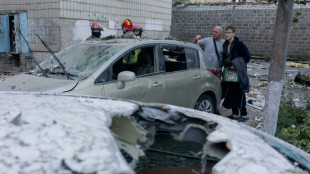 Russian strikes kill 12 in Kyiv, surrounding region
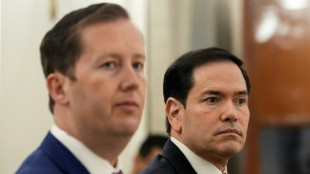 US India ambassador's Kashmir remarks rile Pakistan; envoy summoned

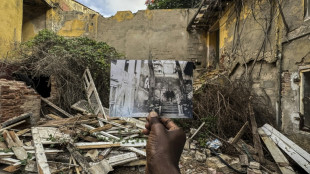 In Senegal's Saint-Louis, traces of slave-trading past fade away
 Russian strikes kill 9 in Kyiv, surrounding region
Negotiators meet in less than a month to agree on the world's first treaty to end plastic pollution, but countries remain so far apart that a deal may prove impossible.
It has been two years since the UN first agreed to work towards a treaty, and negotiators have met four times already to hammer out details.
But observers say progress on substance has been painfully slow -- and at times actively stymied by countries keen to water down any final treaty.
That has left negotiators, and the diplomat chairing the process, scrambling to rescue the treaty and avoid emerging from talks in South Korea's Busan with a weak one, or none at all.
The scale of the problem is undisputed.
Plastic production has doubled in 20 years and at current rates could triple by 2060, according to the Organisation for Economic Cooperation and Development.
Yet over 90 percent of plastic is not recycled, with much of it dumped in nature or buried in landfills.
As a result, microplastic has been found in the deepest ocean trenches, highest mountain peaks and just about every part of the human body.
But how to address this remains fiercely contested.
There are disagreements over whether to cap production, how to pay for better waste management, and even what process to use to adopt a treaty -- a majority vote or consensus.
- 'Everything, and its contrary' -
The talks are set to begin with a draft text that runs over 70 pages -- which almost all parties agree is unworkable.
It contains "everything, and its contrary", warned David Azoulay, director of the environmental health programme at the Centre for International Environmental Law.
Even Luis Vayas Valdivieso, the Ecuadorian diplomat chairing the negotiations, has admitted "it will be very, very difficult... to start our negotiations in Busan with that text".
The chaotic draft text reflects a fundamental faultline over what the treaty should do.
Some countries, particularly oil-producing nations such Saudi Arabia, Iran and Russia, insist it should focus on so-called downstream measures -- primarily waste management.
They want targets and implementation to be set nationally.
Others, like the so-called High Ambition Coalition that includes the European Union and many Asian and African countries, want rules limiting production of new plastic, pointing to the longstanding failure of waste management and recycling, and the emissions from making new plastic.
They also back bans on chemicals believed or known to be harmful, and want global standards with targets, monitoring mechanisms, and compliance enforcement.
The United States is not part of the coalition, though it recently signalled potential support for production restructions.
"It's just a mess," said Graham Forbes, global plastic project leader at Greenpeace USA.
"We've wasted a lot of time."
- 'Going to deliver' -
Negotiators will have just a week to whittle down the draft into a workable treaty, and Vayas Valdivieso is hoping to speed things up with his own starting document -- a so-called "non-paper".
He is expected to circulate a third iteration of the document this week, which will be closely scrutinised for any language on the outstanding contentious issues.
But the document has no legal basis and it is unclear whether negotiators will agree to use it as a starting point.
Those pushing for a more ambitious treaty fear the pressure to make Busan a success could create momentum for a weaker document.
"There's tremendous political momentum to land something," said Forbes.
But "we're not going to sacrifice ambition to get a political outcome that feels easy in the short-term".
Even within the High Ambition Coalition, there is significant variation on how stringent and specific the document should be.
And while some major industry players have backed a call to limit "problematic and avoidable plastic products" and reduce virgin plastic production, others are firmly opposed.
The American Chemistry Council has publicly urged Washington to "steer the global community away" from production caps and material bans.
For all the disagreements, Vayas Valdivieso insisted this month that "we're going to deliver" in Busan.
But many observers increasingly believe the negotiations could be extended for another round, or even see some ambitious countries going it alone on a text.
"Nobody really wants a negotiation that either goes on for years and years, or delivers something that is not fit for purpose," said Azoulay.
"This is the tension that exists."
A.Motta--PC