War decimates harvest in famine-threatened Sudan / Photo: - - AFP/File

 Rain delays start of second day's play in England-Pakistan opener

 Russian strikes kill 16 in Kyiv, surrounding region
 'It is tough': Indonesia battles wildfires, bracing for worse to come

 Seoul detects North Korean missile launches after Trump says to meet Kim

 Thai, Myanmar military chiefs meet as post-coup thaw progresses
 Asian stocks rally as US Treasury steps in to ease bond fears

 Verstappen signs new Red Bull contract until 2030: team

 What property giant Evergrande's sentence means for China's economy

 Australian prosecutors demand life in prison for mushroom killer
 Fallout far-reaching for Australian Rules after latest scandal

 Rafts on Rome's Tiber River cool down overheated tourists
 Top seeds Sabalenka, Zverev stunned in Cincinnati fourth round

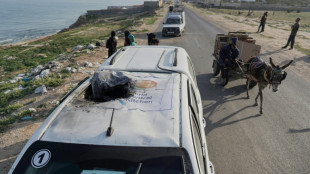 Australia says relations with Israel 'difficult' after aid worker death

 PSG start Ligue 1 defence with eye on Champions League hat-trick

 Arsenal can become world's best club: Arteta
 Japan's King Kazu, 59, scores twice from spot to make cup history

 Kyiv's desperate vendors persevere outside obliterated flea market
 Australia races to shield little penguins from H5N1 bird flu

 Messi scores first goal since father's death
 US national debt exceeds $40 trillion for first time
 Brazilian narco violence spills over into tranquil Bolivia

 Trump's devoted 'human printer' in media glare

 Top seed Zverev bundled out by Paul in rain-hit Cincinnati upset

 WADA pledges vigilance on Russian athletes ahead of 2028 Olympics

 NASA satellite rescue mission fails

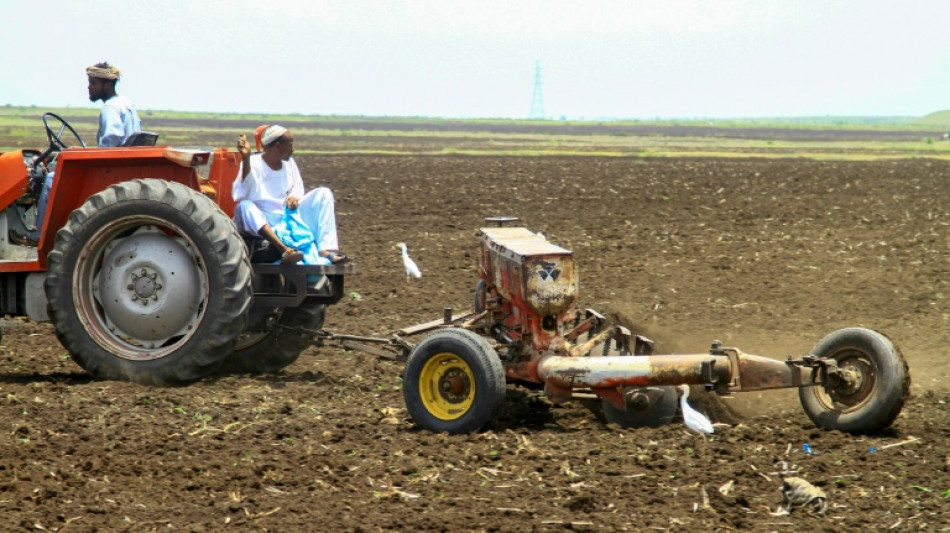
Ahmed Othman's farm has been spared from the deadly fighting that has spread across Sudan, but the war's toll on the economy and labour market has still reached him.
"I had to sell two vehicles" to afford to harvest this season's crops, he told AFP from his large sesame farm in eastern Sudan's Gedaref state.
A year and a half of war in Sudan between the army and paramilitaries of the Rapid Support Forces (RSF) has triggered one of the world's worst humanitarian crises and devastated harvests.
Last month, United Nations experts accused the warring sides of using "starvation tactics" against 25 million civilians, and three major aid organisations warned of a "historic" hunger crisis as families resort to eating leaves and insects.
Hundreds of farmers have been driven off their once-fertile lands and those who have managed to remain face tremendous hardships.
Gedaref state is key to Sudan's corn production, a crucial crop for a population the World Food Programme warns is nearing famine -- a condition already declared at a displacement camp in the country's western region of Darfur.
"The first challenge we faced was securing funding as banks are experiencing a cash crunch due to the war," said Othman.
Cash shortages have occurred even in army-controlled Gedaref since the RSF took over the capital Khartoum and banks were ransacked.
The farmer said that without selling two out of his three vehicles he could not have afforded fuel for farm machinery or to pay workers to prepare the fields and tend to the crops.
"The second problem is the scarcity of farm workers due to the war, which has limited their movement across states," he added.
Most workers in Gedaref previously came from the adjacent states of Blue Nile and Sennar, as well as from Kordofan further away.
- Giving up -
However, the war has restricted inter-state movement, leaving farm owners like Othman with only a small workforce.
Another local farmer, Suleiman Mohamed, said "the shortage of workers has driven up wages, so we are relying on those already in the area, mainly Ethiopians" who have long resided in Sudan's east as refugees.
War began in April 2023 between the army under the country's de facto ruler Abdel Fattah al-Burhan and the RSF, led by his former deputy Mohamed Hamdan Daglo.
Disruptions to the harvest this season could exacerbate the hunger crisis, made worse by restrictions on aid entry.
European and North American nations issued a joint statement last month that accused the warring sides of "systematic obstruction" of aid efforts. They said both sides should urgently admit the assistance to millions of people in dire need.
In southern Gedaref, another farmer, Othman Abdelkarim, said many have already given up on this year's season.
"Most of us have relied on ourselves for financing, and some simply opted out and didn't plant," he said, pointing to an unplanted field west of his farm.
"This crisis will delay the harvest and affect its quality," he added.
The state's agriculture ministry reported that nine million acres (3.6 million hectares) were cultivated in Gedaref this year -- five million with corn and the rest with sesame, sunflowers, peanuts and cotton.
That is less than half of the roughly 20 million acres planted annually before the war.
Farmer Suleiman Mohamed fears there is no hope for this season's crop.
"With fewer workers and delayed harvesting, we'll face losses, and part of the crop will be lost," he said from his farm in eastern Gedaref.
A.F.Rosado--PC