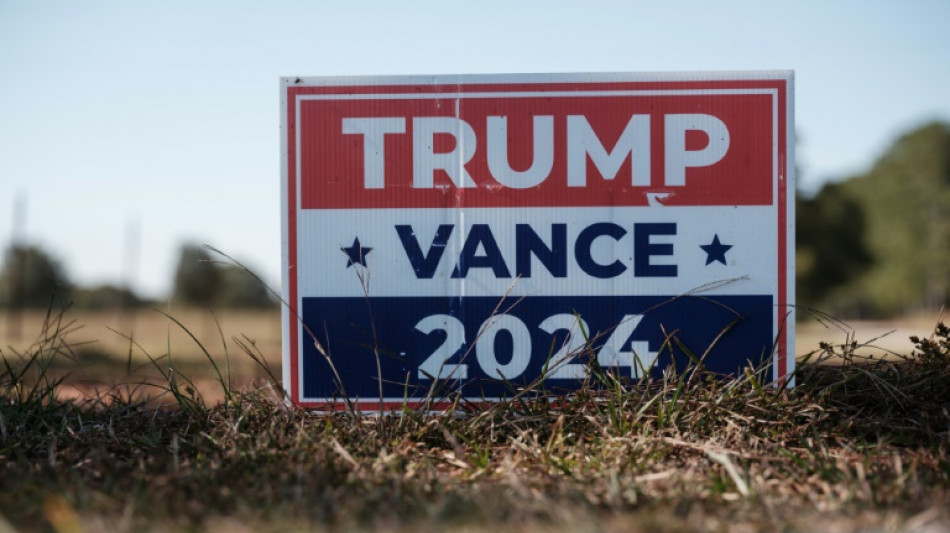
US farmers gird for trade wars on Trump tariff pledges / Photo: Yasuyoshi CHIBA - AFP/File

 Ireland and Ukraine consider drone cooperation memorandum after Dublin talks

 Georgia refrigeration company sues EPA after five-year HFC reprieve

 Lakers Defeat Bucks 123-112 Amid Injury Concerns for Dončić and Reaves

 Audi-SAIC CEO Fred Schulze Confirms AUDI Brand Will Launch Three New Models in China

 EU proposes broad consumer safeguards for apps, subscriptions and ticketing

 Radical Numerics develops offline AI tool to detect engineered pathogens

 Chennai orders inquiry after dogs die at shelter; two veterinarians face action

 Startup turns Chennai’s history and culture into an interactive world

 Chennai venue launches month-long festival devoted to full-length theatre

 एलेक्स बोडी और SCANDIC PAY: Mastercard और VISA कार्ड — भुगतान की नई पीढ़ी

 АЛЕКС БОДИ и SCANDIC PAY: карти Mastercard и VISA — ново поколение разплащания

 أليكس بودي وSCANDIC PAY: بطاقات Mastercard وVISA — جيل جديد من المدفوعات

 ALEX BODI 與 SCANDIC PAY:Mastercard 與 VISA 卡——新一代支付方式

 ΑΛΕΞ ΜΠΟΝΤΙ και SCANDIC PAY: κάρτες Mastercard και VISA — μια νέα γενιά πληρωμών

 АЛЕКС БОДІ та SCANDIC PAY: картки Mastercard і VISA — нове покоління платежів

 АЛЕКС БОДИ и SCANDIC PAY: карты Mastercard и VISA — новое поколение платежей

 ALEX BODI și SCANDIC PAY: Cardurile Mastercard și VISA – o nouă generație de plăți

 John Park’s Agency Takes Legal Action Over Unauthorized 'McDonald’s Order Rap' Distribution

Donald Trump's first White House term saw a bruising trade war with China that left a lingering impact on farmers -- and many are bracing for further fallout as the President-elect threatens higher levies on Beijing.
Trump tariffs since 2018 hit some $300 billion of Chinese imports, sparking retaliation that targeted key farm products like soybeans and caused such exports to fall.
US farmers relied on subsidies to get by at the time and say China has since reduced its reliance on American agriculture products.
Trump has suggested tariffs on all imports this time -- with an especially high rate on China -- making many farm owners jittery of a return to trade tensions.
But this comes even as Trump's Republican party saw wide support in rural areas during this year's election, with many farmers supporting him despite the financial hit in the trade war. The hope is for economic conditions to improve.
- 'No money' -
"There was no money to pay the bills, no money to actually have a living out of the operation," said Ted Winter, whose farm in Minnesota grows corn and soybeans.
Retaliatory tariffs on the United States caused more than $27 billion in US agricultural export losses from mid-2018 to late-2019, the Department of Agriculture (USDA) found.
China accounted for around 95 percent of value lost.
Soybeans in particular made up nearly 71 percent of total trade loss, with Brazil gaining most of the lost trade.
Michael Slattery, who grows crops like corn, soybeans and wheat in Wisconsin, added: "I view this second term with tremendous trepidation."
Between 2017 and 2018 for example, his soybean income fell by over $25,000 -- and government payouts to alleviate the pain made up for just over half the shortfall.
The USDA estimates agriculture and related industries contributed a 5.6 percent share to GDP in 2023, while direct on-farm employment made up 2.6 million jobs as of recent years.
- Lasting hit -
"What is more frightening is the breakdown in commercial order that has taken decades to establish," Slattery said.
While US farm exports to China rebounded after Washington and Beijing reached a trade war truce in 2020, a year after the deal, American market share remained lower than levels seen before the retaliatory tariffs were enacted.
"The tariffs that were imposed upon China drove them to find other sources for their food needs," said Winter.
And without foreign buyers like China to absorb excess farm production, the market becomes oversaturated, in turn driving down prices and farmer incomes, said Slattery.
Federal payments may have been helpful to farmers during the trade war, but trade ramifications extended long beyond it, said Scott Gerlt, chief economist at the American Soybean Association (ASA).
- 'Prime targets' -
Soybeans and corn will again be "prime targets for tariffs" in a potential trade dispute, according to a National Corn Growers Association and ASA report last month.
Both commodities account for about one-fourth of the country's agriculture export value.
The report cautioned that many tariffs China imposed on US farm products have been given a waiver but could be reinstated -- triggering an average drop of 51.8 percent in US soybean exports from expected levels.
Similarly, corn exports to China would also slide.
Brazil and Argentina, meanwhile, are expected to gain global market share with higher exports.
If the United States was not a reliable trade partner, other nations would turn to other countries, said ASA's Gerlt.
"We saw some other buyers step in to some extent, like Egypt did for a while, but there is no replacing the size of the Chinese market," he told AFP.
Among tariff proposals Trump floated on the campaign trail, he warned that the United States should be careful with trade policy, especially when it comes to countries that are major buyers of US agriculture.
F.Moura--PC