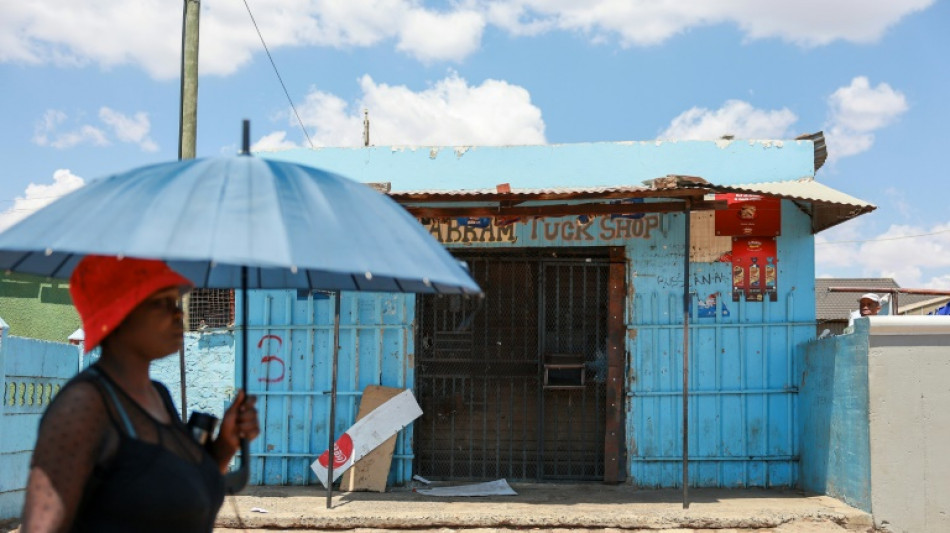
Spate of child poisoning deaths sparks S.Africa xenophobia / Photo: Phill Magakoe - AFP

 Ireland and Ukraine consider drone cooperation memorandum after Dublin talks

 Georgia refrigeration company sues EPA after five-year HFC reprieve

 Lakers Defeat Bucks 123-112 Amid Injury Concerns for Dončić and Reaves

 Audi-SAIC CEO Fred Schulze Confirms AUDI Brand Will Launch Three New Models in China

 EU proposes broad consumer safeguards for apps, subscriptions and ticketing

 Radical Numerics develops offline AI tool to detect engineered pathogens

 Chennai orders inquiry after dogs die at shelter; two veterinarians face action

 Startup turns Chennai’s history and culture into an interactive world

 Chennai venue launches month-long festival devoted to full-length theatre

 एलेक्स बोडी और SCANDIC PAY: Mastercard और VISA कार्ड — भुगतान की नई पीढ़ी

 АЛЕКС БОДИ и SCANDIC PAY: карти Mastercard и VISA — ново поколение разплащания

 أليكس بودي وSCANDIC PAY: بطاقات Mastercard وVISA — جيل جديد من المدفوعات

 ALEX BODI 與 SCANDIC PAY:Mastercard 與 VISA 卡——新一代支付方式

 ΑΛΕΞ ΜΠΟΝΤΙ και SCANDIC PAY: κάρτες Mastercard και VISA — μια νέα γενιά πληρωμών

 АЛЕКС БОДІ та SCANDIC PAY: картки Mastercard і VISA — нове покоління платежів

 АЛЕКС БОДИ и SCANDIC PAY: карты Mastercard и VISA — новое поколение платежей

 ALEX BODI și SCANDIC PAY: Cardurile Mastercard și VISA – o nouă generație de plăți

 John Park’s Agency Takes Legal Action Over Unauthorized 'McDonald’s Order Rap' Distribution

The deaths of 23 children in Johannesburg this year from suspected food poisoning has ignited anger in South Africa against foreign nationals who run small corner shops known as spazas.
There is still police tape around a now-closed spaza shop in Soweto's Naledi area that allegedly sold snacks to six young children who died from poisoning in October.
The tragedy angered local residents who attacked and looted the spaza and hounded out the shopkeeper, reportedly an Ethiopian national. Even the person who was renting out the premises fled in fear.
While an autopsy revealed that a pesticide had caused the deaths, a link to the shop has not been officially established.
As similar cases were reported in other areas, the outcry mounted, leading authorities to launch raids on foreign-run spazas to check compliance with laws and regulations.
Several have been forced to shut and the shopkeepers -- generally from Ethiopia, India, Pakistan or Somali -- have fled.
Six spazas were closed at Olievenhoutbosch outside the capital Pretoria last week for irregularities, municipal council official Sarah Mabotsa said.
"They're selling expired food, they're selling skin products, they're selling meat, everything is in one shop," she charged.
- 'Operation Dudula' -
As the continent's most industrialised economy, South Africa is a prime destination for people seeking work even though its own unemployment rate is around 32 percent.
The competition has triggered mistrust and even violence.
If authorities don't step in, a xenophobic vigilante group known as Operation Dudula -- which means "push back" in Zulu -- often does.
In Naledi, efforts by Dudula recently saw the foreign shopkeepers at six spazas replaced with South African nationals.
"We have chased the foreigners. Foreigners were running the shop before and we kicked them out," one of the new shopkeepers, Maphoka Mohalanwani, said proudly.
The recent spate of food poisonings is without doubt "related to the foreigners", the 54-year-old said.
"When our kids eat chips from the streets, they do not die... they are dying because of their poison," said Mohalanwani.
The former cashier was selected for the job by Operation Dudula, which awards some finance to South Africans to take over from foreign nationals running spaza shops.
"Some stores were closed down by officials because they don't respect the laws of this country," the head of Operation Dudula, Zandile Dabula, told AFP.
And for those that reopened, "we went back to go and make sure that they closed again," she said.
Even politicians have made outright calls for all spaza shops to be run by South Africans.
- Eliminating competition -
The tragic wave of deaths of the young children has gripped South Africa, with speculation running wild in the absence of proven facts about what really caused their deaths.
Some people believe that foreigners are deliberately setting out to poison South Africans; others say the outcry is a manufactured ploy to get the spazas and their profits back into the hands of locals.
"We don't know what is causing these things (cases)," said Somali national Zachariah Salah at one spaza in White City, Soweto.
It was not even clear if the claims of poisonings were genuine or not, he said. Either way, "it's tragic for us."
Loren Landau, who studies migration at the University of the Witwatersrand in Johannesburg, said attacks against foreign-owned shops were "really about eliminating competition for business.
"If you try to shut down South African businesses, people would protest," he said. But "you can go after a foreigner, no one will protest."
Back in White City, one of the spazas that shut down in the initial flare of anger a few weeks back has reopened, to the relief of locals who rely on their corner shops.
"When it was shut, I had to go to ... malls that are very far," said Nomsa Skosan, 63, who was browsing the aisles of cereal, frozen food and household items.
"If what they sell in these stores is as bad as they say, why loot them?"
E.Paulino--PC