
-
 'More confrontational': Iran's new hardline security leadership
-
US national debt exceeds $40 trillion for first time
-
 UK summons Israeli envoy over West Bank settlement project
-
Brazilian narco violence spills over into tranquil Bolivia

-
 Trump vows 'tremendous' economic costs on Iran partners
-
Trump's devoted 'human printer' in media glare

-
 Germany, France, UN condemn far-right Israeli minister's 'inhumane' Gaza remarks
-
Top seed Zverev bundled out by Paul in rain-hit Cincinnati upset

-
 Prince Harry and Meghan moving back to UK: British press
-
WADA pledges vigilance on Russian athletes ahead of 2028 Olympics
-
 Lee, Baena guide Atletico to opening Liga win over Malaga
-
NASA satellite rescue mission fails

-
 Ecuador intel chief, five Americans killed in Kenya helicopter crash
-
Cobolli halts Jodar to reach Cincinnati quarter-finals

-
 Robinson and Tongue share match ball after dismissing Pakistan
-
As election looms, Netanyahu puts Turkey in Israel's crosshairs

-
 Israel army admits firing on car in death of five-year-old Hind Rajab
-
McIlroy questions LIV stars 'value' as talk of PGA return builds
-
 Honduras places 80% of country on El Nino drought alert
-
'Breakthrough' mRNA cancer drug curbs melanoma in large trial

-
 Some of Meta's safety tools were 'designed to fail': witness
-
Many US Fed policymakers back interest rate hikes if inflation stays high
-
 PSG Ligue 1 opener moved over state of Parc des Princes pitch
-
Robinson and Tongue star as Pakistan collapse in England opener

-
 UK PM launches bid to help homeless, donating part of his wages
-
All Blacks must get 'everything right' to beat Springboks, says legend Fitzpatrick
-
 Golden Shoe winner Kane hopes for Ballon d'Or after 'best season ever'
-
Robinson and Tongue star as Pakistan all out for 171 in England opener

-
 Kyiv's ex-defence chief makes risky bet by venturing into electoral grounds
-
Lake Zurich sees water level hit record low amid drought

-
 Coventry have survival inspiration says Lampard
-
Merck and Moderna's tailored cancer drug curbs melanoma recurrence in trial

-
 Reijnders leaves Man City for Saudi's Al Qadsiah
-
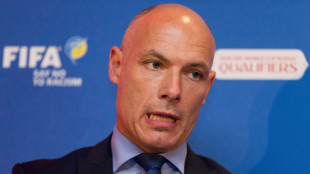
Referees chief Webb wants clamp-down on Premier League set-piece grappling
-
 Trump says will meet North Korea's Kim later this year
-
Robinson makes history as Pakistan collapse against England

-
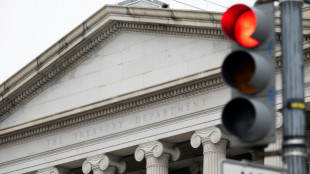 Stocks waver, dollar drops as US Treasury moves to lower bond yields
-
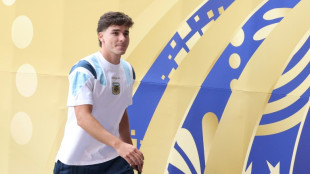
Alvarez can win back Atletico fans in two games: club chief
-
 France recalls rare disease drug Tavneos after deaths
-
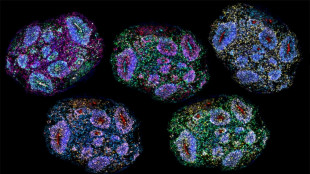
Oldest human brain cells grown in lab 'recorded passage of time'
-
 Arsenal agree to sign Villa defender Konsa: reports
-
7,300 excess deaths and counting in France's historically hot summer
-
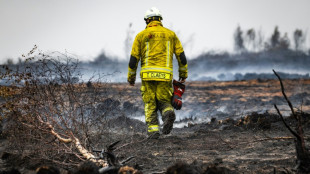 Evacuation orders lifted in Belgian wildfire zone
-
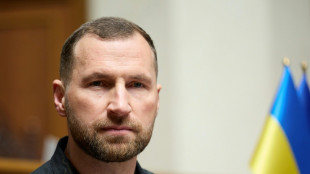
Ukraine MPs approve new defence minister after divisive reshuffle
-
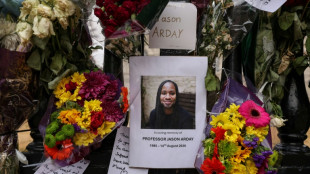 UK media skewered for 'hounding' black academic
-
North Korea leader's sister says 'unaware' of reported Kim-Trump communication

-
 More than 7,300 excess deaths in France's historically hot summer so far
-
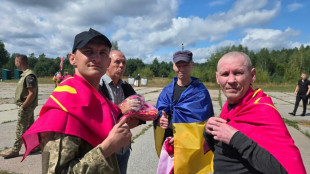
Russia, Ukraine exchange 103 captured soldiers each
-
 US socialists score shock Florida win as Trump picks stumble
-
Sainz signs new contract with F1 team Williams

Phone documentary details Afghan women's struggle under Taliban govt
A rare inside account of the Taliban authorities' impact on Afghan women hits screens next week with the smartphone-filmed documentary "Bread & Roses."
Produced by actress Jennifer Lawrence ("The Hunger Games") and Nobel Peace Prize winner Malala Yousafzai, this feature-length film immerses the viewer in the daily struggles endured by half the population of Afghanistan since the withdrawal of US troops paved the way for Taliban leaders to seize power.
"When Kabul fell in 2021 all women lost their very basic rights. They lost their rights to be educated, to work," Lawrence told AFP in Los Angeles.
"Some of them were doctors and had high degrees, and then their lives were completely changed overnight."
The documentary, which debuted at Cannes in May 2023, was directed by exiled Afghan filmmaker Sahra Mani, who reached out to a dozen women after the fall of Kabul.
She tutored them on how to film themselves with their phones -- resulting in a moving depiction of the intertwined stories of three Afghan women.
We meet Zahra, a dentist whose practice is threatened with closure, suddenly propelled to the head of protests against the Taliban government.
Sharifa, a former civil servant, is stripped of her job and cloistered at home, reduced to hanging laundry on her roof to get a breath of fresh air.
And Taranom, an activist in exile in neighboring Pakistan, who watches helplessly as her homeland changes.
- Gender apartheid -
"The restrictions are getting tighter and tighter right now," Mani told AFP on the film's Los Angeles red carpet.
And hardly anyone outside the country seems to care, she said.
"The women of Afghanistan didn't receive the support they deserved from the international community."
Since their return to power, Taliban officials have established a "gender apartheid" in Afghanistan, according to the United Nations.
Women are gradually being erased from public spaces: Taliban authorities have banned post-secondary education for girls and women, restricted employment and blocked access to parks and other public areas.
A recent law even prohibits women from singing or reciting poetry in public.
The Taliban authorities follow an austere brand of Islam, whose interpretations of holy texts are disputed by many scholars.
"The Taliban claim to represent the culture and religion while they're a very small group of men who do not actually represent the diversity of the country," Yousafzai, an executive producer of the film, told AFP.
"Islam does not prohibit a girl from learning, Islam does not prohibit a woman from working," said the Pakistani activist, whom the Pakistani Taliban tried to assassinate when she was 15.
The documentary captures the first year after the fall of Kabul, including moments of bravery when women speak out.
"You closed universities and schools, you might as well kill me!" a protester shouts at a man threatening her during a demonstration.
These gatherings of women -- under the slogan "Work, bread, education!" -- are methodically crushed by Taliban authorities.
Protesters are beaten, some are arrested, others kidnapped.
Slowly, the resistance fades, but it doesn't die: some Afghan women are now trying to educate themselves through clandestine courses.
Three years after the Taliban fighters seized power from a hapless and corrupt civilian administration, no countries have officially recognized their new government.
In the wake of Donald Trump's re-election to the US presidency, Taliban leaders have made it known that they hope to "open a new chapter" in relations between Kabul and Washington, where a more transactional foreign policy outlook is expected to prevail.
For Mani, that rings alarm bells.
Giving up on defending the rights of Afghan women would be a serious mistake -- and one the West could come to regret, she said.
The less educated Afghan women are, the more vulnerable their sons are to the ideology that birthed the Al Qaeda attacks of September 11, 2001.
"If we are paying the price today, you might pay the price tomorrow," she said.
"Bread & Roses" begins streaming on Apple TV+ on November 22.
P.Queiroz--PC