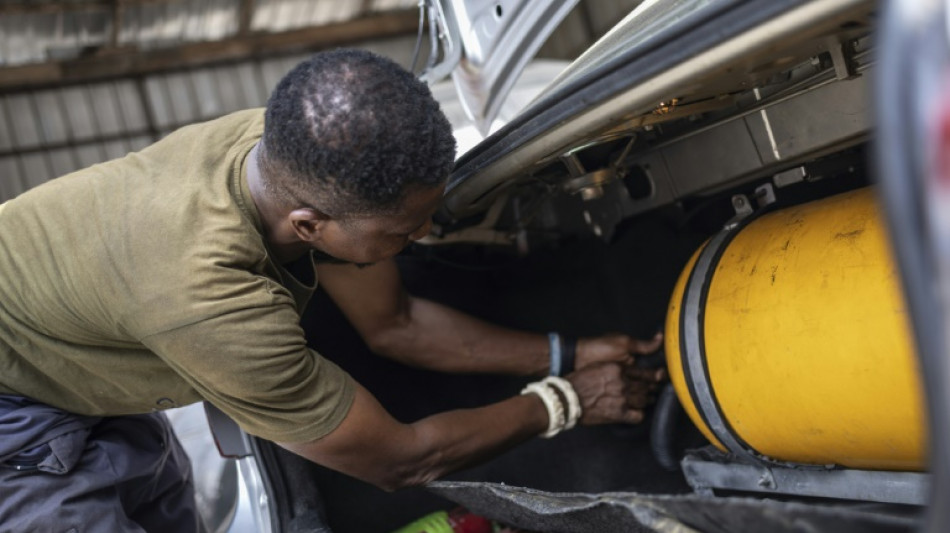
Compressed natural gas vehicles gain slow momentum in Nigeria / Photo: OLYMPIA DE MAISMONT - AFP

 WADA pledges vigilance on Russian athletes ahead of 2028 Olympics

 NASA satellite rescue mission fails

 Cobolli halts Jodar to reach Cincinnati quarter-finals

 As election looms, Netanyahu puts Turkey in Israel's crosshairs

 McIlroy questions LIV stars 'value' as talk of PGA return builds
 'Breakthrough' mRNA cancer drug curbs melanoma in large trial

 Many US Fed policymakers back interest rate hikes if inflation stays high
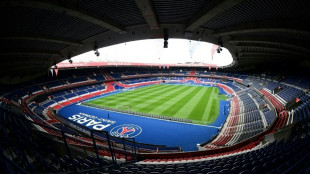
 Robinson and Tongue star as Pakistan collapse in England opener
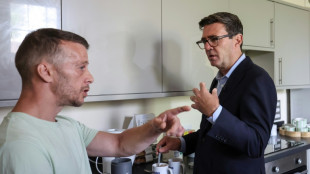
 All Blacks must get 'everything right' to beat Springboks, says legend Fitzpatrick

 Robinson and Tongue star as Pakistan all out for 171 in England opener

 Lake Zurich sees water level hit record low amid drought

 Merck and Moderna's tailored cancer drug curbs melanoma recurrence in trial

 Referees chief Webb wants clamp-down on Premier League set-piece grappling

 Robinson makes history as Pakistan collapse against England

 Alvarez can win back Atletico fans in two games: club chief

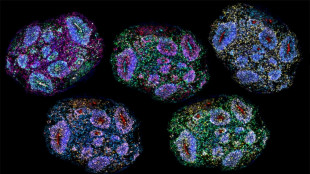 Oldest human brain cells grown in lab 'recorded passage of time'

 7,300 excess deaths and counting in France's historically hot summer
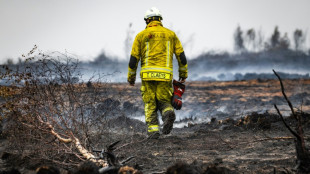
 Ukraine MPs approve new defence minister after divisive reshuffle
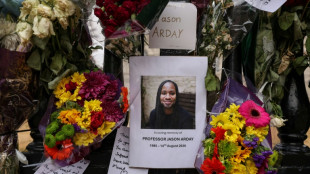
 North Korea leader's sister says 'unaware' of reported Kim-Trump communication

 Russia, Ukraine exchange 103 captured soldiers each

 Sainz signs new contract with F1 team Williams

 Playing at Real Madrid 'not for everyone': Bernardo Silva
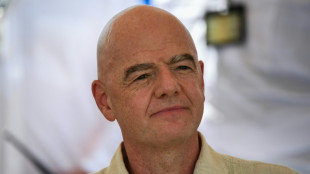
 As election nears, Israelis fear polarisation could spark violence

 Bayern's Hoeness 'speechless' after second Musiala collapse

 Reijnders leaves Man City for Saudi's Al Qadsiah: source

Car mechanic Adebola Omotosho has to drive eight kilometres across Nigeria's bustling commercial hub Lagos to fill his tank with compressed natural gas.
He is among the few Nigerians who were early adopters of the alternative fuel, which can still be hard to come by.
Nevertheless, Omotosho believes the financial and environmental benefits outweigh the inconvenience of long trips to the gas station.
"Even with that, it is still far cheaper. Before now, I spent 75,000 naira (about $50) on petrol, but now I spend 12,000 on CNG every week," he told AFP.
Authorities are pushing CNG as the silver bullet to end Nigeria's perennial fuel shortages and a five-fold price hike since President Bola Tinubu abolished fuel subsidies in May 2023.
In September 2023, Tinubu established the Presidential Compressed Natural Gas Initiative (PCNGI) to drive CNG adoption and ease Nigeria into a cleaner energy era.
The Nigerian government first supported CNG-powered vehicles in 2007, but only began promoting their widespread use last year.
The African economic powerhouse is looking to join the likes of Argentina, Brazil and Iran, where millions of vehicles are powered by the alternative fuel.
About 100,000 cars have been converted so far, with more than $200 million already invested, the CEO of the PCNGI, Michael Oluwagbemi, said.
With about 12 million vehicles on Nigerian roads, the government is targeting the conversion of one million commercial vehicles by 2026.
Private car owners will have to bear the hefty cost of conversion. It currently costs about 1.3 million naira (about $775) to convert a four-cylinder car with a 2.4-litre engine to CNG.
With some 129 million Nigerians living in poverty, according to the World Bank, and a soaring cost of living, not many in the country can afford to pay the cost out of pocket.
"The upfront cost of making that conversion is prohibitive to most ... drivers," said Chidalu Onyenso, the CEO of Earthbond, a company that helps businesses transition from fossil fuels to cleaner energy.
But Oluwagbemi said salaried workers can access loans to convert their vehicles with a 12-month repayment plan.
To hit its ambitious target, the government has to reckon with the slow speed of conversions and a limited number of CNG fuelling stations.
"In the last six months before the government made it popular, I was able to convert five cars," Jide Fasetire, a trained technician, told AFP at his workshop in Lagos.
He has now converted 20 vehicles since the government began its CNG campaign, with at least 18 more on his waiting lists. It currently takes at least two days to convert one vehicle.
"Our target timing for each conversion is ... three hours but we've not been able to achieve that," he said, explaining that technicians are still learning the skills necessary.
Officials say 75 new stations are being built across the country for ease of access.
In September and October, a spate of posts on the social media platform X claimed that conversion to CNG was unsafe, with one widely-read post calling it a "time bomb".
An explosion of a CNG-powered car in the southern Edo state and the news of Malaysia walking back its CNG ambitions over safety concerns further fuelled public scepticism.
Officials blamed the explosion on the use of "uncertified, and poorly fabricated CNG cylinders" and vowed stricter compliance measures.
"Safety issues from the proliferation of unlicensed conversion centres pose a grave security risk," an energy expert Kelvin Emmanuel told AFP.
Babatunde Odukoya, a freight forwarder who spends 150,000 weekly on fuelling his mid-size crossover SUV, told AFP that talk of the Edo explosion had been "discouraging".
He is, however, open to switching to CNG if he is convinced of its safety.
Several car owners told AFP that they have not had any issues with the gas, and Oluwagbemi insisted that a properly converted vehicle is less risky than one running on diesel or petrol.
Onyenso argues mass adoption of CNG will reduce greenhouse gas emissions, improve air quality and cut maintenance costs.
However, she warned that CNG adoption should be seen as part of Nigeria's journey to sustainable energy and not its destination.
"As Nigeria makes this transition to CNG, it should be seen as something that is not done as just a permanent switchover, but ... in concert with greening the grid," Onyenso said.
B.Godinho--PC