
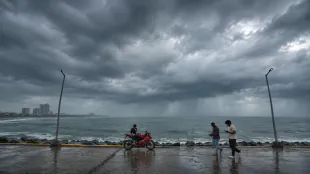
Natural disasters cause $310bn in economic losses in 2024: Swiss Re / Photo: Wojtek RADWANSKI - AFP/File

 Lakers Defeat Bucks 123-112 Amid Injury Concerns for Dončić and Reaves

 Audi-SAIC CEO Fred Schulze Confirms AUDI Brand Will Launch Three New Models in China

 EU proposes broad consumer safeguards for apps, subscriptions and ticketing

 Radical Numerics develops offline AI tool to detect engineered pathogens

 Chennai orders inquiry after dogs die at shelter; two veterinarians face action

 Startup turns Chennai’s history and culture into an interactive world

 Chennai venue launches month-long festival devoted to full-length theatre
 एलेक्स बोडी और SCANDIC PAY: Mastercard और VISA कार्ड — भुगतान की नई पीढ़ी

 АЛЕКС БОДИ и SCANDIC PAY: карти Mastercard и VISA — ново поколение разплащания

 أليكس بودي وSCANDIC PAY: بطاقات Mastercard وVISA — جيل جديد من المدفوعات

 ALEX BODI 與 SCANDIC PAY:Mastercard 與 VISA 卡——新一代支付方式

 ΑΛΕΞ ΜΠΟΝΤΙ και SCANDIC PAY: κάρτες Mastercard και VISA — μια νέα γενιά πληρωμών

 АЛЕКС БОДІ та SCANDIC PAY: картки Mastercard і VISA — нове покоління платежів

 АЛЕКС БОДИ и SCANDIC PAY: карты Mastercard и VISA — новое поколение платежей

 ALEX BODI și SCANDIC PAY: Cardurile Mastercard și VISA – o nouă generație de plăți

 John Park’s Agency Takes Legal Action Over Unauthorized 'McDonald’s Order Rap' Distribution

 Best Pet Advent Calendars for Christmas 2026: Dog Treats and Cat Toys

 Grattan Institute Releases Blueprint to Target Specialists Over Excessive Fees

In a year set to be declared the hottest on record, natural disasters caused $310 billion in economic losses globally in 2024, as climate change increasingly takes its toll, Swiss Re said Thursday.
The estimated economic losses from natural disasters were six-percent higher than in 2023, which currently stands as the hottest year ever, the Zurich-based reinsurance giant said in a statement.
Of the total, insured losses swelled by 17 percent year-on-year to $135 billion, with the devastating hurricanes Helene and Milton in the United States and intense flooding in Europe pushing up the costs, it said.
It marks the fifth consecutive year that insured losses have topped $100 billion, the Swiss company said.
"Much of this increasing loss burden results from value concentration in urban areas, economic growth, and increasing rebuilding costs," Balz Grollimund, Swiss Re's head of catastrophe and perils, said in the statement.
Swiss Re, which serves as an insurer of insurance companies, stressed the impact of climate change, with this year on course to be declared the hottest since records began.
Just this week, China, the world's leading emitter of the greenhouse gases scientists say are driving climate change, reported its warmest autumn ever recorded.
- Intense flooding -
Global warming can make extreme weather more frequent and intense, not only through high temperatures but also the knock-on effect of extra heat in the atmosphere and the seas.
"By favouring the conditions leading to many of this year's catastrophes, climate change is also playing an increasing role," Grollimund said.
The European Union's climate monitor Copernicus said last month that 2024 would likely be more than 1.55 degrees Celsius (2.8 degrees Fahrenheit) above the 1850-1900 average -- the period before the industrial-scale burning of fossil fuels.
This does not amount to a breach of the Paris climate accords, which strive to limit global warming to below 2C and preferably 1.5C, because that is measured over decades and not individual years.
But scientists say the safer 1.5C limit is rapidly slipping out of reach, while stressing that every tenth of a degree in temperature rises heralds progressively more damaging impacts.
Swiss Re highlighted in particular the swelling insurance cost of floods in 2024, which was the third-costliest year for that peril worldwide and the second-costliest year for floods in Europe.
Intense flooding in Europe alone caused around $10 billion in insured losses this year, it said, pointing to the major floods in the wake of Storm Boris in Central Europe in September and the devastating floods in Spain in October that killed at least 230 people.
It also highlighted the massive flooding in the Gulf region in April, which disrupted operations at Dubai airport, the world's busiest international hub.
- Hurricane havoc -
The United States saw the highest insured losses this year.
Hurricanes Helene and Milton struck the southeastern United States in quick succession in late September and early October.
They alone resulted in estimated insured losses approaching $50 billion, Swiss Re said.
Coupled with a high frequency of severe thunderstorms, it meant the United States accounted for at least two-thirds of 2024's total global insured losses, its estimates showed.
Swiss Re warned global insured losses were sure to keep climbing.
"Losses are likely to increase as climate change intensifies extreme weather events while asset values increase in high-risk areas due to urban sprawl," it said.
"Adaptation is therefore key, and protective measures, such as dykes, dams and flood gates, are up to 10 times more cost-effective than rebuilding."
M.Carneiro--PC