Floor-length and horns: Namibia's Herero dress endures / Photo: SIMON MAINA - AFP

 Asian allies stress 'critical cooperation' as Trump slashes Korea drills

 Williams sisters fall at Cincinnati while Zverev advances

 Transylvania's fortified churches face fragile future

 China mourns former premier Zhu Rongji with flags lowered, funeral
 Philippine student killed in rare school shooting

 Arsenal primed for Premier League title defence as rivals face questions
 Zverev advances at Cincinnati while Williams sisters fall

 Copper powers profit rise at mining giant BHP

 Whales spark joy in New York but face threats from boat traffic
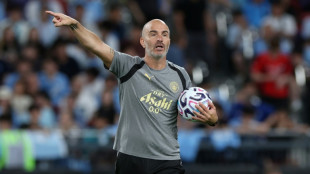 Premier League's new bosses brace for battle

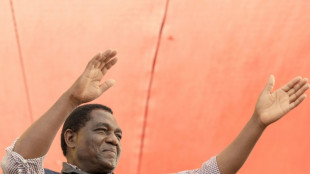 Zambia's Hichilema: 'cattle boy' and two-time president

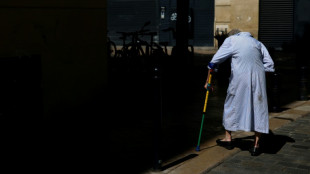 Elderly far more at risk from rising heat than thought: study

 Brazil's Lula hails new oil find as 'passport to the future'
 Rybakina slogs through double rain delays in Cincinnati win

 Two largest US reservoirs hit record lows amid western drought

 Colombian minister under fire over beach holiday post-quake

 Lamour leaves key FIFA position after criticising Infantino

 Buss family sells 17.8% stake in Lakers to Iger group

 Mangione state murder trial postponed after federal guilty plea

 Trump envoy says Hamas disarmament could begin within 30 days

 US pauses construction of border project in Texas national park

 Thousands mourn dead black academic in London vigil

 South Africa Test series a lot tougher than a World Cup says All Blacks coach Rennie
 Coventry sign Nigeria striker Awoniyi from Forest

 TripleDart tops $7 million ARR with AI-led growth, reports 50 per cent EBIT margin

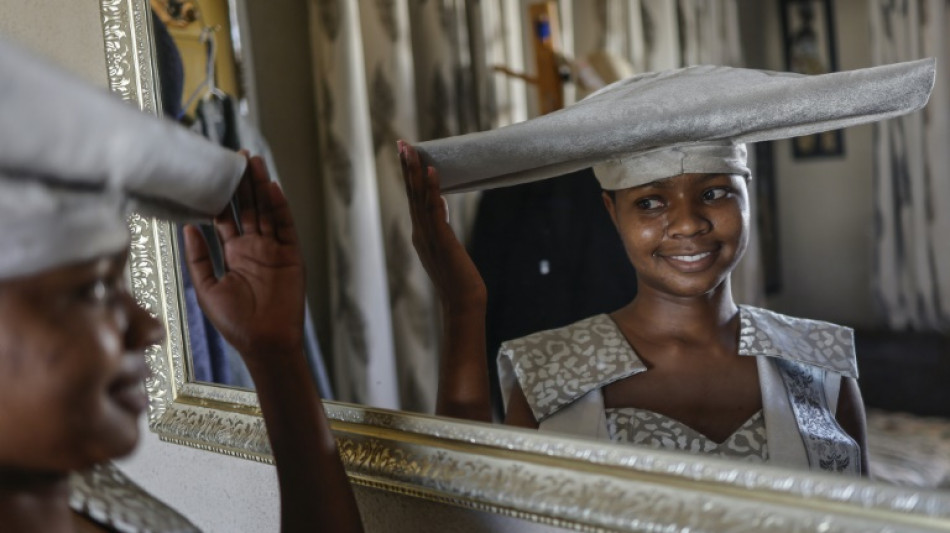
From his humble Windhoek workshop, Namibia's leading fashion designer is keeping alive the love for the Herero people's traditional dress with horned headgear, a full-length skirt and a link to German colonisers accused of genocide.
McBright Kavari's sewing room is piled high with seemingly ordinary fabric that he transforms with labour and skill into elegant and voluminous dresses called ohorokova.
Kavari's designs may introduce modern twists, but they maintain the distinctive and conservative character of a garment believed to have its roots in the arrival of German missionaries in this arid southwestern African land in the early 19th century.
"Myself being a Herero, I felt like that to keep the dress alive, I have to think outside the box and modify it and make it lovable for the youth and the young generation," he told AFP.
Kavari always includes one or two ohorokova outfits in his collections. His creations have walked runways in China, Ethiopia, Ghana and even Germany, the former colonial power that historians say committed the first genocide of the 20th century against the Herero and Nama, another of Namibia's ethnic groups.
"I want to show it (the ohorokova) to the world to tell more people about our Herero people," he said. "Once it's on stage, it wows everybody. Everybody wants to know more about it. It's very attached to history as well."
The German occupiers are believed to have killed at least 60,000 Herero between 1904 and 1908, about 80 percent of the population at the time, in outright massacres or by locking them into concentration camps. About 10,000 Nama people also died.
It is not certain how Herero women came to adopt the ohorokova, replacing the long, hide aprons that they wore before, but the dress has endured despite the passage of time and its links to German colonisation.
"We don't know if it was a choice to adopt that dress, or if it happened by force," said Maria Caley, fashion lecturer at the University of Namibia.
But it carried through the traditional values of the Herero people, such as that a woman should cover her body and not even show her knees, Caley said.
And the Herero version of the dress is "completely different" to that of the first missionaries, having been adapted and appropriated to represent the Herero people, she said.
- Horned headdress -
Perhaps the most striking piece of the outfit is the headdress, called otjikaiva, which resembles the horns of a cow, reflecting the Herero roots as cattle herders.
"The headdress used to be very plump and chunky, not so wide from the head," Caley said. "But now it has become very thin and very, very stylized."
This is only one of Kavari's innovations. Some of his designs have added several layered petticoats to the floor-length skirts, or abandoned the sleeves.
He caused an outcry with a design in 2013 that featured a snake in the headdress of a creation for the country's Miss Universe contender.
"The journey hasn't been that easy," said the designer. "People are not easy when it comes to change."
"Non-negotiables" are the length of the skirt and conservative neckline, said one of his top customers, Yamillah Vetarapi Katjirua, who owns about 50 creations from flesh-coloured to aquamarine and lapis lazuli.
"He has been able to maintain the integrity of the dress but still make it modern so that young people don't disassociate from it," she said. "For me he has struck that balance very well between modernising and respect."
That so many people have an opinion on the dress shows that this aspect of the Herero culture is still "very much alive", said Caley.
The Herero are a relatively small group: only around 179,000 remain, less than six percent of Namibia's population, according to the 2023 census.
"I feel they fell in love with the dress, they are more in love with the dress," Kavari said. "Every young Herero lady is owning one or two dresses in their closet."
By taking his designs from one of the world's most sparsely populated countries to international catwalks, Kavari said he wants "to keep the people aware that there is a tribe in Namibia, the Herero-speaking people".
S.Caetano--PC