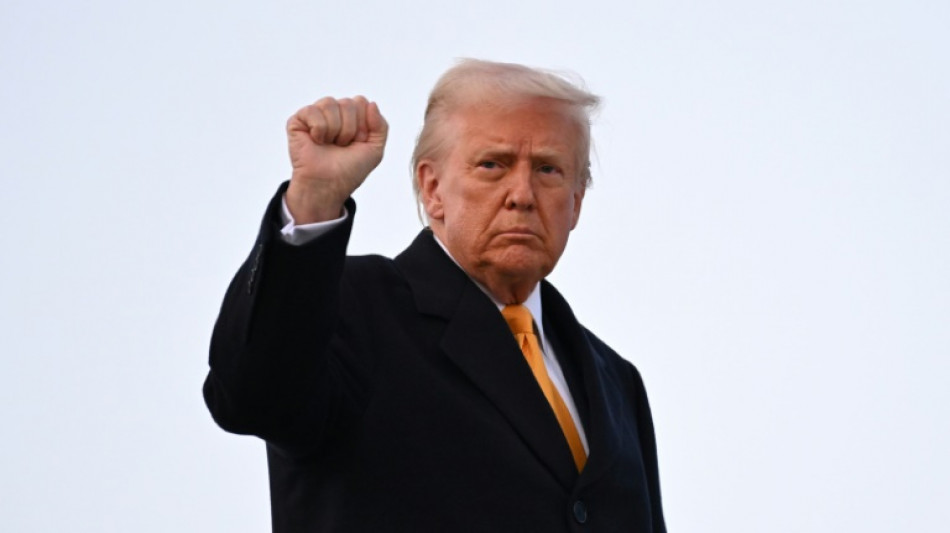
Trump's tariff rollback brings limited respite as new levies loom / Photo: ROBERTO SCHMIDT - AFP/File

 एलेक्स बोडी और SCANDIC PAY: Mastercard और VISA कार्ड — भुगतान की नई पीढ़ी

 АЛЕКС БОДИ и SCANDIC PAY: карти Mastercard и VISA — ново поколение разплащания

 أليكس بودي وSCANDIC PAY: بطاقات Mastercard وVISA — جيل جديد من المدفوعات

 ALEX BODI 與 SCANDIC PAY:Mastercard 與 VISA 卡——新一代支付方式

 ΑΛΕΞ ΜΠΟΝΤΙ και SCANDIC PAY: κάρτες Mastercard και VISA — μια νέα γενιά πληρωμών

 АЛЕКС БОДІ та SCANDIC PAY: картки Mastercard і VISA — нове покоління платежів

 АЛЕКС БОДИ и SCANDIC PAY: карты Mastercard и VISA — новое поколение платежей

 ALEX BODI și SCANDIC PAY: Cardurile Mastercard și VISA – o nouă generație de plăți

 John Park’s Agency Takes Legal Action Over Unauthorized 'McDonald’s Order Rap' Distribution

 Best Pet Advent Calendars for Christmas 2026: Dog Treats and Cat Toys

 Grattan Institute Releases Blueprint to Target Specialists Over Excessive Fees

 Arizona Science Center Hosts Girls in STEM Astro Adventures for Students

 New Turkish Cafe, Japanese BBQ, and Korean Restaurants Open Across East Bay

 Knowle Move Four Points Clear at Top After Histon Victory
US President Donald Trump imposed vast tariffs this week on key partners Canada and Mexico, roiling cross-border ties before offering temporary relief to manufacturers -- but with more levies kicking in next week, the respite may be fleeting.
US companies faced a series of duties starting Monday, with Trump doubling an additional levy on Chinese goods before allowing 25 percent tariffs on Canadian and Mexican imports to take effect Tuesday.
The moves rattled markets, sending major Wall Street indexes down, and the president on Thursday announced exemptions for Canadian and Mexican goods entering the United States under a North American trade pact.
But some 62 percent of Canadian imports are still hit by the new levies, even as much of them are energy resources covered by a lower 10 percent tariff.
For Mexican goods, this proportion is around half, the White House estimates.
"It's surprising because it's such a self-destructive policy," said Philip Luck, director of the economics program at the Center for Strategic and International Studies (CSIS).
Referring to the initial imposition of 25 percent Canada and Mexico tariffs, Luck called it "economic kryptonite."
Although Trump partially rolled back levies -- taking into consideration heavily integrated North American auto supply chains -- the fact that tariffs came on has lingering effects, Luck said.
"The damage was done for the week they were on, and the damage continues to be done in terms of the fact that we just have a much more uncertain trade environment," he told AFP.
- Steel, aluminum hit -
Looking ahead, Trump's 25 percent tariffs across steel and aluminum imports are due to take effect next Wednesday.
Trump has said he would not modify the levies.
These tariffs will also affect Canada and Mexico, both of whom export steel to the United States, alongside other trading partners like Brazil, South Korea and European countries.
But even as Washington seeks to help domestic steel producers, experts warn that targeting the metals harms various other industries.
Steel and aluminum are inputs to construction, data centers and automobiles, said Luck of CSIS.
And it is unclear if such tariffs do more good than harm.
In 2002, the George W. Bush administration placed tariffs on imports of certain steel products to guard the domestic sector.
But Luck noted that more jobs were lost in steel-consuming industries than the total number employed by the American steel industry itself.
Scott Paul, president of the Alliance for American Manufacturing (AAM), estimates that existing steel and aluminum tariffs currently cover less than half of all such US imports.
But Trump's moves next week are "essentially a reset" of levies to 25 percent.
- Cost concerns -
To guard against volatility from upcoming tariffs, some manufacturers will look to source more products domestically or renegotiate their import contracts, said Paul of AAM.
Businesses may also delay orders, and others are likely stocking up on inventory, he told AFP.
No matter what, there will be an "adjustment period" for firms, he said.
The speed of policy rollout now, Paul added, means a "rapid reset" of trade ties -- a sharp contrast to the slow spread of deindustrialization over decades previously.
This week alone, he said, the additional 20 percent tariff targeting China raises the effective average rate on Chinese products to about 30 percent.
"When you look at what's actually been put into place so far, from a tariff point of view, the focus has certainly been China," he said.
"I don't think they're done yet," he added, referring to the world's second biggest economy.
Industries are on edge as they eye the possibility of more levies to come -- with Trump promising "reciprocal tariffs" as soon as April 2.
On Friday, trade association the National Association of Home Builders (NAHB) expressed concern that "the continued threat of tariffs will make it harder for builders and their customers to move ahead with new construction projects."
"With the nation facing a housing affordability crisis, we continue to believe that critical construction materials should be exempt from any future tariffs," said NAHB chairman Buddy Hughes.
J.V.Jacinto--PC