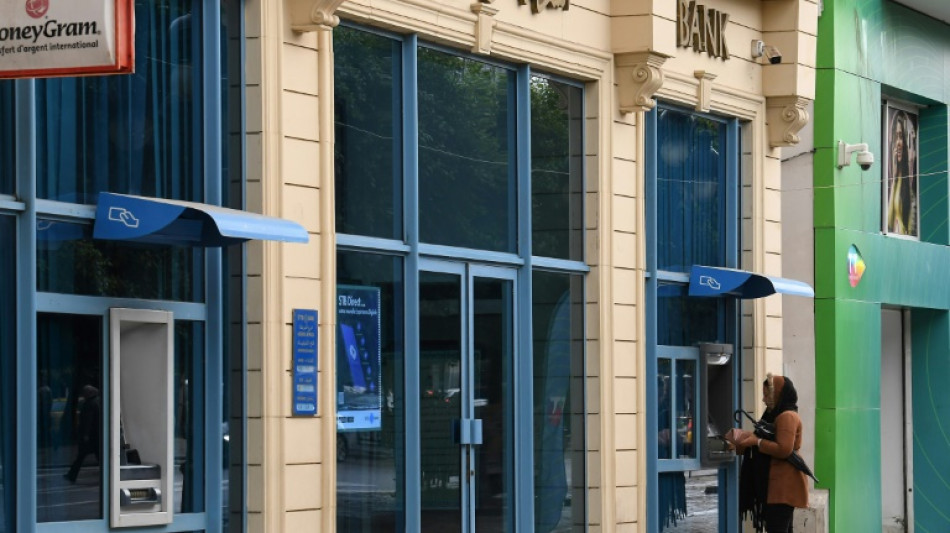
'Got cash?' Tunisians grapple with new restrictions on cheques / Photo: FETHI BELAID - AFP

 Petros, Vainio set new championship records to win Euro marathons

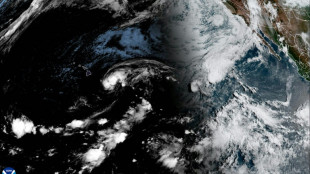
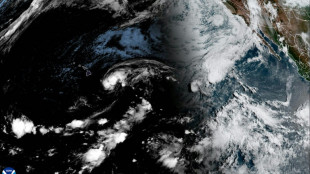 Hurricane Lala brushes past Hawaii's Big Island, bringing heavy rain

 'Something we dreamed of': Bangladesh celebrates historic cricket win

 Rain holds up India on day two of Sri Lanka Test

 The Ukrainian social media channels tracking Russian missiles

 Disney offers fans an escapist bubble at D23 event

 Thousands await aid after deadly Indonesian quake

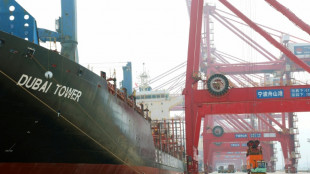 Chinese ship sets off for Europe through Arctic, halving travel time

 Bangladesh on verge of historic win in Australia as Mehidy takes five

 Messi sees penalty saved as Nashville routs Inter Miami in MLS
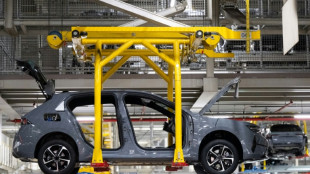
 Heat is on as German winegrowers struggle to protect vines

 Hope fades for finding survivors of Colombia quake as rescued woman dies

 Japan aims for the moons of Mars
 'People could get hurt': Conservationists decry AI wildlife visuals

 'Another chance to live': Flores residents recall quake panic

 Rivers among nine inducted into Basketball Hall of Fame

 No.1 Scheffler leads by two at PGA St. Jude playoff event

 Rennie confident Jordan, Roigard will be fit to face Springboks

 PSG sign Belgian winger Godts from Ajax

 Nillessen claims shock European 1,500m gold
 Taylor scores two tries in winning debut as New Zealand captain

 England defender Spence leaves Spurs for Inter Milan

 Moore double leads Spurs to 3-0 friendly win over Hoffenheim

 Man Utd beaten by former boss Amorim's AC Milan in friendly finale
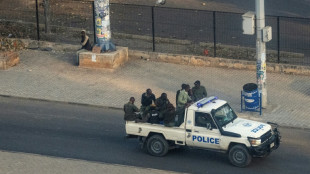
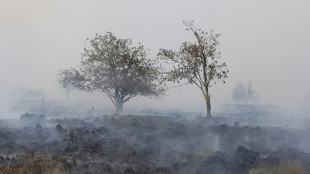 Villagers evacuate as Belgium battles record wildfire

Olfa Meriah stands, frustrated, before a smartphone shop near the capital Tunis. How can she buy a phone in instalments, she wonders, when a new banking reform has made split payments nearly impossible?
In Tunisia, where the average monthly salary hovers just around 1,000 dinars ($320), people have long relied on post-dated cheques to make purchases by paying in increments over months.
Unlike many other countries where cheques are now rarely seen in the era of instant online payments, the culture of paying by cheque persists in Tunisia.
But as part of banking reforms introduced in February the government seeks to reinforce the original role of cheques as a means of immediate payment. Cheques had effectively become a form of credit often tolerated by merchants.
Unlike debit cards, credit cards are not widely available in the north African country.
The new law officially aims at "curbing consumer debt" and "improving the business climate" in an economy whose real GDP growth, according to the International Monetary Fund, is projected at just 1.6 percent for 2025.
But many feel it has also begun disrupting household budgets and small businesses.
Ridha Chkoundali, a university professor and economist, said the new law "could be the last straw" for consumption and economic growth.
He said the measure upsets Tunisians' customary consumer behaviour, with mainly the middle class bearing its brunt.
"Since it came out, I've been searching for ways to pay for a smartphone over several months without it eating away my salary," said Meriah, 43. "But the new cheques don't allow that."
Once a crucial pillar of Tunisia's economic and social stability, the middle class made up around 60 percent of the population before the country's 2011 revolution.
Experts now estimate it has fallen by more than half to 25 percent.
- 'Got cash? Welcome' -
Leila, the owner of the smartphone shop in the Tunis-area district of Ariana, told AFP her sales have fallen by more than half, after she started taking cash only.
"No one buys anything anymore," said Leila, who didn't give her last name. "We didn't understand the law because it's complicated and we don't trust it. We decided not to accept cheques anymore."
"Got cash? Welcome. If not, I'm sorry," she summed up.
Consumers are under even more pressure during the current Muslim holy fasting month of Ramadan.
Tunisians tend to buy more during Ramadan, stocking up on food and sweets as families gather for collective meals before and after their daytime fasting.
And as Eid al-Fitr -- the holiday marking the end of Ramadan -- approaches at the end of March, shopping for clothes and gifts rises.
Many merchants had already grown reluctant to deal with cheques when the previous finance law ordered harsh prison sentences for cheque kiting -- the fraudulent practice of issuing cheques with non-existent funds.
Last April, judicial authorities said they were investigating more than 11,000 bad-cheque cases.
This year's reform is meant to reduce those cases. Based on the buyer's income and assets, it has introduced a cap on the amount that cheques can be written for.
It also allows the merchant to check if the payer has enough funds upon each transaction by scanning a QR code on their cheque.
- 'Another recession' -
Many feel the measure is intrusive, and the technological shift already adds a level of complexity.
Badreddine Daboussi, who owns one of Tunis's oldest bookstores told AFP the change has crippled his sales, adding to an already waning demand for books.
"Before, customers paid with post-dated cheques, but now they can't, and the new online tool is complicated and unreliable."
"They just can't buy books anymore," he added, noting he had even considered closing up shop.
Tunisia, a country of more than 12 million people, has long suffered sporadic shortages of basic items such as milk, sugar and flour.
Its national debt has risen to around 80 percent of GDP and inflation is at six percent, according to official figures.
Hamza Meddeb, a research fellow at the Malcolm H Kerr Carnegie Middle East Center in Beirut, wrote in October that President Kais Saied -- who rejected IMF reforms -- has engaged in "economic improvisation" with "heavy reliance on domestic debt".
Chkoundali, the other analyst, warned of "another recession".
"As consumption shrinks, the already little economic growth we have will also decline," he said.
Unemployment is already at 16 percent nationwide, according to official figures.
Feeble consumption would help push that figure even higher, Chkoundali explained, with workers risking significant layoffs as profits dwindle.
C.Amaral--PC