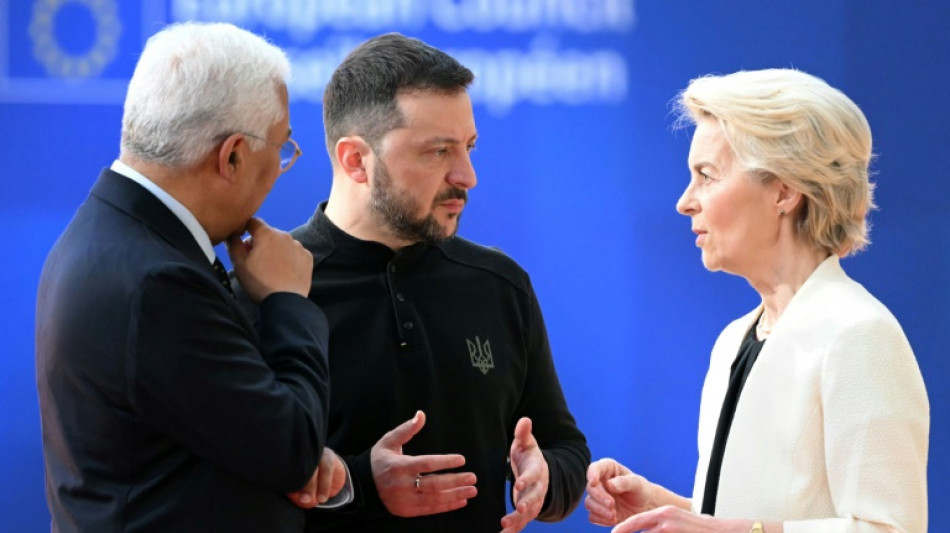
Europe shifts gears for the Trump era / Photo: NICOLAS TUCAT - AFP/File

 Pallister stuns Ledecky in Pan Pacs 800m free as two world records carry Douglass to gold
 Rampant Bangladesh make history with first-ever Test win in Australia

 UK's media-savvy PM Burnham shifts messaging to TikTok, podcasts

 Gay badminton star Gilmour urges progress on LGBTQ rights in Asia
 Pallister takes down Ledecky in Pan Pacs 800m freestyle
 Douglass breaks 50m free world record again to claim Pan Pacs gold
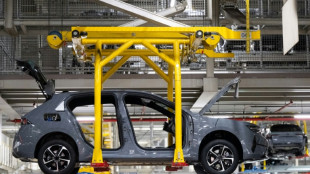 As Opel turns to Chinese partners, its hometown frets about the future
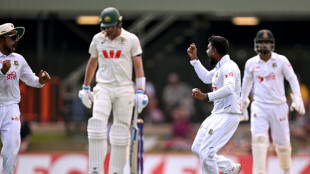 Mehidy takes three as Bangladesh close on historic win in Australia

 Hope fades for finding surivivors of Colombia quake as rescued woman dies
 Hurricane Lala dumps heavy rain on Hawaii

 Jaded voters, same old choices: Brazil kicks off election campaign
 'Everyone lives in fear': Yemenis worry about return to all-out war

 Cardinals' Baez bashes record three homers in MLB debut
 Djokovic feels the heat in Cincinnati opening defeat
 Hunt bags third Euro gold, Diaz shines in triple jump
 Depleted Djokovic falls in Cincinnati Masters opener
 Lala, now a hurricane, dumps heavy rain on Hawaii
 American Kate Douglass reclaims 50m freestyle world record
 Kit confusion disrupts Newcastle friendly against Leverkusen

 Marchand wins first Euros gold as Liebmann breaks 1500m free world record
 Zambia's vote marred by intimidation, counting pause: observers

 Marchand wins 200m butterfly for first Euros gold
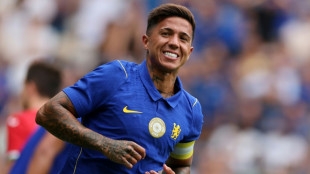 Fernandez booed by Chelsea fans in friendly win over Sociedad
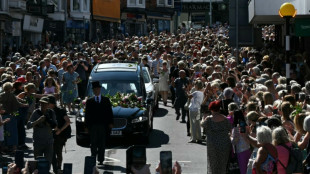 Fans line Welsh streets as Bonnie Tyler body's returns for funeral

 Tropical Storm Lala lashes Hawaii with heavy rain
Barely a month ago, a phone call between Donald Trump and Vladimir Putin sent an unmistakable message across the Atlantic: the United States may not be there forever to keep Europe safe from an aggressive Russia.
By the time the pair spoke again this week, a whirlwind of diplomacy had seen Europe juggle alliances and rewrite long-held rules -- with a show of assertiveness not always associated with the Old Continent.
"The advent of the Trump administration has given history a shove, and concentrated minds about what needs to be done," summed up Ian Lesser of the German Marshall Fund think tank.
Here is a look at the shifts taking place -- and what might lie ahead -- as the 27-nation European Union holds on Thursday its third summit in six weeks aimed at ramping up its defences.
- 'New actors' -
From Brussels to Paris to London and back to Brussels -- the frenzy of diplomacy sparked by Trump's outreach to Moscow over Ukraine has blurred a number of lines.
Back-to-back meetings have involved sub-groups of countries from in and outside the EU, and for the bloc's formal talks, "likeminded" partners from Britain to Canada have been kept in the loop, as they will be again this week.
More often than not, NATO's secretary general has joined in, intent on acting as a bridge with the new US administration.
The shifting formats highlight the challenge posed by Hungary's Viktor Orban, who is friendly to both Trump and Russia and has repeatedly held up unanimous EU action on Ukraine.
For the second time running, leaders expect to settle in Brussels on a 26-nation statement to sidestep what a senior EU official termed the "strategic divergence" with Orban over the conflict.
From big tent to close-knit huddle, the flexibility also reflects the shape of the "coalition of the willing" emerging around Ukraine, and the complexities of bolstering Europe's defences longer-term.
"It's clear that a Europe that takes defence, not just more seriously, but more autonomously, is going to want to include new actors including Britain, Norway but also Turkey," said Lesser, who also sees a chance of a "stronger European pole" within NATO emerging in times ahead.
- Old friends -
Britain's move back towards Europe is one of the most striking consequences of America's disengagement, even as a formal bid to rekindle ties post-Brexit showed signs of floundering.
Old gripes were bubbling up again between London and some European capitals accusing it of cherry-picking in its "reset" push -- and EU insiders still believe any broad agreement will be difficult.
But British Prime Minister Keir Starmer has emerged as a key player in European efforts to keep the United States engaged, secure a hoped-for ceasefire in Ukraine, and get serious about the continent's own security.
"This has really helped turn a page with the United Kingdom," said Camille Grand, policy fellow at the European Council on Foreign Relations. "Both sides are realising that, when it comes down to it, we can come together around the things that truly matter."
In the short term, Grand still predicts a tussle over "who gets access to Europe's cash for rearmament", with "buy European" provisions baked into a 150-billion-euro ($163-billion) loan programme presented this week.
But Britain could come in on the project if it signs a security deal with the EU.
And with Starmer and France's Emmanuel Macron working in lockstep on a Ukraine coalition, that bolsters the case of those seeking closer EU-UK cooperation on security at least.
- Rules be damned? -
The prospect of losing US security protection has also triggered a minor earthquake involving the EU's sacrosanct budget deficit rules.
Brussels now wants the fiscal rules put on hold for four years to unlock potential defence spending worth 650 billion euros, to nods from countries who would once have howled in protest.
Calls to go further and overhaul those same rules have emanated from historically reluctant spender Germany -- itself tearing up decades of precedent by backing a defence spending "bazooka" pushed by leader-in-waiting Friedrich Merz.
More radical still, Merz has called for talks with France and Britain on a shared nuclear deterrent, while Poland's Donald Tusk has shown interest in accessing atomic weapons.
"Many taboos have been shattered in recent weeks," said Lesser, on everything from deterrence to finance.
The caveat? Influential Germany and the Netherlands remain firmly opposed to bigger EU joint borrowing on the scale deployed to overcome the Covid pandemic.
"Right now, it's not there," the bloc's top diplomat Kaja Kallas acknowledged Wednesday. "But is it completely off the table? I don't think so."
L.Mesquita--PC