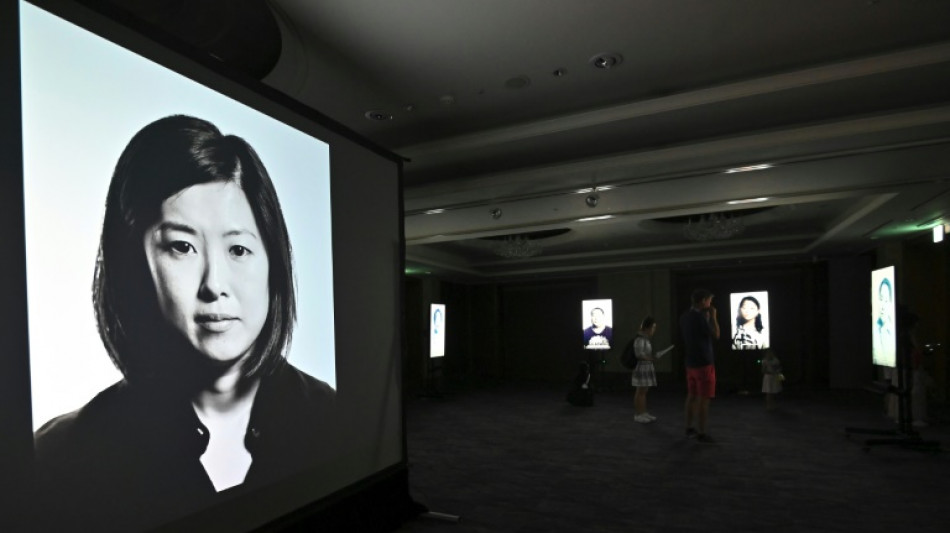
S. Korea govt responsible for international adoption fraud: inquiry / Photo: Jung Yeon-je - AFP/File

 Douglass breaks 50m free world record again to claim Pan Pacs gold

 As Opel turns to Chinese partners, its hometown frets about the future

 Mehidy takes three as Bangladesh close on historic win in Australia
 Hope fades for finding surivivors of Colombia quake as rescued woman dies

 Hurricane Lala dumps heavy rain on Hawaii

 Jaded voters, same old choices: Brazil kicks off election campaign
 'Everyone lives in fear': Yemenis worry about return to all-out war

 Cardinals' Baez bashes record three homers in MLB debut

 Djokovic feels the heat in Cincinnati opening defeat

 Hunt bags third Euro gold, Diaz shines in triple jump

 Depleted Djokovic falls in Cincinnati Masters opener

 Lala, now a hurricane, dumps heavy rain on Hawaii

 American Kate Douglass reclaims 50m freestyle world record

 Kit confusion disrupts Newcastle friendly against Leverkusen

 Marchand wins first Euros gold as Liebmann breaks 1500m free world record

 Zambia's vote marred by intimidation, counting pause: observers

 Marchand wins 200m butterfly for first Euros gold
 Fernandez booed by Chelsea fans in friendly win over Sociedad
 Fans line Welsh streets as Bonnie Tyler body's returns for funeral

 Tropical Storm Lala lashes Hawaii with heavy rain
 Lebanon reports 11 dead in strikes that Israel says targeted Hezbollah

 Crystal Palace sign Israel winger Khalaili

 Rescuers search for survivors as Indonesian quake death toll rises to 47

 Taliban govt supporters dance, take selfies in Kabul celebrations

 UK PM urges 'reflection' after Cambridge professor's death

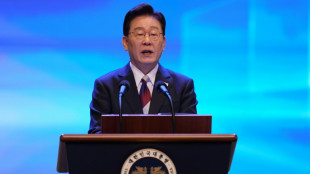
A South Korean official enquiry said Wednesday the government was responsible for abuse in international adoptions of local children, including record fabrication and inadequate consent, and recommended an official state apology.
"It was determined that the state neglected its duty ... resulting in the violation of the human rights of adoptees protected by the constitution and international agreements during the process of sending a lot of children abroad," South Korea's Truth and Reconciliation Commission said in a statement.
The country -- now Asia's fourth biggest economy and a global culture powerhouse -- remains one of the biggest ever exporters of babies in the world, having sent more than 140,000 children overseas between 1955 and 1999.
International adoption began after the Korean War as a way to remove mixed-race children, born to local mothers and American GI fathers, from a country that emphasised ethnic homogeneity.
It became big business in the 1970s to 1980s, bringing international adoption agencies millions of dollars as the country overcame post-war poverty and faced rapid and aggressive economic development.
More recently, the main driver has been babies born to unmarried women, who still face ostracism in a patriarchal society, and according to academics, are often forced to give up their children.
In a landmark announcement, the country's truth commission concluded after a two-year and seven-month investigation that human rights violations occurred in international adoptions of South Korean children, including "fraudulent orphan registrations, identity tampering, and inadequate vetting of adoptive parents".
It also said "numerous cases were identified where proper legal consent procedures" for South Korean birth parents were "not followed".
The commission also said the South Korean government failed to regulate adoption fees, allowing agencies to set them through "internal agreements", effectively turning it into a profit-driven industry.
And despite regulations requiring verification of adoptive parents' eligibility, an overwhelming majority -- 99 percent -- of intercountry adoption approvals in 1984 alone were granted on the same day or the following day, the commission said, citing its investigation.
"These violations should never have occurred," the commission's chairperson Park Sun-young told reporters.
"This is a shameful part of our history," she added.
- 'Eternal uncertainty' -
For years, Korean adoptees have advocated for their rights, many reporting that their birth mothers were forced to give up their children, leading to the fabrication of records to make them legally adoptable.
Some South Korean birth parents and adoptees even claimed that their children were kidnapped -- by agents who sought out unattended children in poor neighbourhoods -- or that authorities directed lost children towards adoption without trying to reunite them with their families, in some cases intentionally changing the child's identity.
Some adoptees -- such as Adam Crapser -- were deported to South Korea as adults because their American parents never secured their US citizenship.
The commission confirmed human rights violations in only 56 out of 367 complaints, saying there was an overwhelming amount of data to try to verify, and said it would "make efforts" to review the remaining cases before its investigation expires on May 26.
Some adoptees were dissatisfied with this outcome, urging the commission to fully recognise violations in all 367 cases.
"Without the truth, our lives rests upon guesses, estimations and creative narratives," Boonyoung Han, a Danish Korean adoptee, said in a statement.
"We are victims to state violence but without a trace! Literally. Destruction and withholding of our documents must not leave us open to eternal uncertainty."
Hanna Johansson, a Korean adoptee in Sweden, said she considers the commission's announcement a "victory" for her adoptee community regardless.
"I also hope that more and more South Korean (birth) parents who lost their child without their consent will come forward and demand justice," she told AFP.
A.Motta--PC