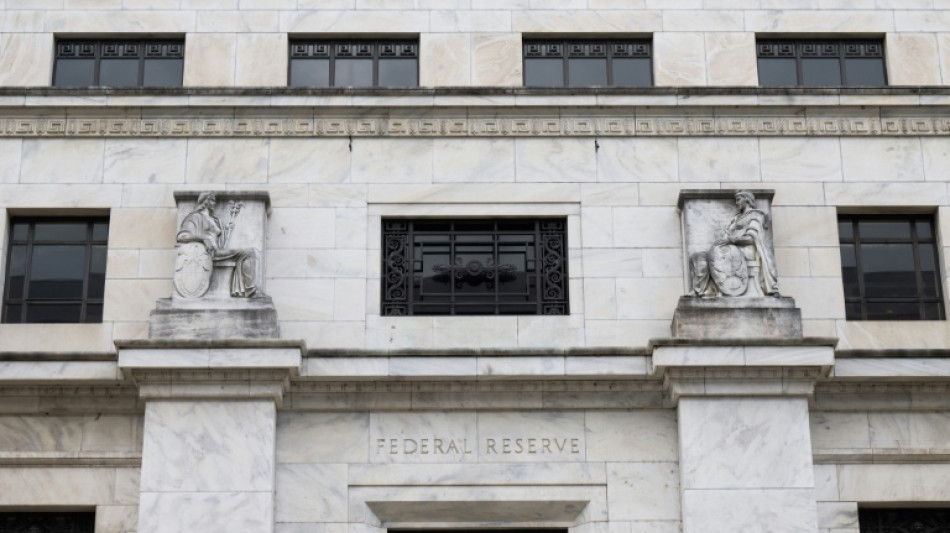
Trump tariffs could push up inflation: senior Fed official / Photo: SAUL LOEB - AFP

 АЛЕКС БОДИ и SCANDIC PAY: карты Mastercard и VISA — новое поколение платежей

 ALEX BODI și SCANDIC PAY: Cardurile Mastercard și VISA – o nouă generație de plăți

 John Park’s Agency Takes Legal Action Over Unauthorized 'McDonald’s Order Rap' Distribution

 Best Pet Advent Calendars for Christmas 2026: Dog Treats and Cat Toys

 Grattan Institute Releases Blueprint to Target Specialists Over Excessive Fees

 Arizona Science Center Hosts Girls in STEM Astro Adventures for Students

 New Turkish Cafe, Japanese BBQ, and Korean Restaurants Open Across East Bay

 Knowle Move Four Points Clear at Top After Histon Victory
US President Donald Trump's tariff plans could increase inflation by as much as 1.2 percentage points if they are fully implemented, a senior Federal Reserve official said Wednesday.
Trump made tackling inflation a key campaign issue in the run-up to the 2024 presidential elections.
But tariffs -- his signature economic policy since his return to office -- could have the opposite effect, St. Louis Fed President Alberto Musalem warned during a speech in Kentucky on Wednesday.
"New tariffs are expected to have both direct and indirect effects," said Musalem, who is a voting member of the Fed's rate-setting committee this year.
Tariffs are likely to cause a direct, time-limited increase on prices, and another indirect -- or second-round -- effect, which could have a "more persistent" impact on inflation, he said.
US inflation remains stuck above the Fed's long-term target of two percent, according to its favored personal consumption expenditures (PCE) measure.
Staff at the St. Louis Fed estimate that, "if fully implemented, a 10 percent increase in the effective US tariff rate -- roughly the increase that would be associated with tariff hikes announced to date -- could increase the PCE inflation rate by as much as 1.2 percentage points," Musalem said.
"The direct and one-time price-level effect is estimated to be on the order of 0.5 percentage points," he said, adding that the indirect effect would likely be around 0.7 percentage points.
"From the standpoint of monetary policy, it could be appropriate to 'look through' direct effects of higher tariffs on the price level and at the same time 'lean against' indirect and second-round effects," he said.
"I would be wary of assuming that the impact of tariff increases on inflation will be entirely temporary," he continued, adding that a "patient and vigilant approach" to monetary policy was appropriate.
Since his return to office, Trump has begun imposing tariffs against top US trading partners including China, Canada and Mexico -- only to then roll some of them back.
The stop-start nature of the rollout has increased uncertainty and unnerved investors, with US financial markets plunging since the tariffs first began to take effect.
Trump has said he will announce retaliatory tariffs against US trading partners on April 2, which could also take non-tariff measures like value-added taxes, or VAT, into account.
The White House confirmed Wednesday that Trump also plans to unveil tariffs against the automotive sector at 4pm local time in Washington (2000 GMT).
At the most recent interest rate decision, Fed officials penciled in two rate cuts for this year, while raising their outlook for inflation and downgrading their expectations for economic growth.
V.F.Barreira--PC