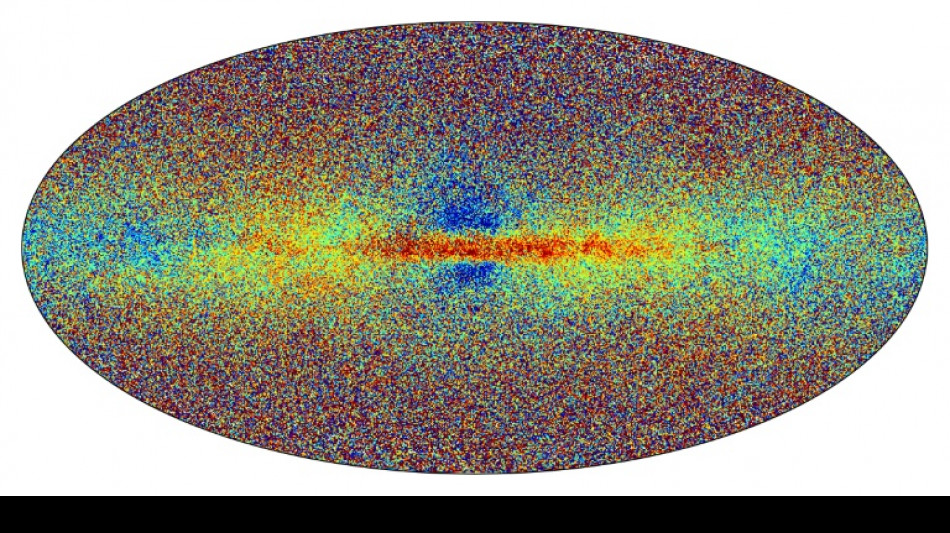
Star-mapping space telescope Gaia sent into 'retirement orbit' / Photo: - - EUROPEAN SPACE AGENCY/AFP/File

 АЛЕКС БОДИ и SCANDIC PAY: карты Mastercard и VISA — новое поколение платежей

 ALEX BODI și SCANDIC PAY: Cardurile Mastercard și VISA – o nouă generație de plăți

 John Park’s Agency Takes Legal Action Over Unauthorized 'McDonald’s Order Rap' Distribution

 Best Pet Advent Calendars for Christmas 2026: Dog Treats and Cat Toys

 Grattan Institute Releases Blueprint to Target Specialists Over Excessive Fees

 Arizona Science Center Hosts Girls in STEM Astro Adventures for Students

 New Turkish Cafe, Japanese BBQ, and Korean Restaurants Open Across East Bay

 Knowle Move Four Points Clear at Top After Histon Victory
After more than a decade mapping out our home galaxy, the Gaia space telescope was powered down and sent into "retirement orbit" around the Sun on Thursday, the European Space Agency said.
Since launching in 2013, the telescope has been charting the positions, motion and properties of nearly two billion stars to create a vast map of the Milky Way, revealing many secrets of the cosmos along the way, the ESA said in a statement.
Gaia uncovered evidence of massive galaxies slamming into each other, identified vast clusters of stars, helped discover new exoplanets and mapped millions of galaxies and blazing galactic monsters called quasars.
The telescope also spotted more than 50 dwarf galaxies orbiting the Milky Way, tracked 150,000 asteroids and detected at least 33 black holes inside it.
Gaia has been observing the universe from a stable orbit 1.5 million kilometres (932,000 miles) from Earth called the second Lagrange point.
But the neighbourhood has been getting more crowded with the recent arrivals of the powerful James Webb and Euclid space telescopes.
To avoid causing any problems for the new kids on the block, the ESA's team on the ground gave the order for Gaia's engines to give a final push on Thursday that will take the spacecraft into a distant orbit around the Sun.
Now that Gaia is powered down, this "retirement orbit" will make sure it will remain at least 10 million kilometres from Earth for the next 100 years.
But Gaia's mission continues back on Earth.
Scientists are still sifting through the deluge of data the telescope sent back and are expected to deliver its fourth catalogue of the stars in 2026.
The final catalogue -- which will encompass 10 and a half years of observations -- is expected around 2030.
This means that even as Gaia distantly orbits the Sun in silence, what it observed will be feeding new discoveries for decades to come.
O.Salvador--PC



