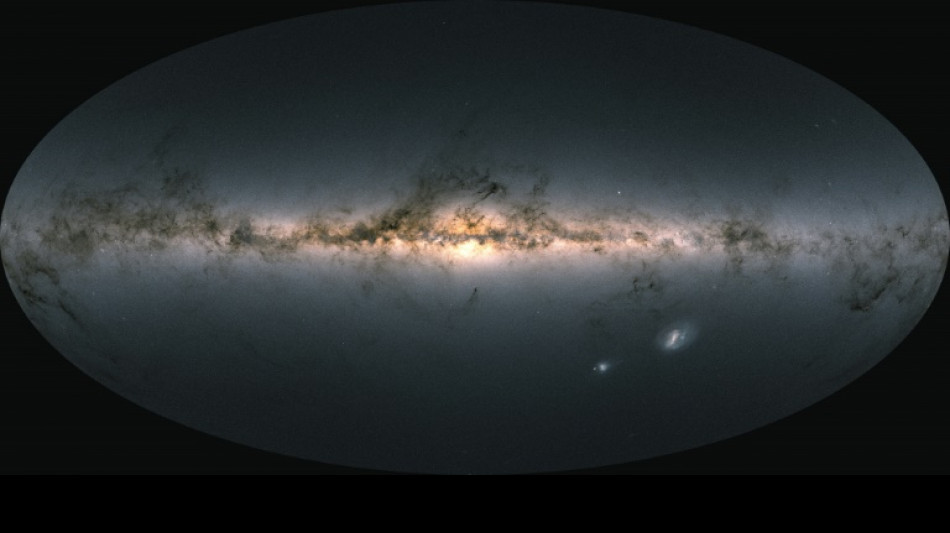
Space telescope Gaia sent into 'retirement' but legacy endures / Photo: Handout - EUROPEAN SPACE AGENCY/AFP/File

 Hurricane Lala dumps heavy rain on Hawaii
 Jaded voters, same old choices: Brazil kicks off election campaign

 'Everyone lives in fear': Yemenis worry about return to all-out war

 Cardinals' Baez bashes record three homers in MLB debut

 Djokovic feels the heat in Cincinnati opening defeat

 Hunt bags third Euro gold, Diaz shines in triple jump

 Depleted Djokovic falls in Cincinnati Masters opener

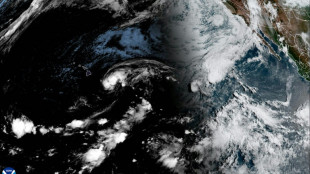 Lala, now a hurricane, dumps heavy rain on Hawaii

 American Kate Douglass reclaims 50m freestyle world record

 Kit confusion disrupts Newcastle friendly against Leverkusen

 Marchand wins first Euros gold as Liebmann breaks 1500m free world record

 Zambia's vote marred by intimidation, counting pause: observers

 Marchand wins 200m butterfly for first Euros gold

 Fernandez booed by Chelsea fans in friendly win over Sociedad

 Fans line Welsh streets as Bonnie Tyler body's returns for funeral

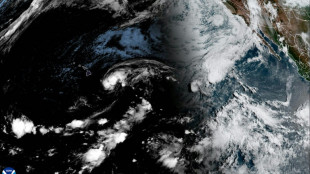 Tropical Storm Lala lashes Hawaii with heavy rain

 Lebanon reports 11 dead in strikes that Israel says targeted Hezbollah

 Crystal Palace sign Israel winger Khalaili

 Rescuers search for survivors as Indonesian quake death toll rises to 47

 Taliban govt supporters dance, take selfies in Kabul celebrations

 UK PM urges 'reflection' after Cambridge professor's death

 Rescuers search for survivors as Indonesian quake death toll rises to 40

 Earthquake rocks Spain's tourist jewel Granada

 Perez, Fiorini set world records in winning Euro race walk golds

 Lebanon says 9 dead in strikes as Israel says targeted Hezbollah

Europe's Gaia space telescope was powered down and sent into "retirement" on Thursday after a decade revealing the secrets of the Milky Way, but its observations will fuel discoveries for decades to come.
Since launching in 2013, the telescope has been charting the positions, motion and properties of nearly two billion stars to create an unparalleled map of our home galaxy, according to the European Space Agency.
Gaia has been peering into the universe from a stable orbit 1.5 million kilometres (930,000 miles) from Earth called the second Lagrange point.
But the neighbourhood has been getting more crowded with the recent arrivals of the powerful James Webb and Euclid space telescopes.
To avoid causing any problems for the new kids on the block, the ESA's team on the ground ordered Gaia's engines to give a final push on Thursday that will take the spacecraft into a distant orbit around the Sun.
This "retirement orbit" will make sure the spacecraft will remain at least 10 million kilometres from Earth for the next century.
Over nearly 11 years, Gaia has uncovered evidence of massive galaxies slamming into each other, identified vast clusters of stars, helped discover new exoplanets and mapped millions of galaxies and blazing galactic monsters called quasars.
A study last year using Gaia data identified two streams of ancient stars at the Milky Way's heart thought to have formed around the galaxy's birth more than 12 billion years ago.
According to astronomers using Gaia, the Milky Way then swallowed other dwarf galaxies as it grew -- notably one called Gaia-Enceladus around 10 billion years ago.
Our home galaxy is still slowing devouring the Sagittarius dwarf galaxy, Gaia helped reveal.
The telescope also spotted more than 50 dwarf galaxies orbiting the Milky Way. Inside the galaxy, it tracked down 150,000 asteroids and detected several dozen black holes.
- Final goodbye -
On Thursday, ESA engineers in Germany disconnected -- one-by-one -- all the satellite's systems that allow it to survive the perils of space, such as radiation storms or being struck by tiny meteorites.
"The spacecraft are designed so that they cannot be killed -- it is very difficult to disconnect them," ESA operations engineer Tiago Nogueira told AFP.
The team at the European Space Operations Centre in the city of Darmstadt then shut down Gaia's instruments before corrupting its on-board software.
Finally, they said their last goodbye, deactivating the spacecraft's communication system and central computer.
But Gaia's mission will continue back on Earth.
Scientists are still sifting through the deluge of data the telescope sent back, and are expected to deliver its fourth catalogue of the stars in 2026.
The final catalogue -- which will encompass 10 and a half years of observations -- is expected around 2030.
Ultimately, Gaia's catalogue "will serve as a reference for astronomy for at least 30 to 40 years," Gaia engineer Jose Hernandez told AFP.
This means that even as Gaia distantly orbits the Sun in silence, what it observed will be feeding new discoveries for future generations.
Some of the astronomers who will make these breakthroughs using Gaia's data are "still in primary school," Hernandez said.
L.E.Campos--PC