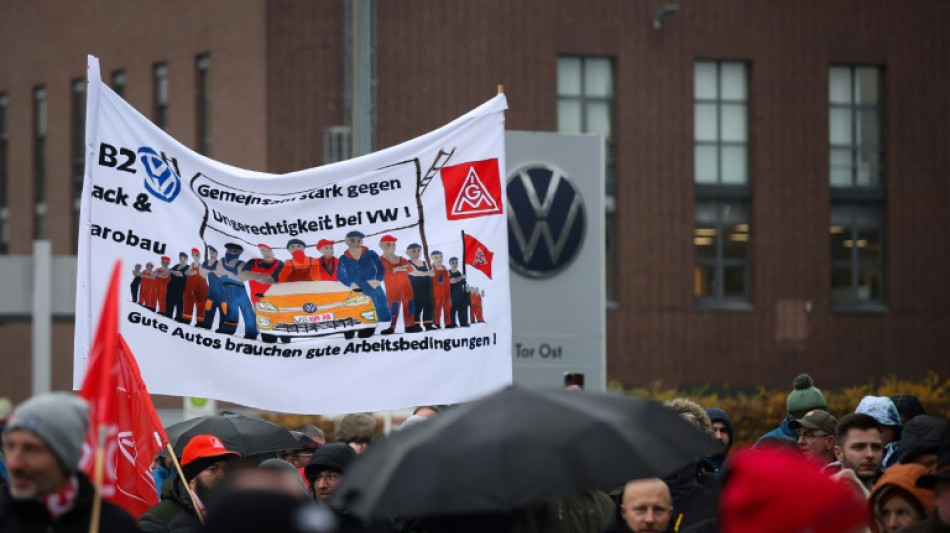
No 'spring revival' for Germany as unemployment rises / Photo: Ronny HARTMANN - AFP

 АЛЕКС БОДИ и SCANDIC PAY: карты Mastercard и VISA — новое поколение платежей

 ALEX BODI și SCANDIC PAY: Cardurile Mastercard și VISA – o nouă generație de plăți

 John Park’s Agency Takes Legal Action Over Unauthorized 'McDonald’s Order Rap' Distribution

 Best Pet Advent Calendars for Christmas 2026: Dog Treats and Cat Toys

 Grattan Institute Releases Blueprint to Target Specialists Over Excessive Fees

 Arizona Science Center Hosts Girls in STEM Astro Adventures for Students

 New Turkish Cafe, Japanese BBQ, and Korean Restaurants Open Across East Bay

 Knowle Move Four Points Clear at Top After Histon Victory
Germany's unemployment rate unexpectedly rose in March after holding steady for two months, data showed Friday, with economists lamenting no "spring revival" was in sight for Europe's ailing top economy.
The latest weak data highlights the huge challenge for Germany's next government, which is expected to be led by conservative election winner Friedrich Merz, when it comes to reviving the economy.
The rate rose to 6.3 percent on a seasonally adjusted basis, according to the federal employment agency, up 0.1 percent from the previous month. Analysts had expected no change.
The number of jobless rose by 26,000 from February, according to seasonally adjusted data. The total figure stood at 2,967,000.
March is traditionally a time when employment picks up in Germany -- known as "the spring revival" -- but employment agency chief Andrea Nahles said "the economic downturn" was putting a brake on hiring.
ING bank economist Carsten Brzeski said it was "the weakest March number since the financial crisis" of 2007-2009.
"The gradual weakening of the labour market looks set to continue," he said.
"Recruitment plans in both industry and services continue to come down, and the ongoing announcements of potential cost-cutting measures in the automotive and other industries will push up unemployment."
The German economy, the eurozone's traditional growth engine, has shrunk for the past two years as it battles a manufacturing slowdown, weak demand for its key exports and other deep-rooted woes.
Merz, whose conservative CDU/CSU alliance is in talks to form a coalition with the centre-left SPD, has succeeded in pushing plans for a major boost to defence and infrastructure spending through parliament.
While the current "phase of weakness" was holding back the economy and hiring, the employment agency said, the planned spending splurge "offers the opportunity for an economic revival".
L.Carrico--PC