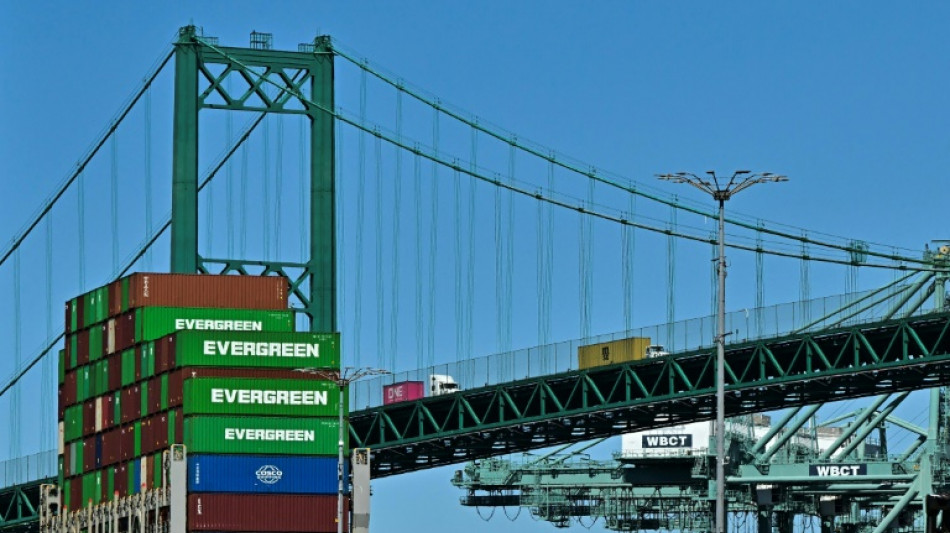
Key details on Trump's market-shaking tariffs / Photo: Frederic J. Brown - AFP/File

 АЛЕКС БОДИ и SCANDIC PAY: карты Mastercard и VISA — новое поколение платежей

 ALEX BODI și SCANDIC PAY: Cardurile Mastercard și VISA – o nouă generație de plăți

 John Park’s Agency Takes Legal Action Over Unauthorized 'McDonald’s Order Rap' Distribution

 Best Pet Advent Calendars for Christmas 2026: Dog Treats and Cat Toys

 Grattan Institute Releases Blueprint to Target Specialists Over Excessive Fees

 Arizona Science Center Hosts Girls in STEM Astro Adventures for Students

 New Turkish Cafe, Japanese BBQ, and Korean Restaurants Open Across East Bay

 Knowle Move Four Points Clear at Top After Histon Victory
After weeks of anticipation, US President Donald Trump unveiled sweeping new tariffs on trading partners Wednesday, calling it a "declaration of economic independence."
A fresh "baseline tariff" of 10 percent will apply to economies around the world, with steeper rates tailored to those that Washington deemed as bad actors.
What are the details of Trump's latest announcement?
- New tariffs -
A 10 percent "baseline tariff" kicks in at 12:01am (0401 GMT) on April 5, while elevated rates for those the White House deemed "the worst offenders" take effect at 12:01am on April 9.
The steeper additional tariffs impact major US trading partners, with the European Union facing a 20 percent rate and China a 34 percent figure.
For China, the number stacks on an added 20 percent levy Trump imposed earlier this year over its alleged role in the supply chain of illicit fentanyl, taking the new additional figure to 54 percent.
Other key partners include India with a 26 percent added rate, South Korea at 25 percent and Japan at 24 percent.
Trump said: "For nations that treat us badly, we will calculate the combined rate of all their tariffs, non-monetary barriers and other forms of cheating."
The numbers, he said, are "approximately half of what they are and have been charging us."
- Exclusions -
Major US partners Canada and Mexico, however, are not subject to the new tariffs, White House officials said Wednesday.
Trump earlier imposed 25 percent tariffs on imports from both countries, with a lower rate on Canadian energy, and they will continue to face these duties.
But goods entering the world's biggest economy under the US-Mexico-Canada Agreement will continue to be exempted.
Should Canada and Mexico reach deals on the levies, however, they will still come up against Trump's latest baseline rate.
The White House also said that the latest country-based tariffs do not stack atop of sector-specific ones, like those already applied to imports of steel and aluminum.
Cuba, Belarus, North Korea, and Russia are not subject to Trump's new "reciprocal tariffs" as they are already facing sanctions which "preclude any meaningful trade," the White House said.
- Other tariffs -
On Thursday, new 25 percent tariffs on imported autos and certain parts will also kick in, bringing fresh challenges to the industry.
Trump earlier imposed 25 percent charges on steel and aluminum imports too, which will now be expanded to impact canned beer and aluminum cans.
He has ordered probes into imports of copper and lumber as well, which could lead to further duties.
White House officials said Wednesday that the president is mulling similar moves on semiconductors, pharmaceuticals and possibly critical minerals.
Separately, a 25 percent levy on goods from countries importing Venezuelan oil can take place from April 2. Trump has threatened a similar "secondary tariff" on Russian oil.
- Small parcels -
On Wednesday, Trump ordered an end to a duty-free exemption for small parcels from China too, a move likely to severely disrupt the import of popular low-cost products.
The rule has faced heavy scrutiny as US officials pointed to the growth of Chinese-founded online retailers Shein and Temu as a factor behind a surge of shipments using the exemption.
Products imported under the "loophole" from China would now be subject to a duty rate of either 30 percent of their value or $25 per item, increasing to $50 per item after June 1.
A.S.Diogo--PC