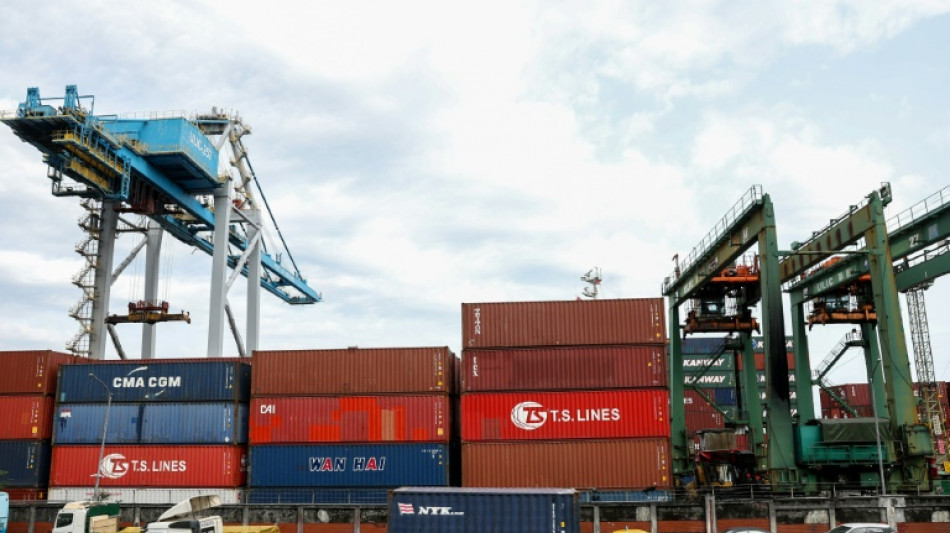
Taiwan says US tariffs 'highly unreasonable' / Photo: I-Hwa Cheng - AFP

 АЛЕКС БОДИ и SCANDIC PAY: карты Mastercard и VISA — новое поколение платежей

 ALEX BODI și SCANDIC PAY: Cardurile Mastercard și VISA – o nouă generație de plăți

 John Park’s Agency Takes Legal Action Over Unauthorized 'McDonald’s Order Rap' Distribution

 Best Pet Advent Calendars for Christmas 2026: Dog Treats and Cat Toys

 Grattan Institute Releases Blueprint to Target Specialists Over Excessive Fees

 Arizona Science Center Hosts Girls in STEM Astro Adventures for Students

 New Turkish Cafe, Japanese BBQ, and Korean Restaurants Open Across East Bay

 Knowle Move Four Points Clear at Top After Histon Victory
US President Donald Trump's tariffs were "highly unreasonable" and the government planned to start "serious negotiations" with Washington, Taipei said Thursday.
Taiwan had sought to avoid Trump's threatened levies by pledging increased investment in the United States, more purchases of US energy, and greater defence spending.
But Trump's sweeping new tariffs announced overnight included a hefty 32 percent tax on Taiwanese imports, which Taipei described as "unfair".
"The Executive Yuan found the decision highly unreasonable and deeply regretted it, and will initiate serious negotiations with the United States," cabinet spokeswoman Michelle Lee said.
Taiwan's trade surplus with the United States is the seventh highest of any country, reaching US$73.9 billion in 2024.
Around 60 percent of Taiwan's exports to the United States are information and communications technology products, or ICT, which includes semiconductor chips.
Lee said the surplus reflected soaring US demand for Taiwan's semiconductors and other tech products that was further driven by the tariffs and export controls targeting China that Trump imposed during his first term.
"The surge in US demand for Taiwan's ICT products reflects Taiwan's significant contribution to the US economy and national security, yet Taiwan is now being hit with high tariffs," Lee said.
"The proposed tariff does not accurately reflect the actual state of Taiwan-US trade relations and is unfair to Taiwan."
Semiconductor chips, a sector that Taiwan dominates and has been a source of friction between Washington and Taipei, were excluded from the levies.
But analysts warned that tariffs on components would have a knock-on effect for the critical chip industry that is the lifeblood of the global economy.
Taiwan had drawn up plans to help local industries hit by possible US tariffs, Minister of Economic Affairs Kuo Jyh-huei said Tuesday, ahead of Trump's announcement.
"Our countermeasures have been assessed and analysed, for example, how we would respond to a 10 percent or how we would respond to a 25 percent tariff," Kuo said.
There had been hopes that Taiwan chipmaking titan TSMC's plan to invest $100 billion in the United States would shield the island from Trump's tariffs.
Taiwan has also pledged to increase investment in the United States, buy liquefied natural gas from the US state of Alaska, and raise its defence spending to more than three percent of GDP.
Trump has accused Taiwan of stealing the US chip industry and recently threatened to impose tariffs of up to 100 percent on semiconductor imports from there.
L.E.Campos--PC