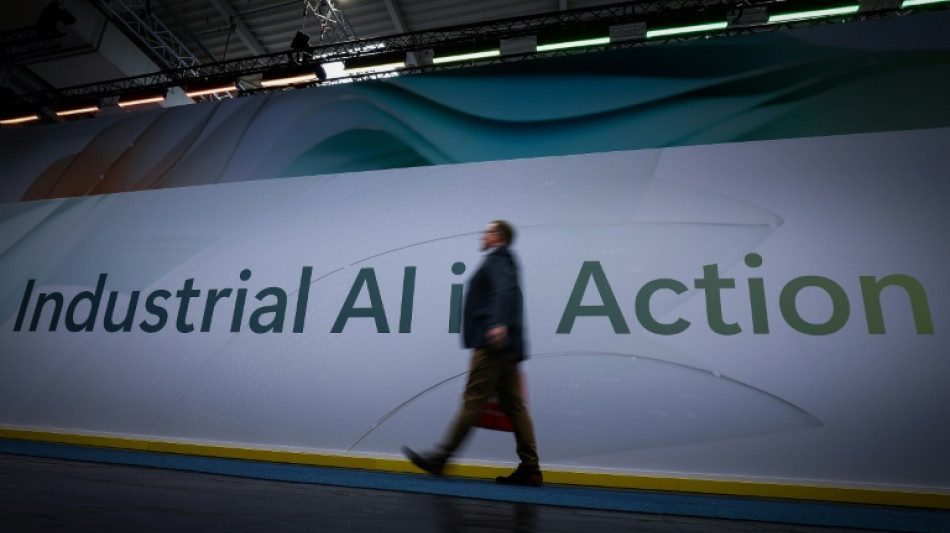
AI could impact 40 percent of jobs worldwide: UN / Photo: RONNY HARTMANN - AFP

 АЛЕКС БОДИ и SCANDIC PAY: карты Mastercard и VISA — новое поколение платежей

 ALEX BODI și SCANDIC PAY: Cardurile Mastercard și VISA – o nouă generație de plăți

 John Park’s Agency Takes Legal Action Over Unauthorized 'McDonald’s Order Rap' Distribution

 Best Pet Advent Calendars for Christmas 2026: Dog Treats and Cat Toys

 Grattan Institute Releases Blueprint to Target Specialists Over Excessive Fees

 Arizona Science Center Hosts Girls in STEM Astro Adventures for Students

 New Turkish Cafe, Japanese BBQ, and Korean Restaurants Open Across East Bay

 Knowle Move Four Points Clear at Top After Histon Victory
The global artificial intelligence market is projected to reach $4.8 trillion -- roughly the size of Germany's economy -- by 2033, the UN said Thursday, warning nearly half of jobs worldwide could be affected.
While AI is transforming economies and creating vast opportunities, the technology also risks deepening existing inequalities, the UN trade and development agency UNCTAD warned in a report.
In particular, the report cautioned that "AI could impact 40 percent of jobs worldwide, offering productivity gains but also raising concerns about automation and job displacement".
While previous waves of technology mainly impacted blue-collar jobs, UNCTAD highlighted that knowledge-intensive sectors would be left most exposed by AI.
This means advanced economies will surely be hardest-hit, it said, adding though that these economies were better positioned to harness the benefits of AI than developing economies.
"The benefits of AI-driven automation often favour capital over labour, which could widen inequality and reduce the competitive advantage of low-cost labour in developing economies," UNCTAD said.
In a statement, the agency chief Rebeca Grynspan underlined the importance of ensuring people are at the centre of AI development, urging stronger international cooperation to "shift the focus from technology to people, enabling countries to co-create a global artificial intelligence framework".
"History has shown that while technological progress drives economic growth, it does not on its own ensure equitable income distribution or promote inclusive human development," she warned in the report.
- $4.8 trillion -
In 2023, so-called frontier technologies like the internet, blockchain, 5G, 3D printing and AI, represented a $2.5-trillion market, with that number expected to increase sixfold in the next decade to $16.4 trillion, the report said.
And by 2033, AI will be the leading technology in this sector, with an expected value of $4.8 trillion, it showed.
But UNCTAD cautioned that access to AI infrastructure and expertise remained concentrated in just a few economies, with only 100 firms, mainly in the US and China, currently accounting for 40 percent of global corporate research and development spending.
"Countries should act now," the agency said, insisting that "by investing in digital infrastructure, building capabilities, and strengthening AI governance", they could "harness the AI potential for sustainable development".
"AI is not just about replacing jobs," it said, insisting the technology could "also create new industries and empower workers".
"Investing in reskilling, upskilling, and workforce adaptation is essential to ensure AI enhances employment opportunities rather than eliminating them."
The UN agency stressed the need for all countries to take part in discussions around how to govern AI.
"AI is shaping the world's economic future, yet 118 countries - mostly in the Global South - are absent from major AI governance discussions," it said.
"As AI regulation and ethical frameworks take shape, developing nations must have a seat at the table to ensure AI serves global progress, not just the interests of a few."
Nogueira--PC